The illustrator tells us how the beauty of manga and anime influenced her dreamlike work.
Yuka Sakuma is a painter and illustrator based in Nagoya, Japan. Inspired by the nihonga school, her work has been exhibited at home and abroad. We caught up with her to discuss the origins of her art style, how she empathises with her characters, and how she’s reached an international audience.
What, outside of traditional art, has most influenced your work throughout the years?
Manga and anime, which are, of course, two of the most popular cultural institutions in Japan. I grew up watching and reading so much of them from an early age. The shapes of the characters, the beauty of the lines, and the contrast between black and white found in manga have all had a major part to play in my art and its development.
Is there a painting you saw in your formative years that changed everything? What was it?
When I began studying art seriously, I remember being struck by Shinsui Ito’s beautiful, highly technical piece Finger at a museum. It’s one of the artworks that became a significant influence on my art.
(Image credit: Yuka Sakuma)
Tell us about your first paid commission. Does it stand as a representation of your talent?
My graduation project in college was a turning point for me. I received so many invitations to exhibit from gallerists who saw it, and it was the work that launched my career as a painter. It has since been added to my university’s art collection.
When did you decide that you wanted to be an artist?
My goal was always to become a professional artist, so I’ve never had any other future in mind than painting full-time.
(Image credit: Yuka Sakuma)
What advice would you give to your younger self?
Getting started isn’t the hard part; the most difficult thing is to keep on creating. While it’s vital to hone your painting skills, it’s important to have the understanding and support of loved ones. You have to keep putting yourself in the right environment to continue painting.
How has the art industry changed for the better since you’ve been working in it?
Not long after I began painting, social networking sites exploded. Now an artist’s personality is often more important than academic background, and so on. For me, the possibility of connecting with audiences and opportunities outside of Japan has also increased, just like this interview! Even though I can’t speak English, I’m grateful for the chances that are presented by living in a more connected world.
(Image credit: Yuka Sakuma)
Can you tell us a little about the subjects in your art?
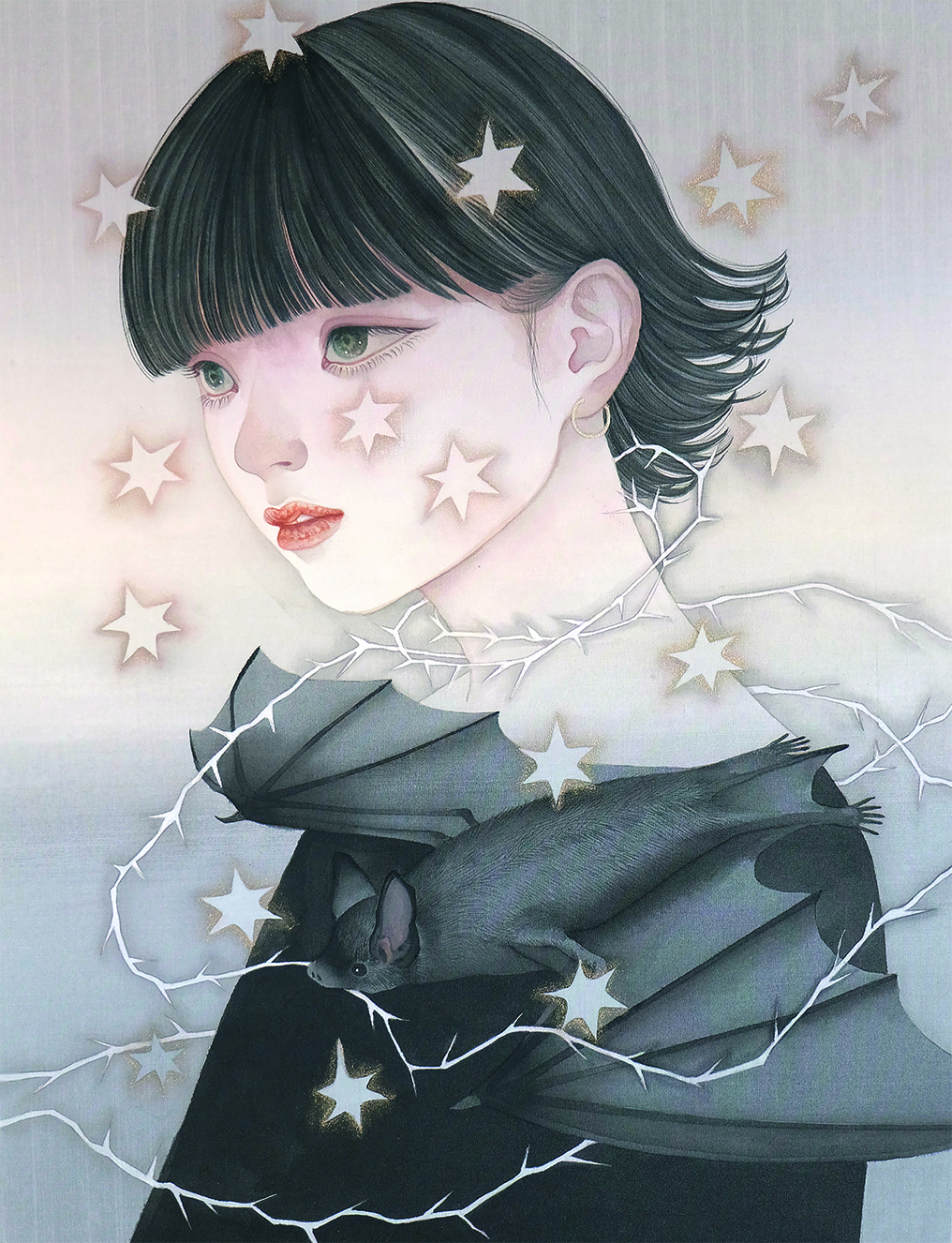
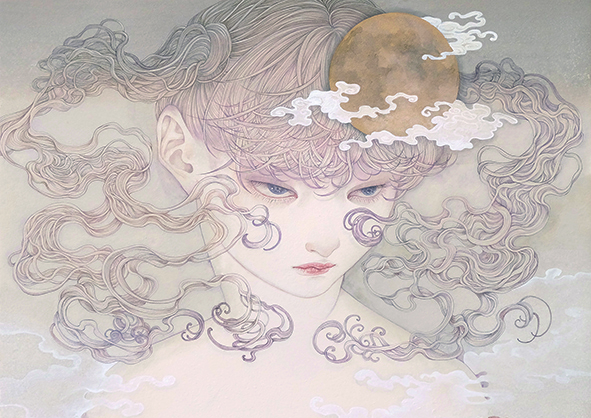
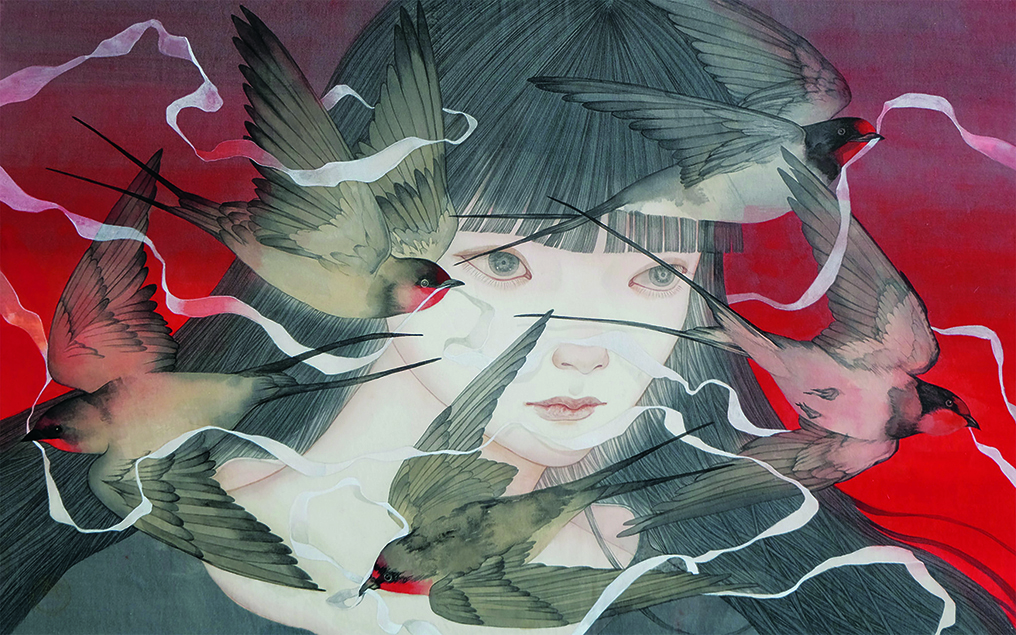
I always empathise with the girls in my work. I paint in the hope of removing the anguish from them.
What character, scene or style do you most identify with?
Ukiyo-e is one of the most famous genres of Japanese art, where artists created woodblock prints and paintings. So many wonderful ukiyo-e pieces have been created, among them bijin-ga, which are portraits of beautiful women. I’m a painter who produces contemporary bijin-ga pieces, and hope that my work will encourage more people to look at Japanese art, whether that’s ukiyo-e or beyond.