

Graphic design has always been a reflection of its moment, shaped by technology, culture, economics, and taste. What changes year to year is not merely how things look, but what designers choose to emphasise. In 2026, design feels less concerned with perfection and more interested in presence. There is a visible shift toward systems that feel intentional rather than ornamental, expressive rather than polished for polish’s sake.
The visual language emerging right now suggests a recalibration. Designers are negotiating the growing influence of AI without surrendering authorship, embracing motion as a core design principle rather than an enhancement, and revisiting tactility, imperfection, and emotion in response to an increasingly synthetic digital environment. Typography stretches beyond rigid grids, photography escapes predictable frames, and minimalism is reasserted with confidence rather than restraint.
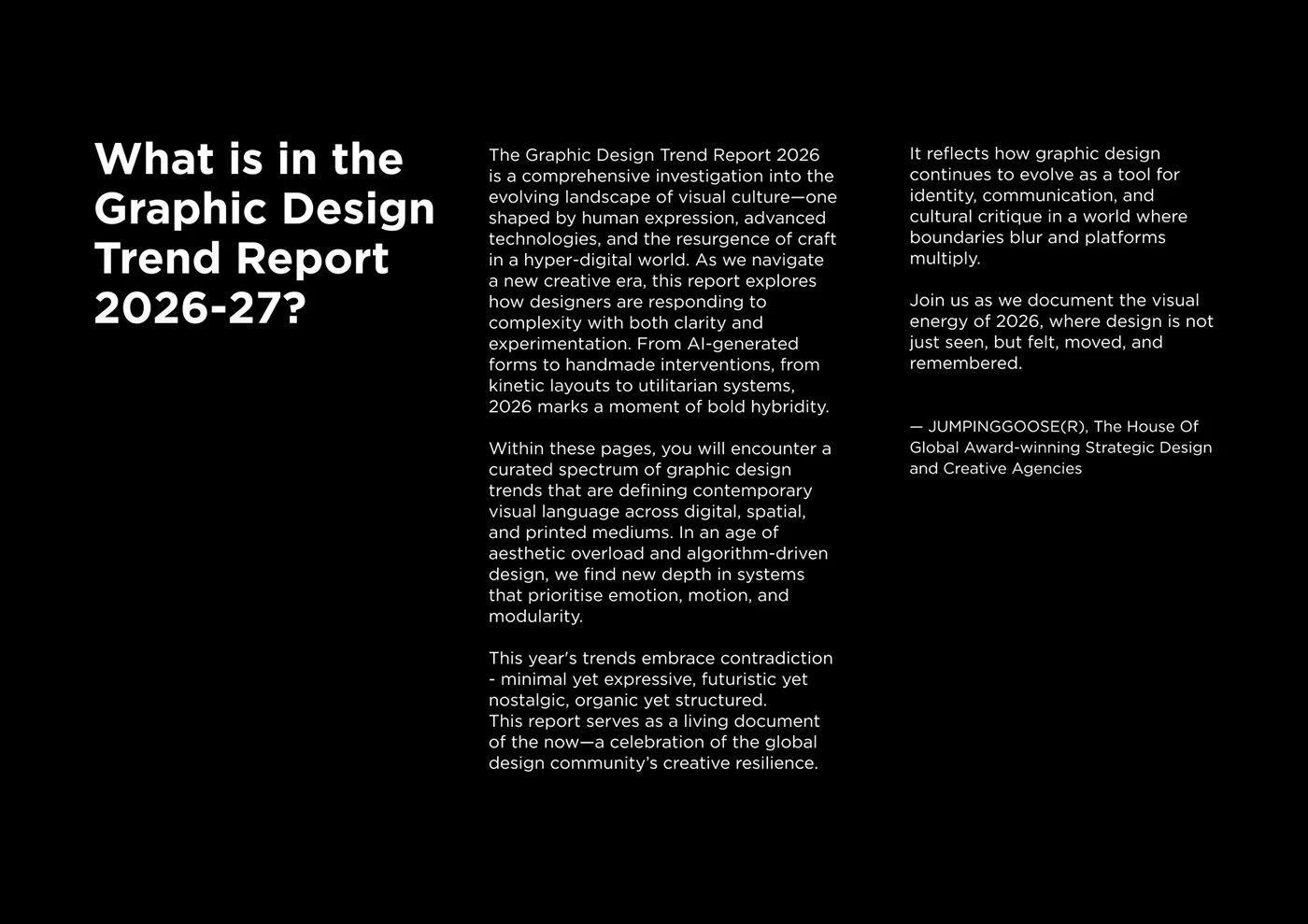
This analysis is based on the Graphic Trend Report curated by Nandini Tiwari from Jumping Goose, whose research maps the evolving visual landscape of 2026 with clarity and depth. Rather than treating trends as purely aesthetic shifts, the report examines the cultural and functional forces driving these changes, making it a valuable reference point for designers working across branding, editorial, digital, and experiential design.
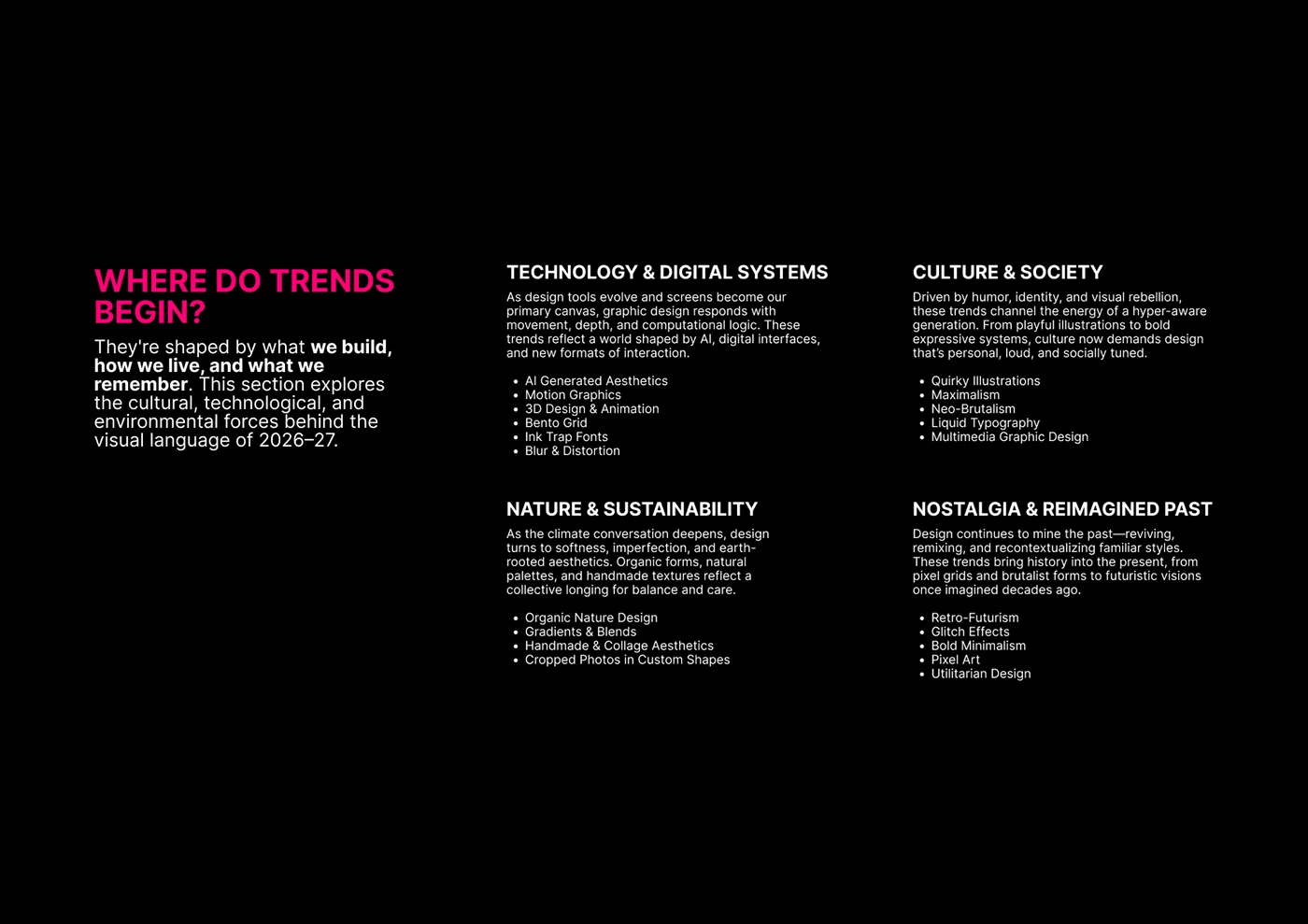











 As these twenty trends show, graphic design in 2026 is less about chasing novelty and more about making deliberate choices. The strongest work emerging today isn’t defined by tools or aesthetics alone, but by intent. Designers are thinking in systems, responding to culture, and using technology with restraint rather than dependence.
Trends will continue to evolve, overlap, and fade, but the underlying shift is clear: design is becoming more expressive, more human, and more conscious of its role in shaping perception. Whether you adopt these directions fully or selectively, the value lies in understanding why they exist and how they align with the stories you’re trying to tell.
Ultimately, trends are not rules to follow, but signals to interpret. And in 2026, those signals point toward clarity, emotion, and thoughtful design decisions that prioritise meaning over mere visual impact.
As these twenty trends show, graphic design in 2026 is less about chasing novelty and more about making deliberate choices. The strongest work emerging today isn’t defined by tools or aesthetics alone, but by intent. Designers are thinking in systems, responding to culture, and using technology with restraint rather than dependence.
Trends will continue to evolve, overlap, and fade, but the underlying shift is clear: design is becoming more expressive, more human, and more conscious of its role in shaping perception. Whether you adopt these directions fully or selectively, the value lies in understanding why they exist and how they align with the stories you’re trying to tell.
Ultimately, trends are not rules to follow, but signals to interpret. And in 2026, those signals point toward clarity, emotion, and thoughtful design decisions that prioritise meaning over mere visual impact.
1. AI-Generated Design
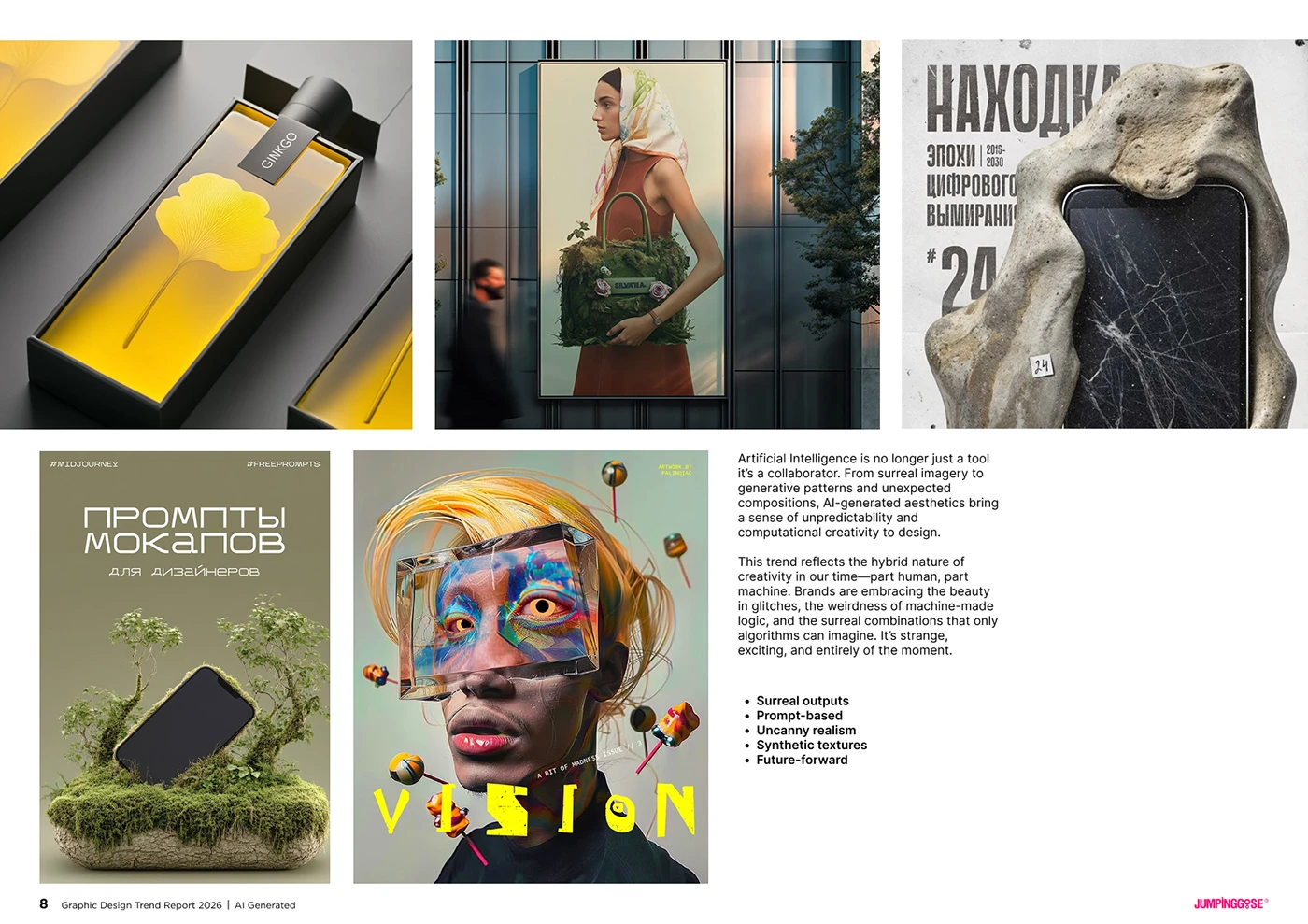
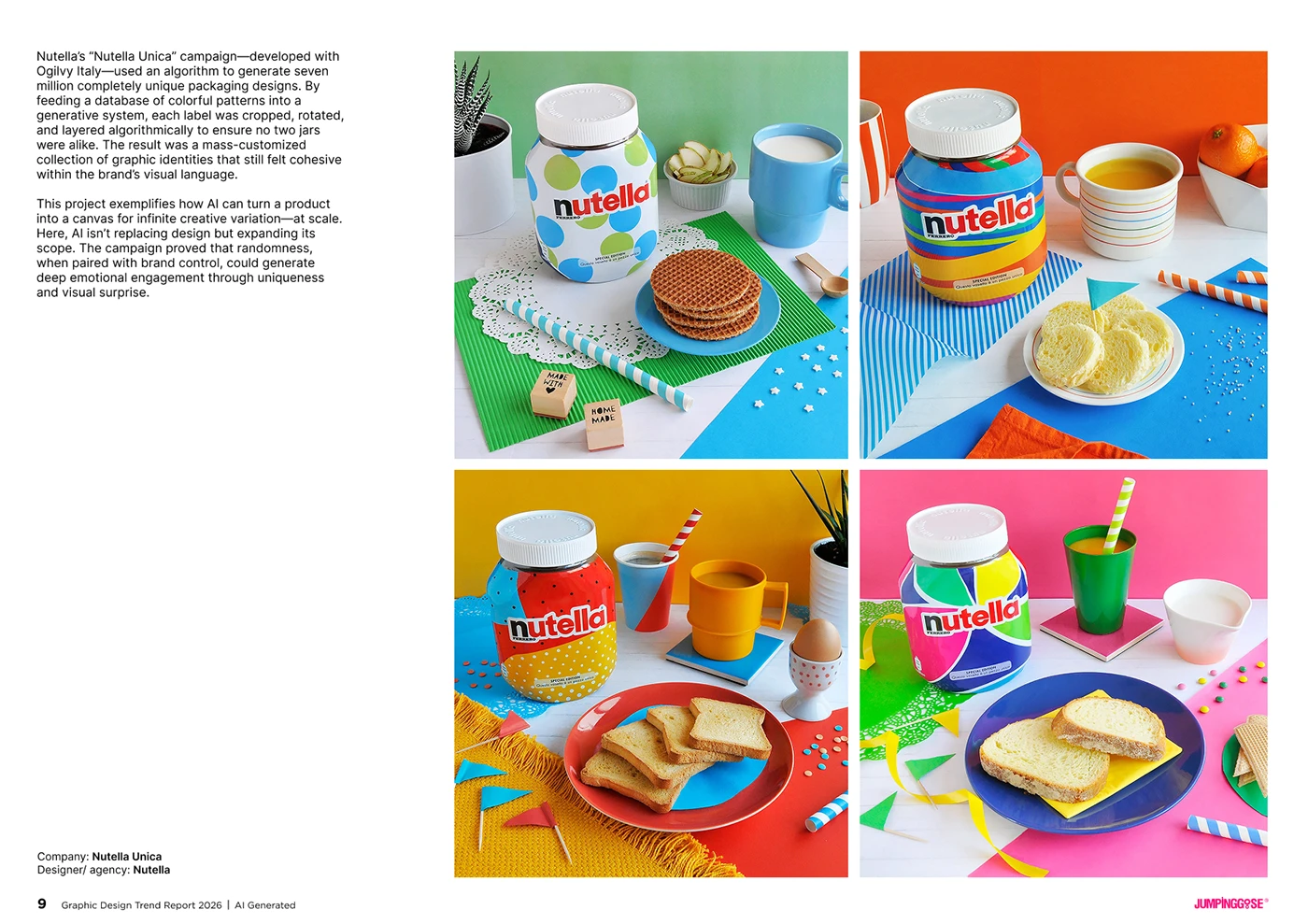
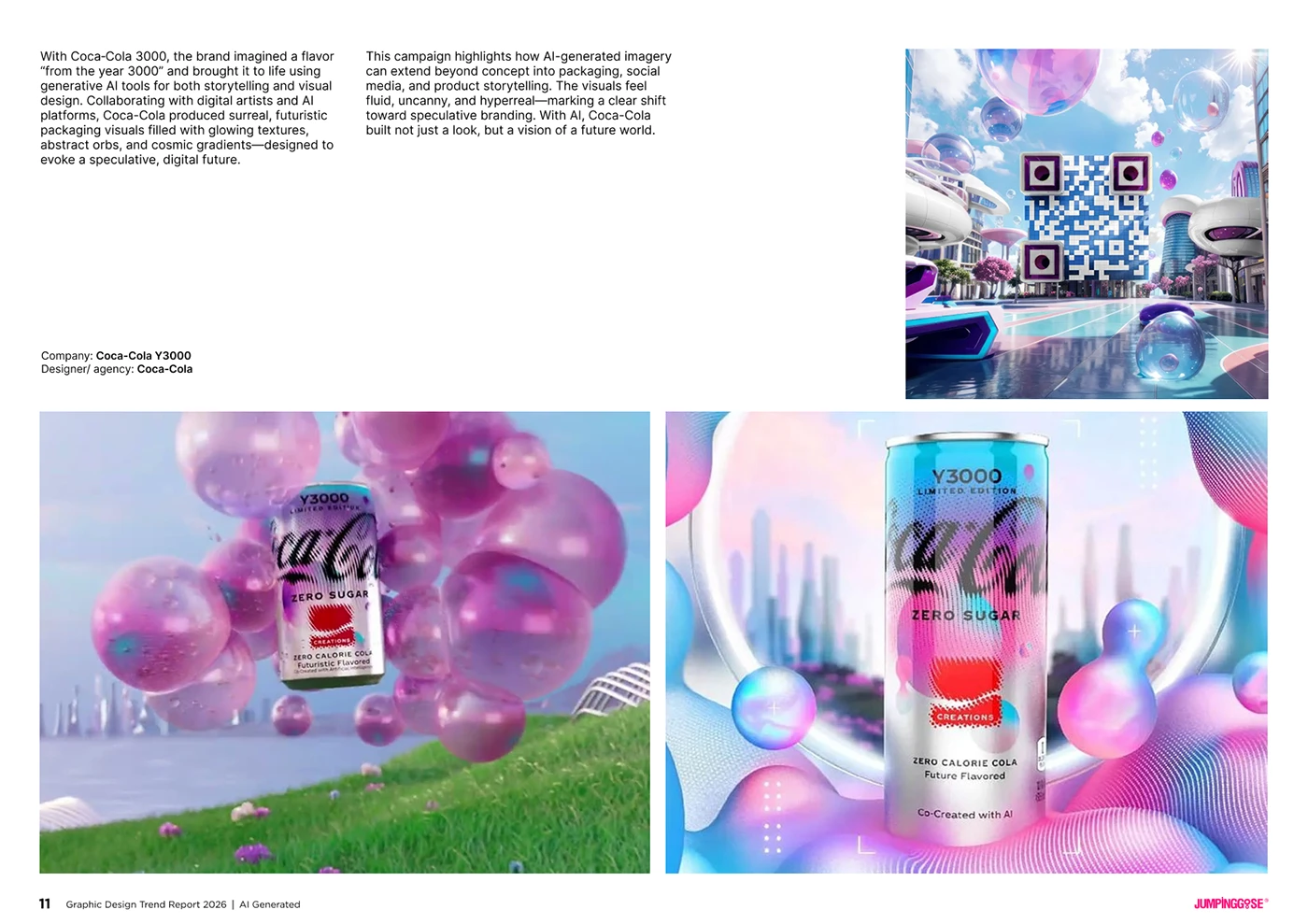
In 2026, AI is no longer treated as a novelty or a shortcut. Its role has matured into that of a generative collaborator, a tool for exploration rather than execution. The most compelling work uses AI to surface unexpected forms, compositions, and textures, which are then refined through human judgment. Authorship remains central; AI simply expands the field of possibility.
2. 3D Design & Animation
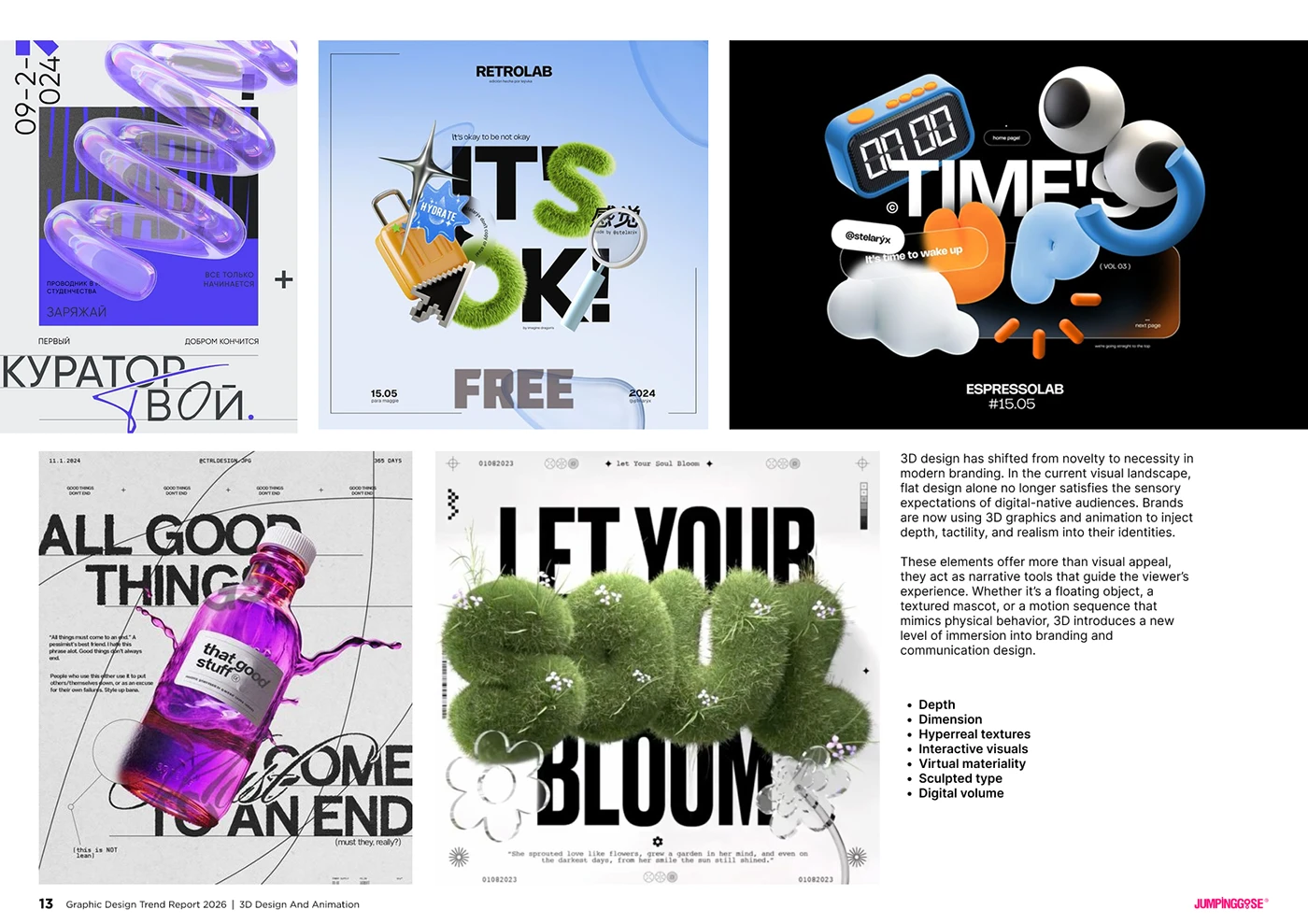
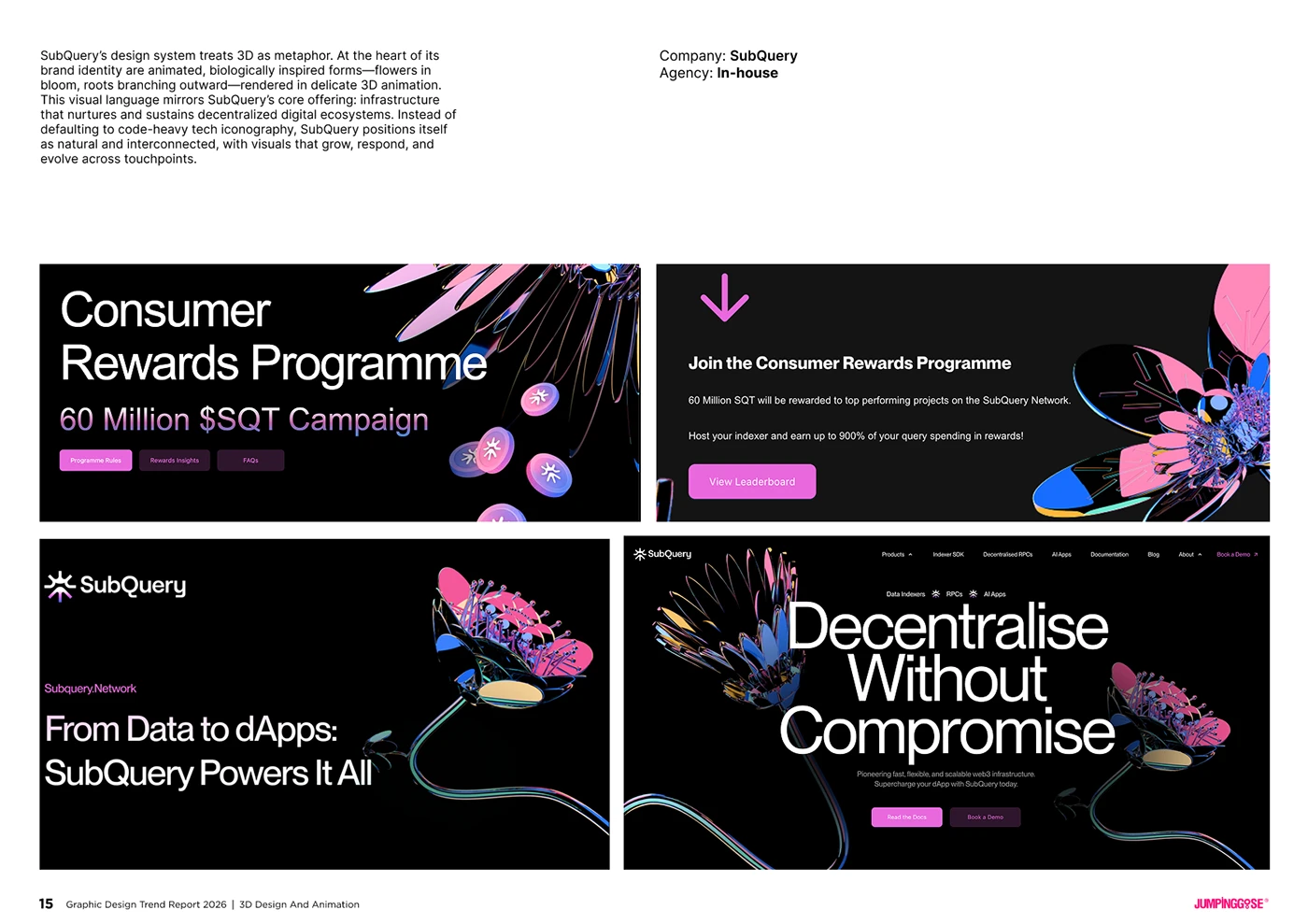
Three-dimensional design continues to move away from spectacle and toward integration. Rather than dominating layouts, 3D elements are used with restraint, adding depth, tactility, and spatial logic to brand systems and interfaces. Stylisation often takes precedence over realism, allowing 3D to feel expressive without becoming visually heavy.
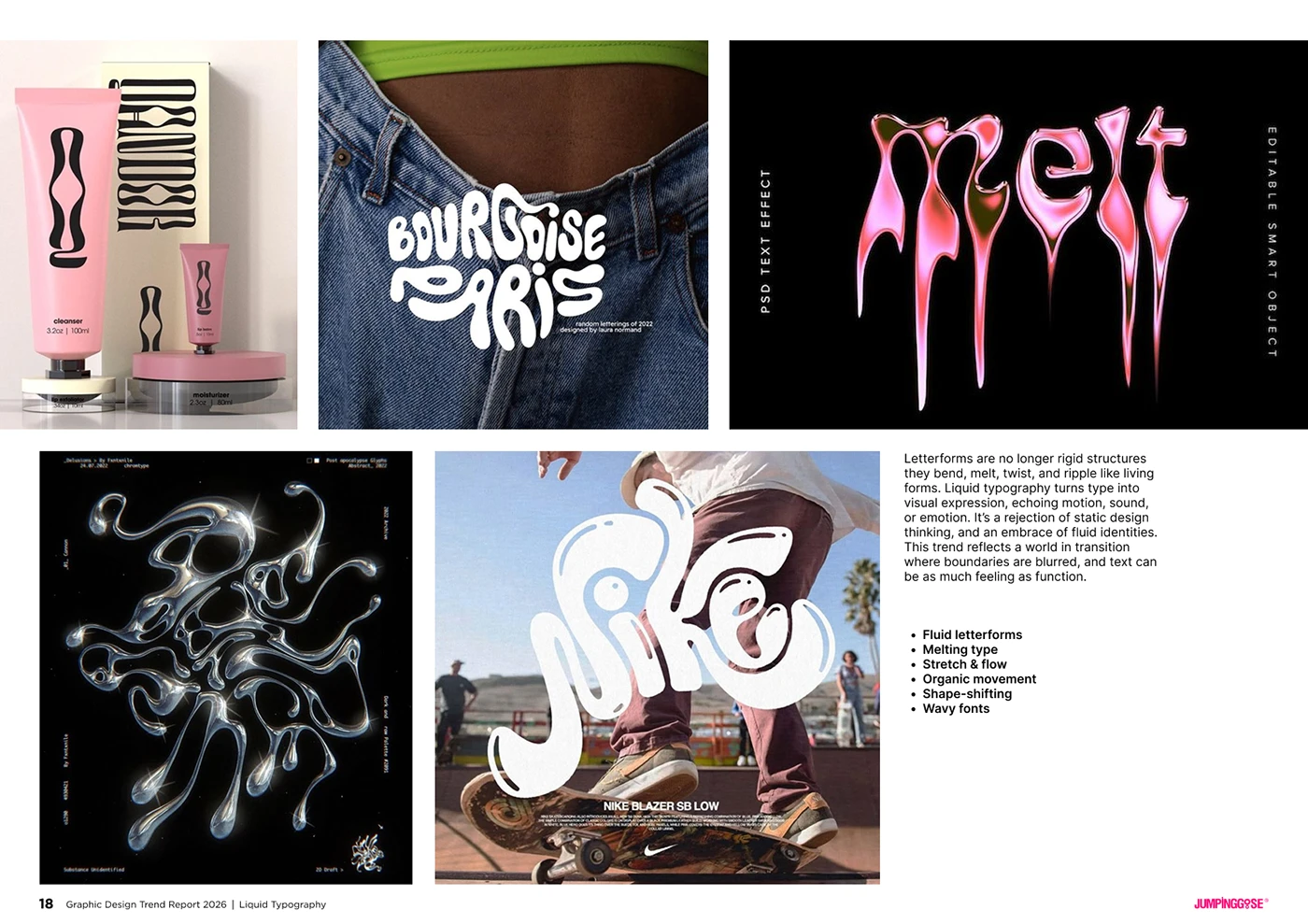
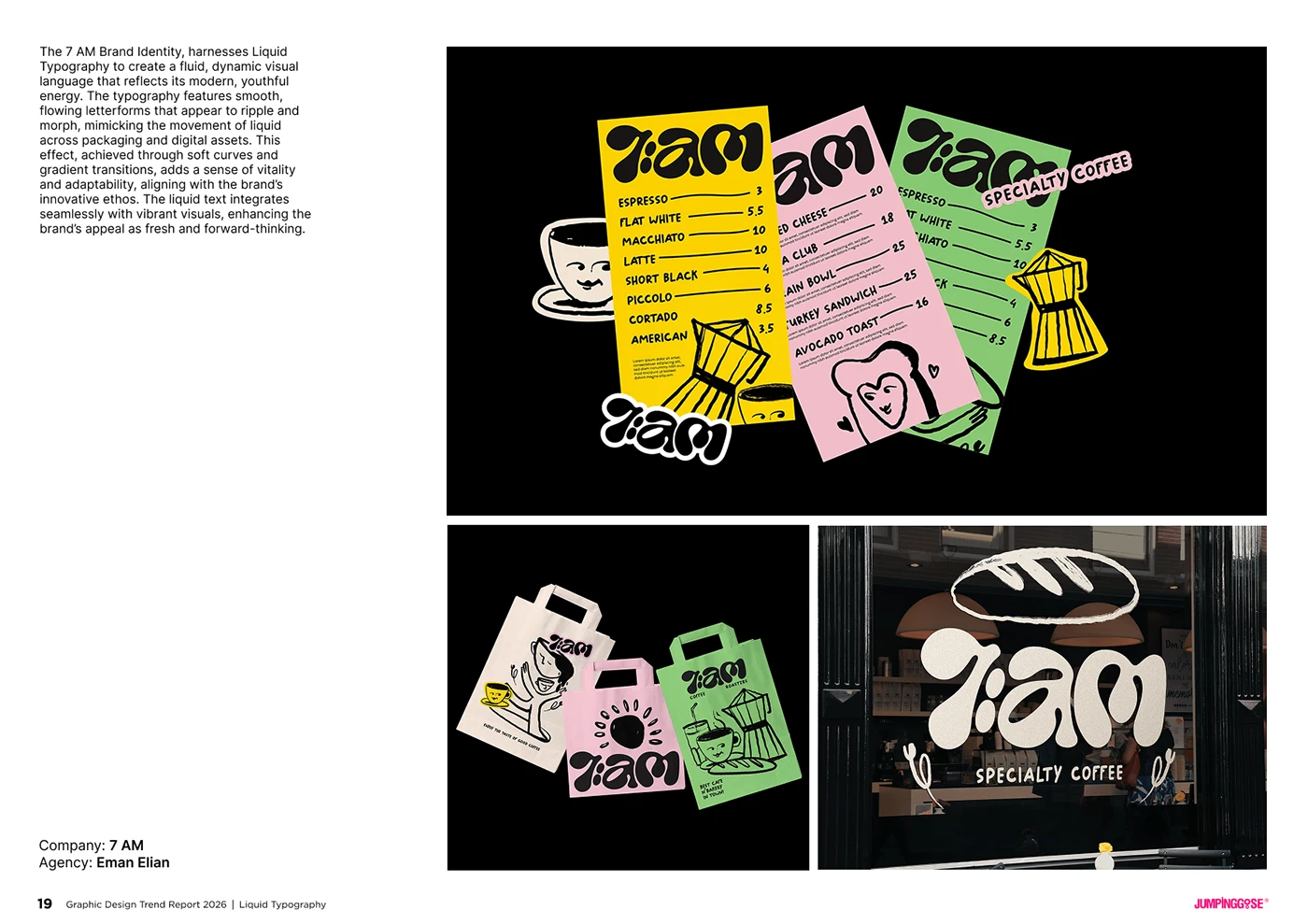
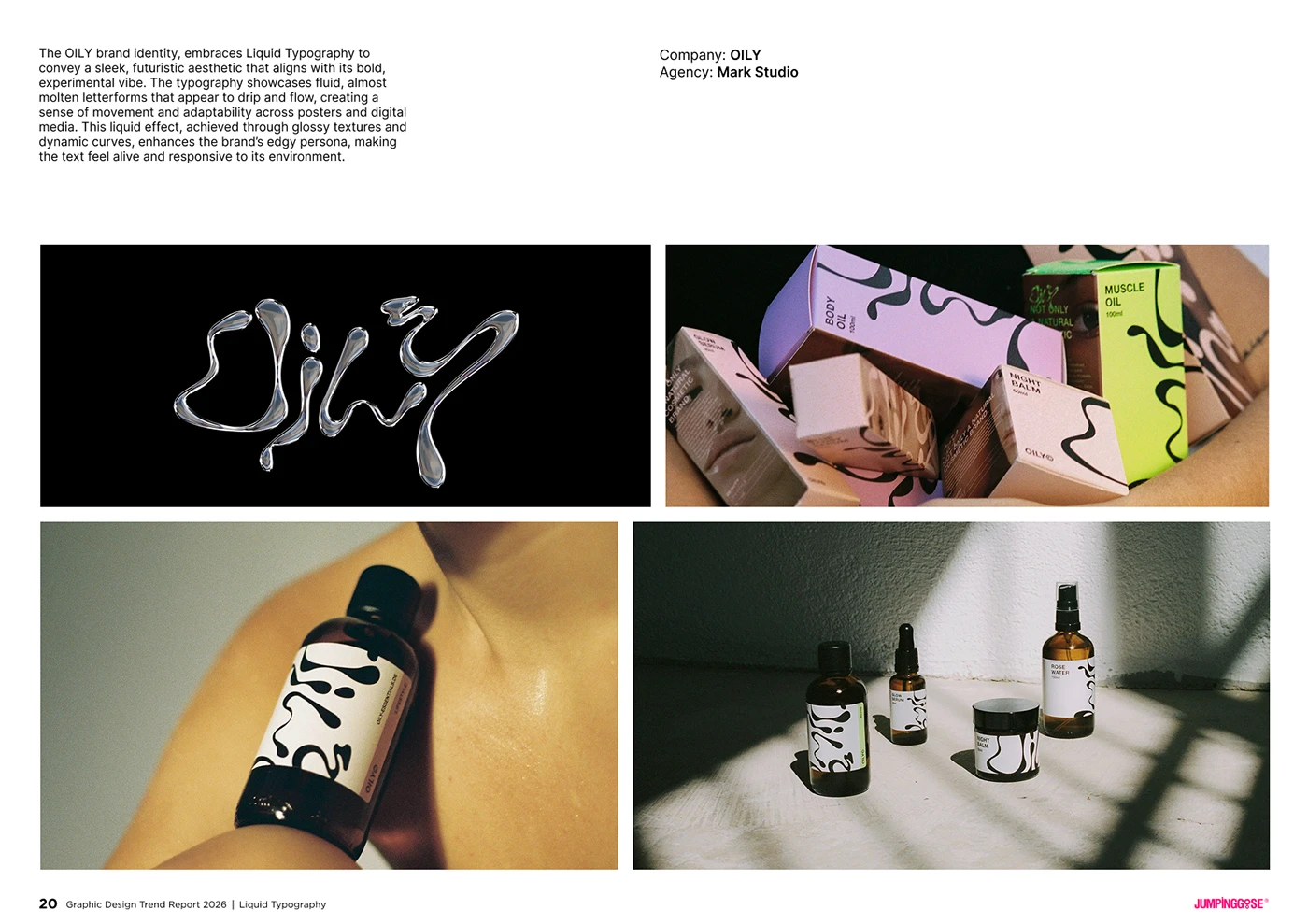
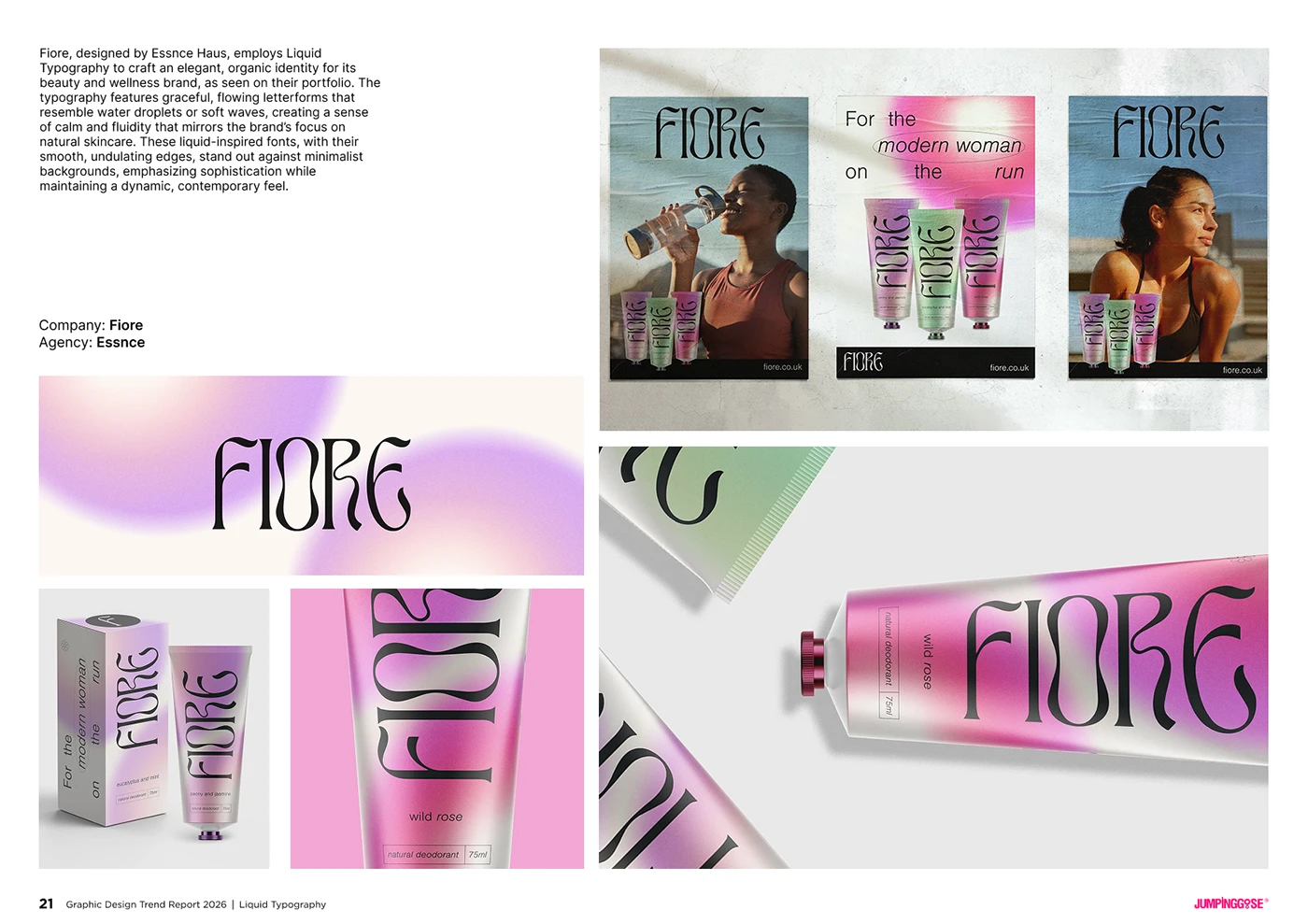
3. Liquid & Experimental Typography
Typography in 2026 appears less static and more elastic. Letterforms stretch, soften, and flow, often suggesting movement even in still compositions. This experimentation is deliberate rather than chaotic, typically reserved for display type and brand moments where emotion and tone matter more than strict neutrality.
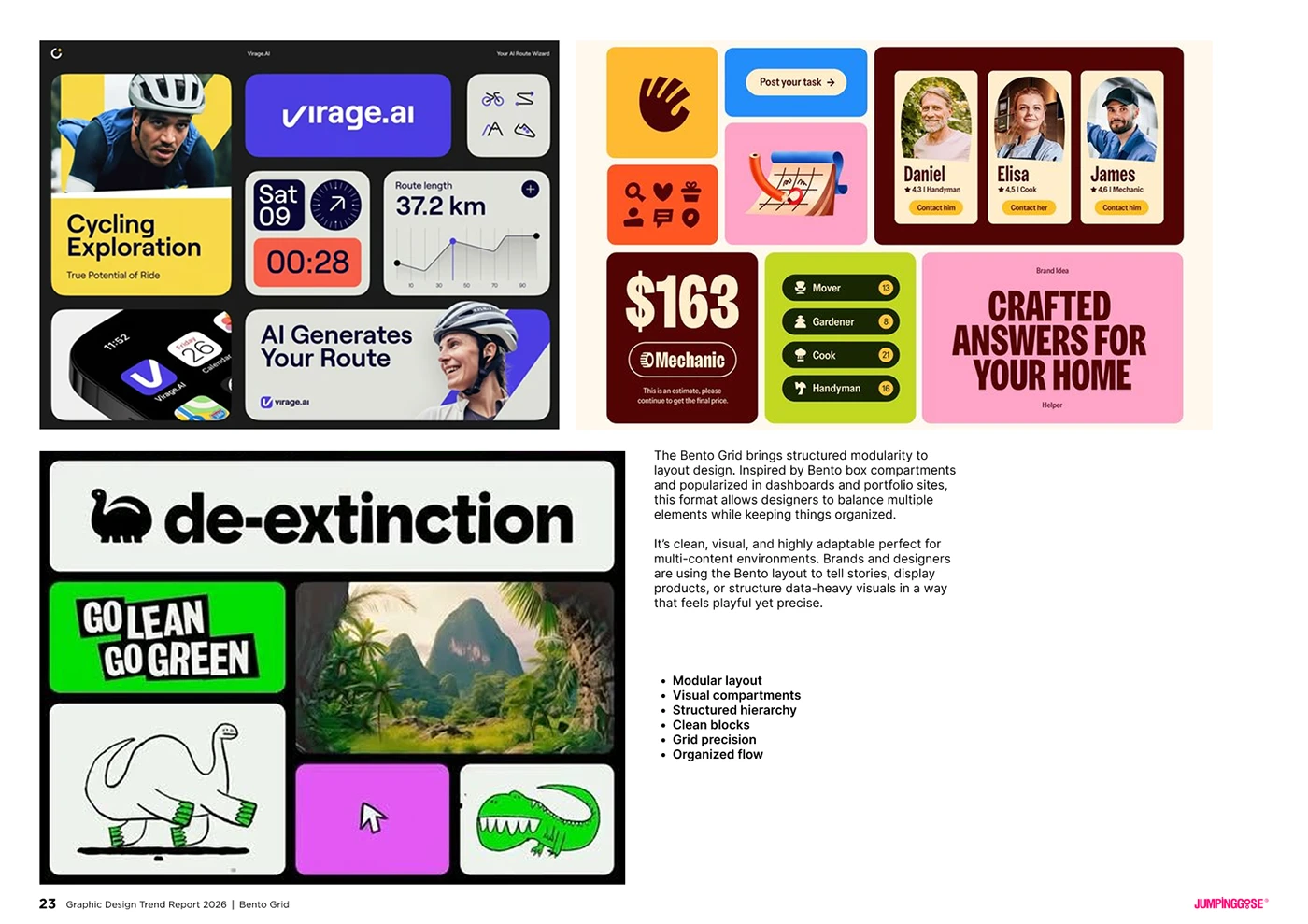
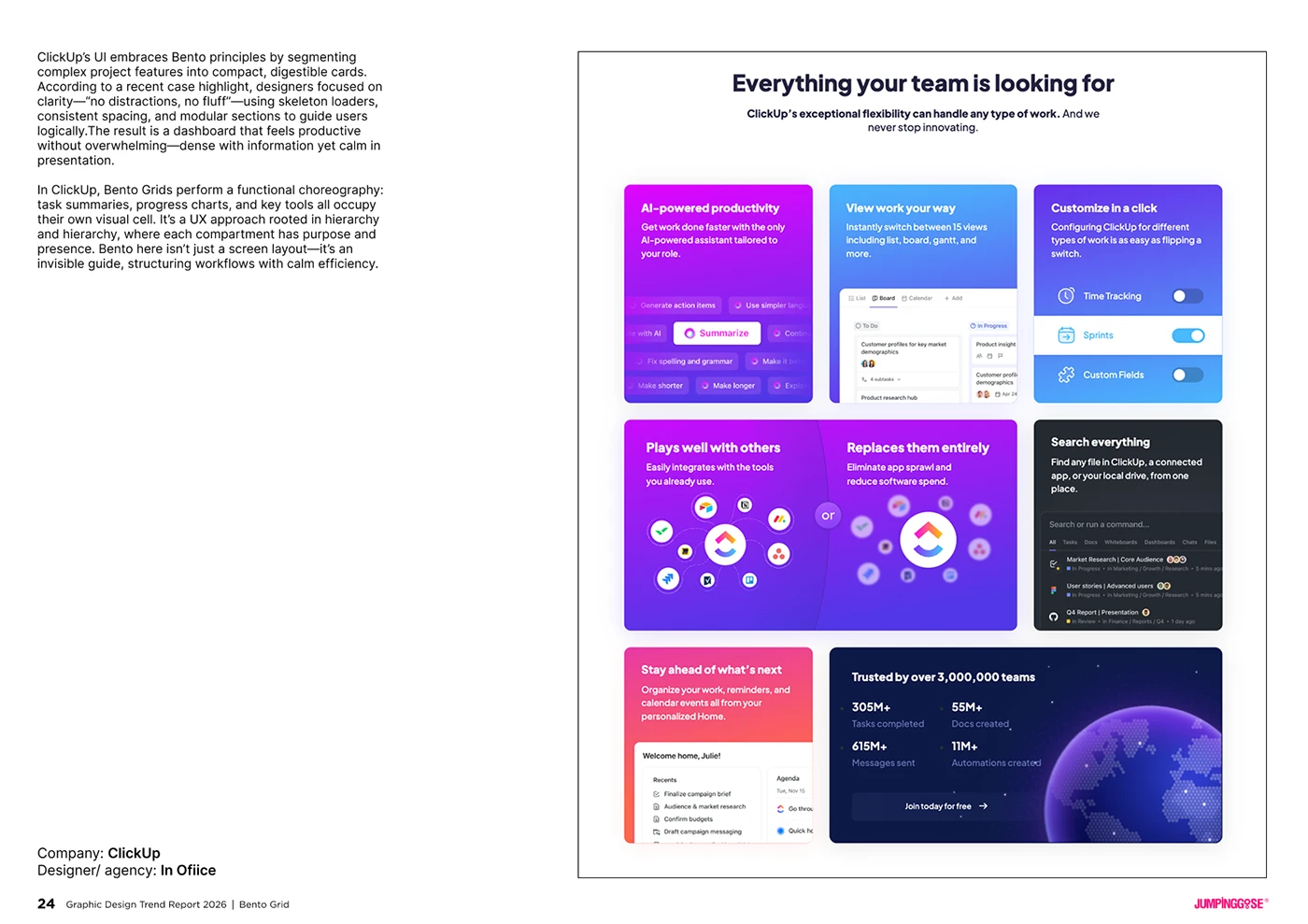
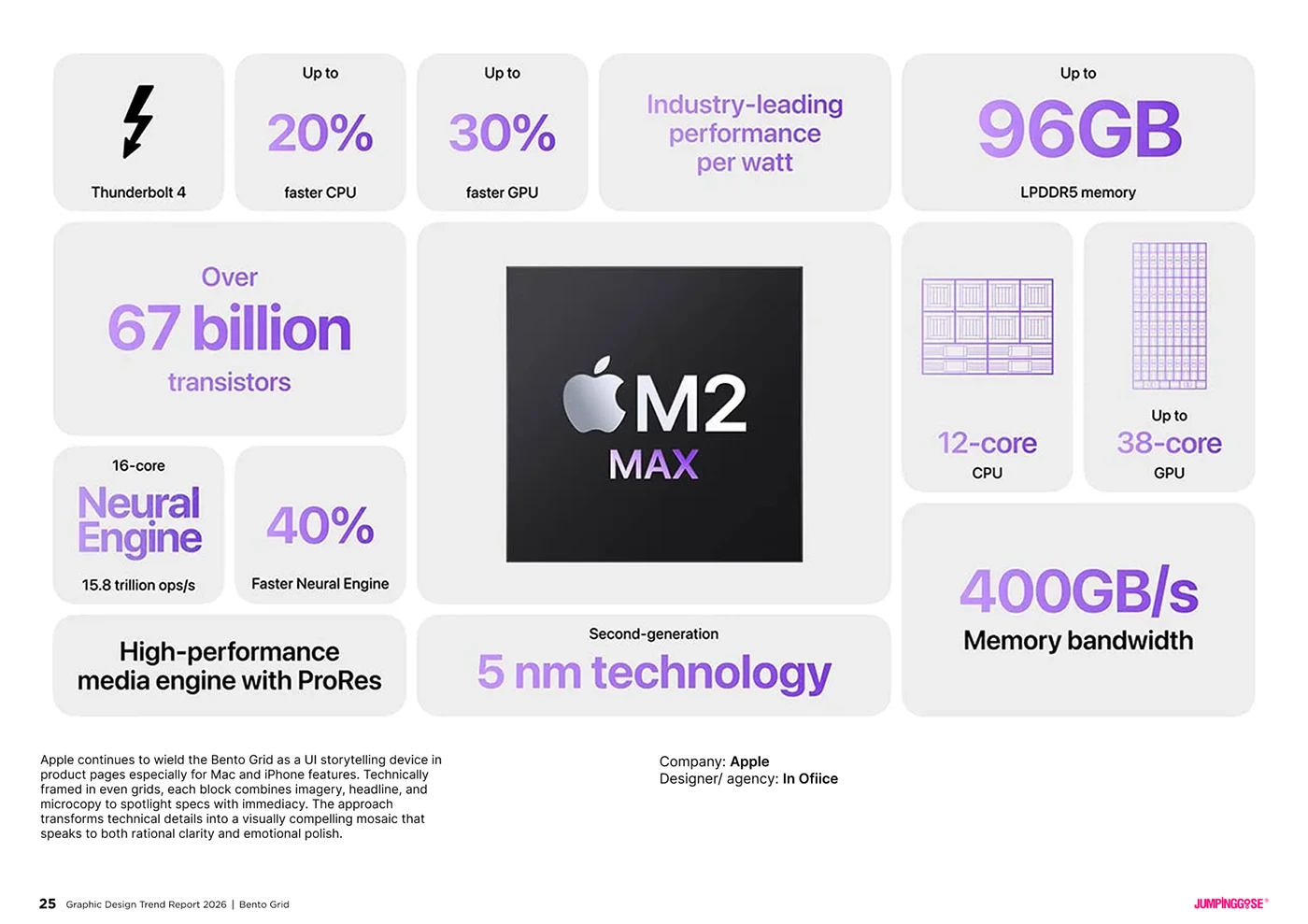
4. Bento Grid Layouts
Bento-style layouts reflect a growing preference for modular clarity. Content is compartmentalised into balanced sections that feel structured without being rigid. These grids are especially effective in digital environments, offering flexibility while maintaining visual order across devices and formats.
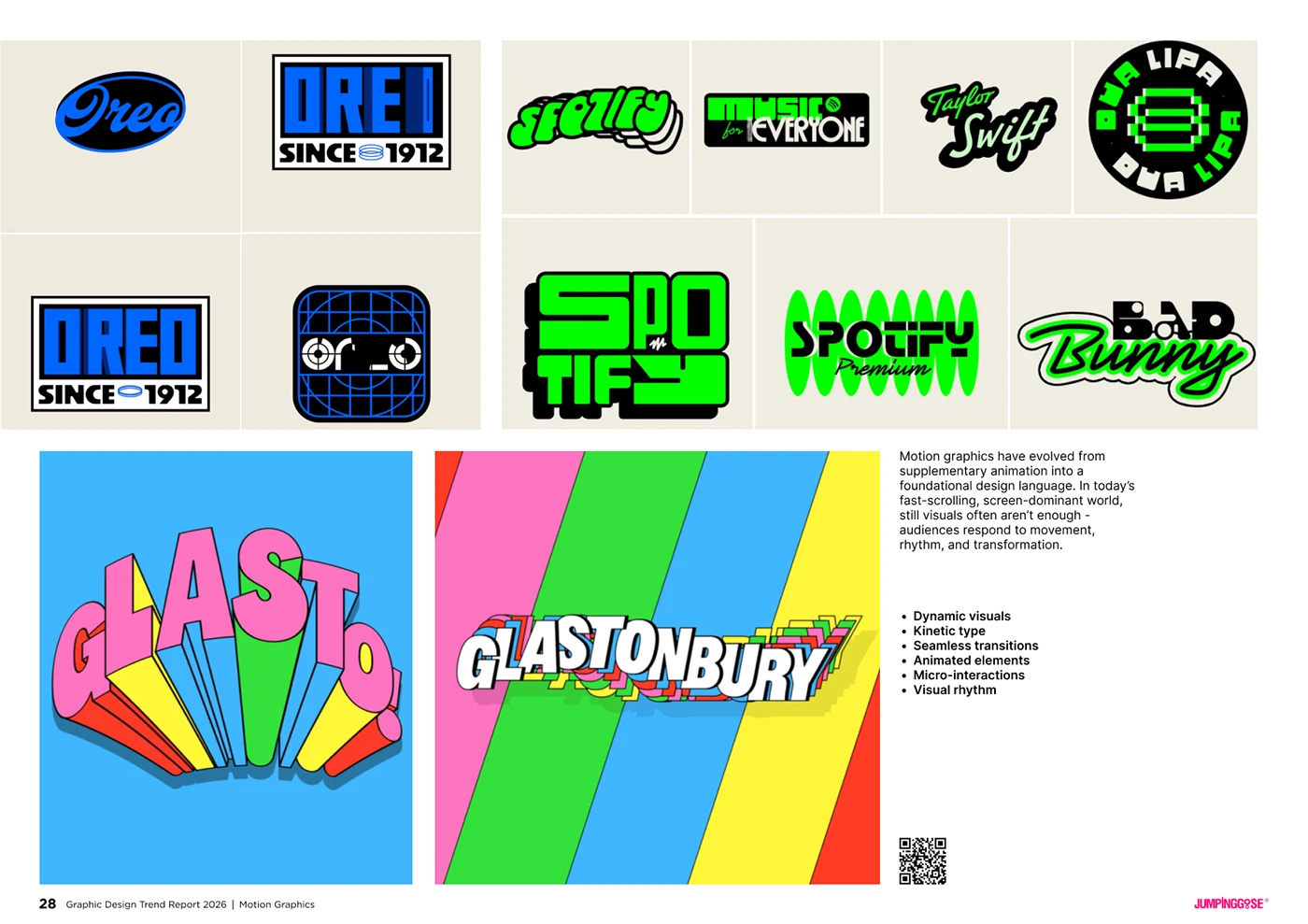
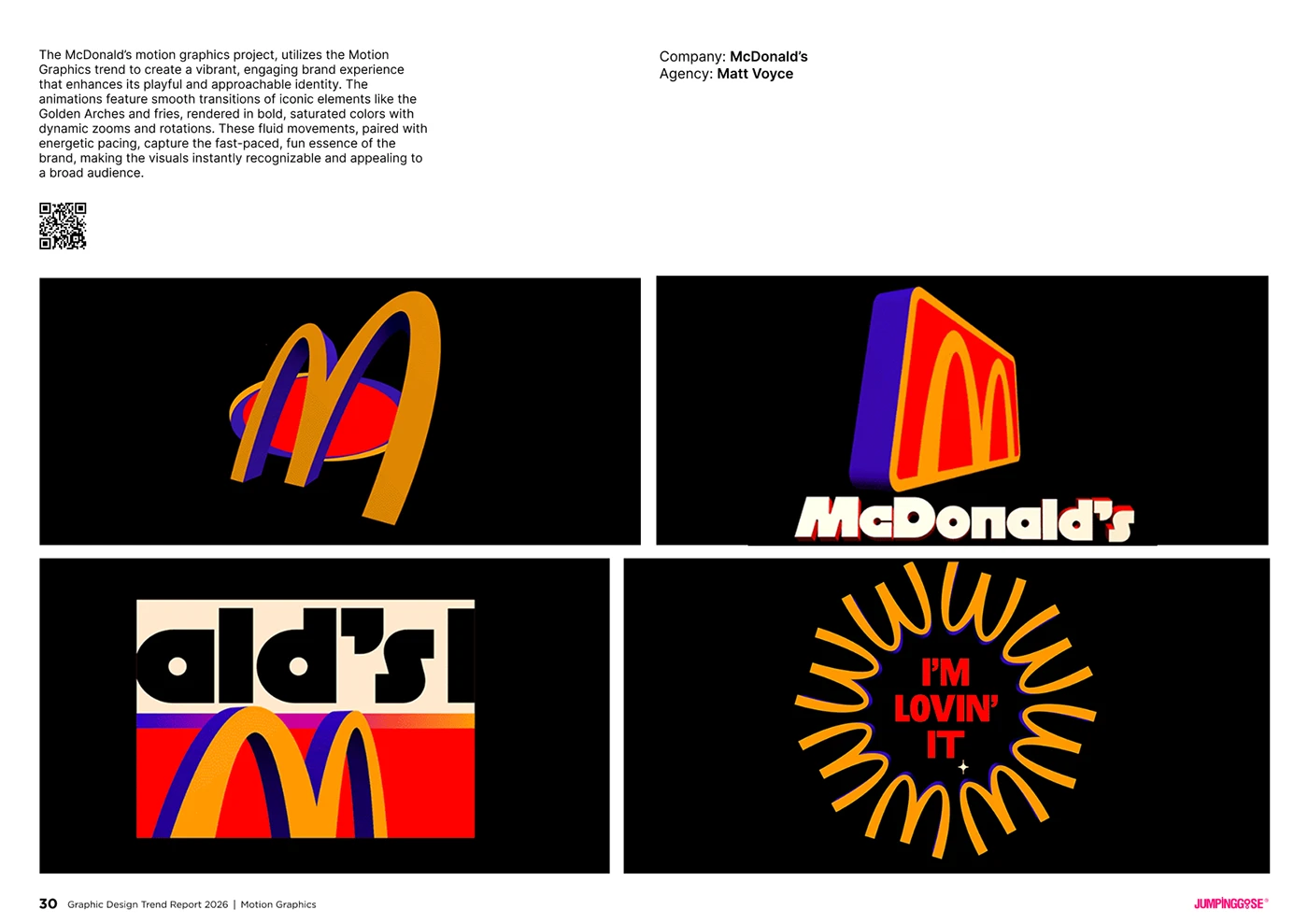
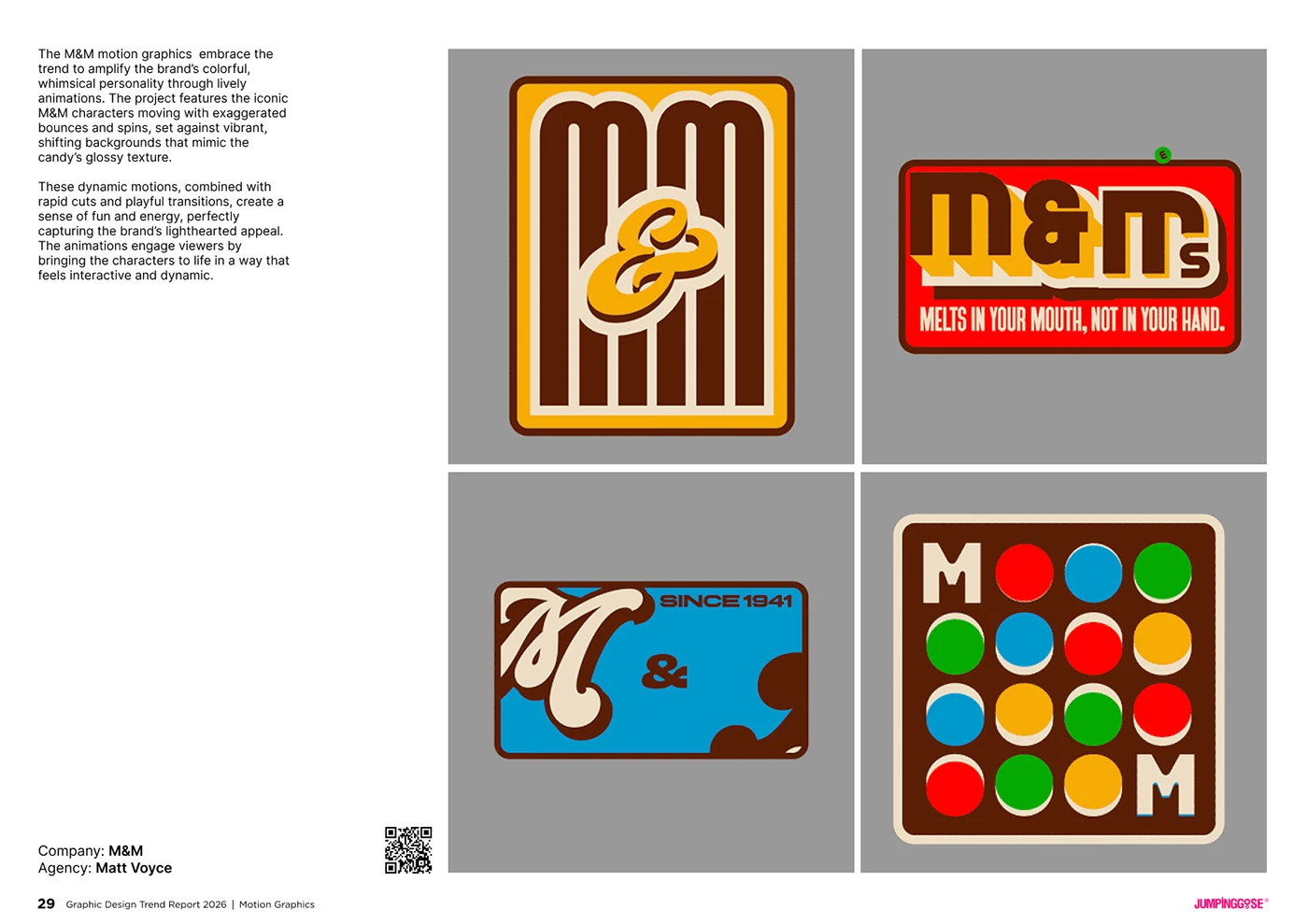
5. Motion-Led Branding
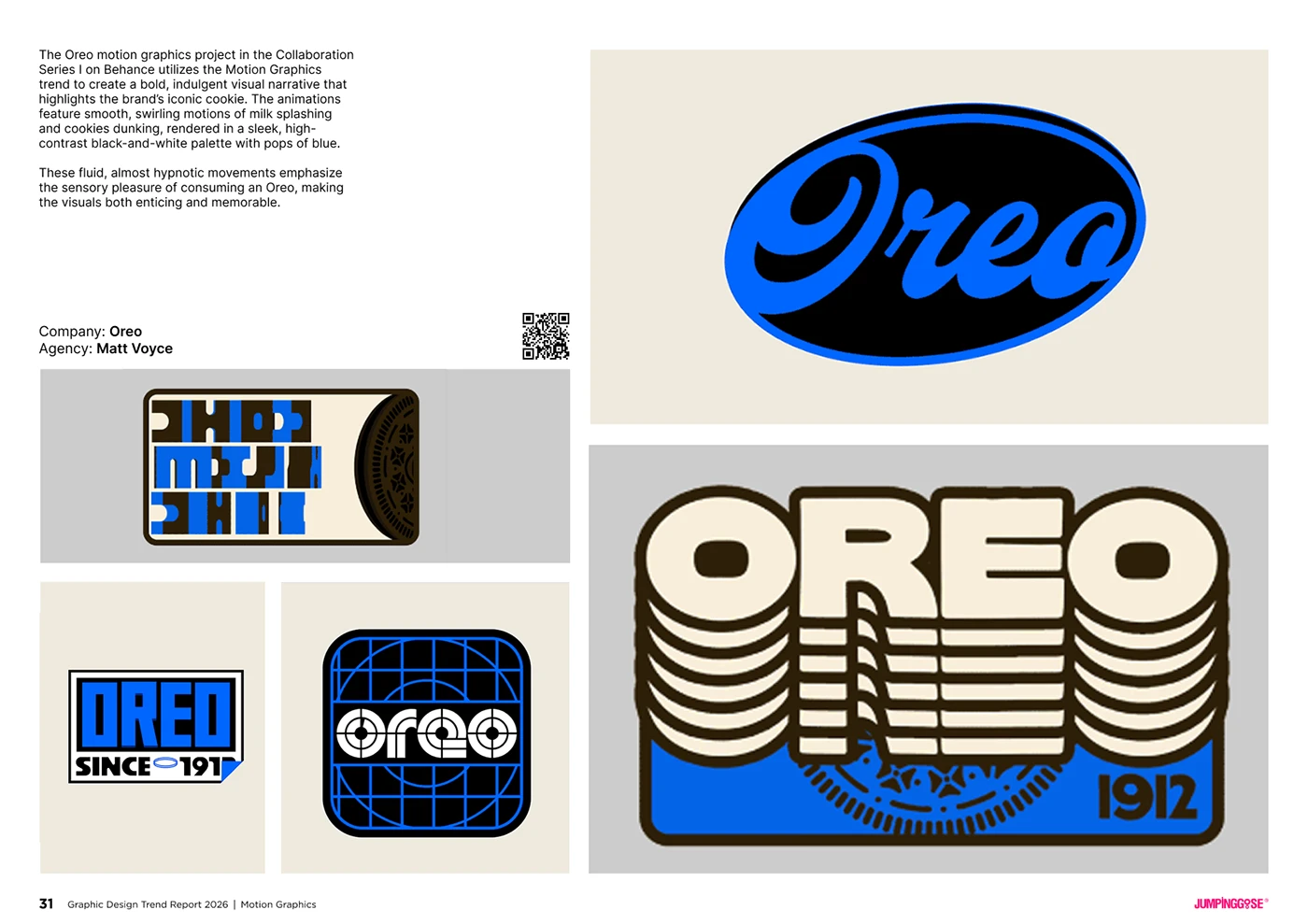
Motion has become intrinsic to brand identity. Logos, typography, and graphic systems are now conceived with movement in mind, allowing brands to communicate rhythm, personality, and responsiveness. Even minimal animation contributes to a sense of presence in increasingly screen-based interactions.
6. Mixed-Media Design
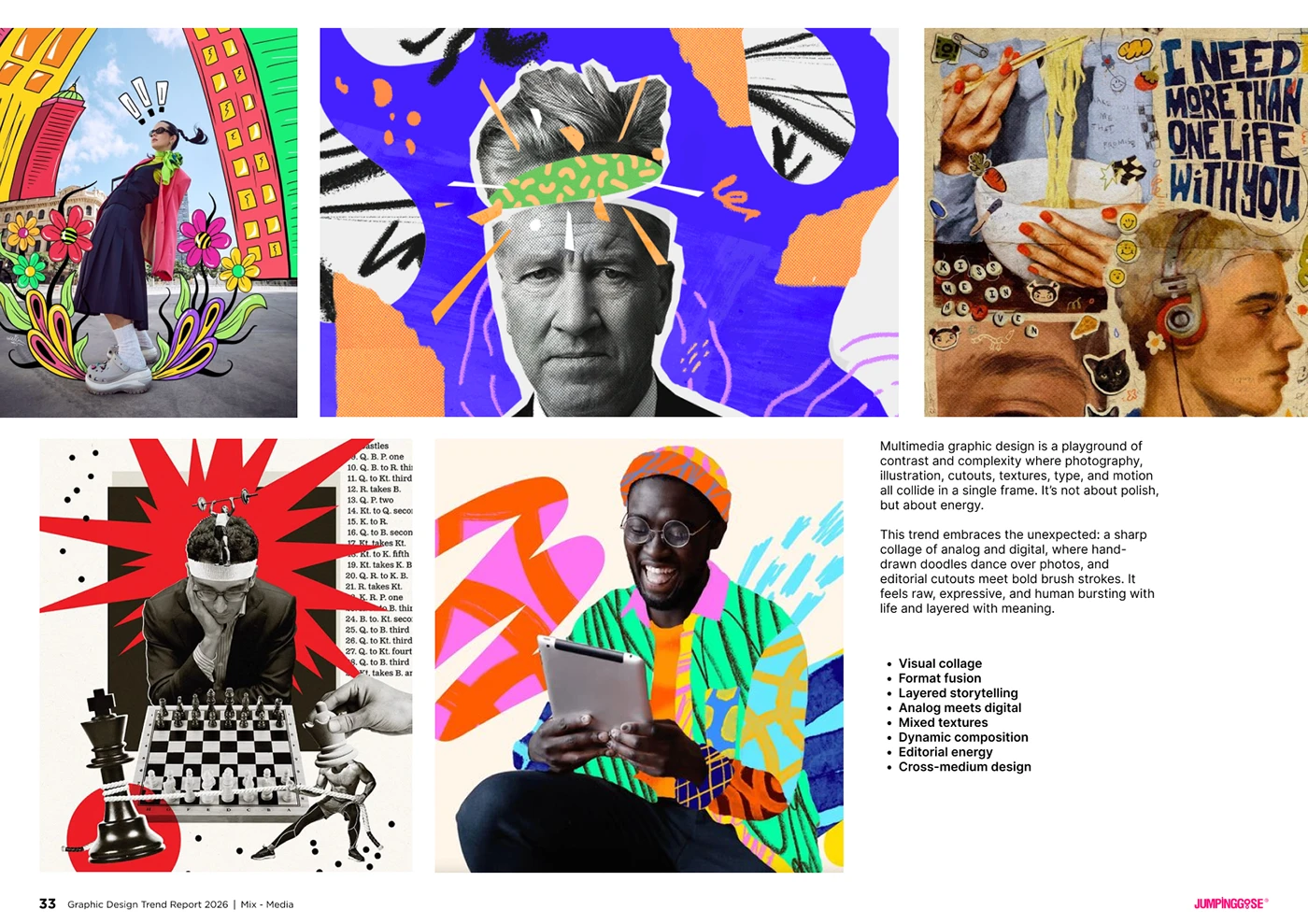
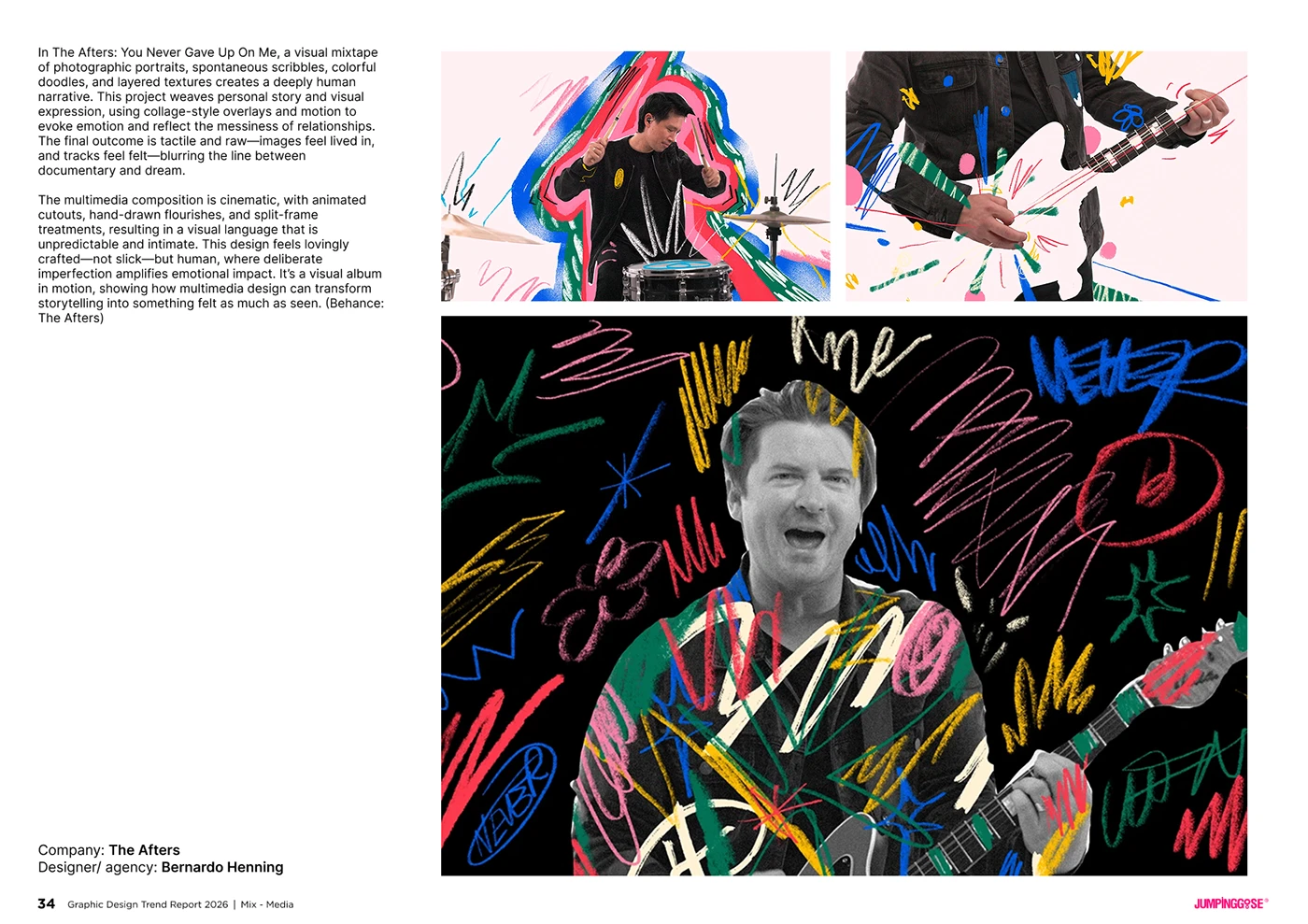
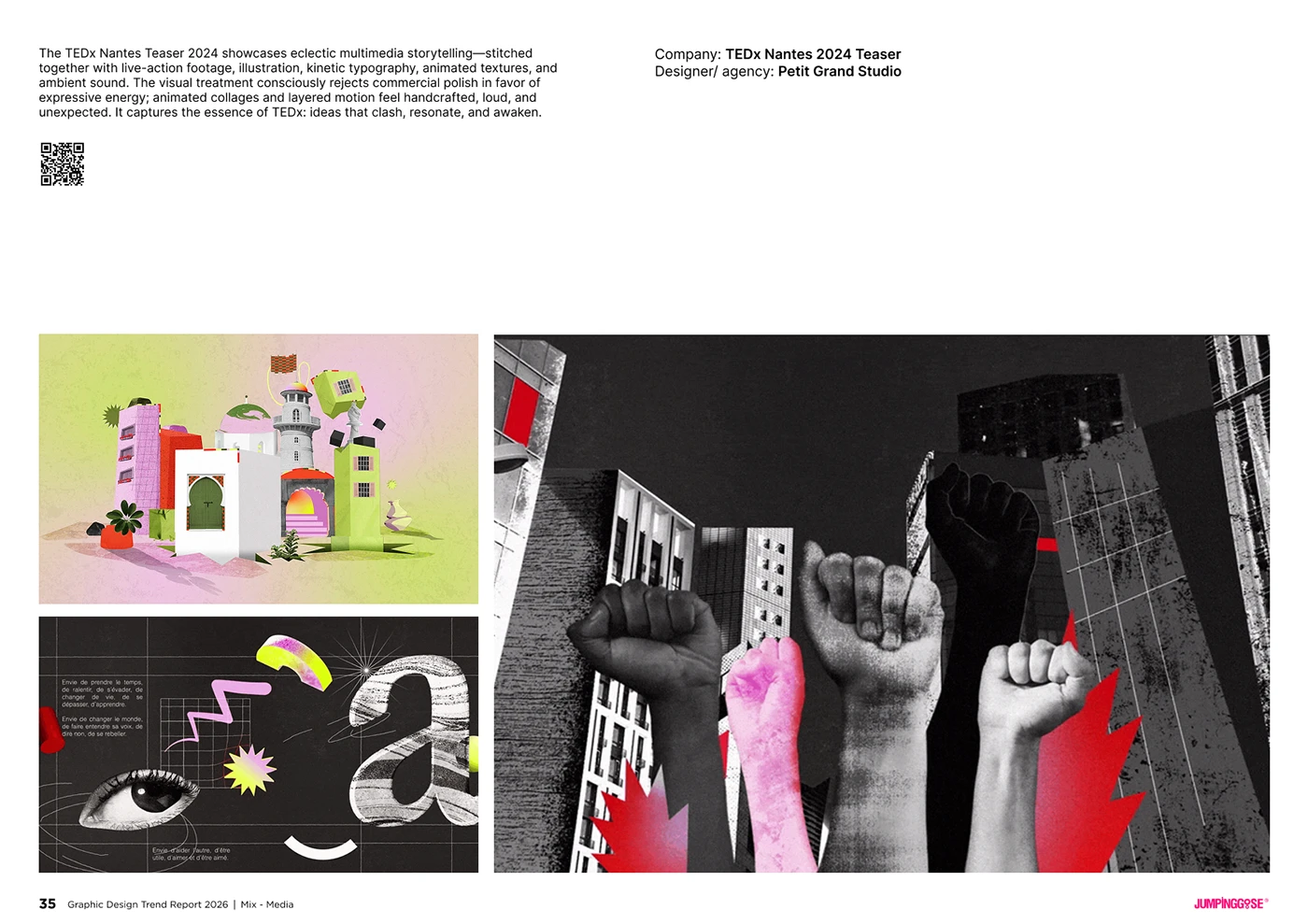
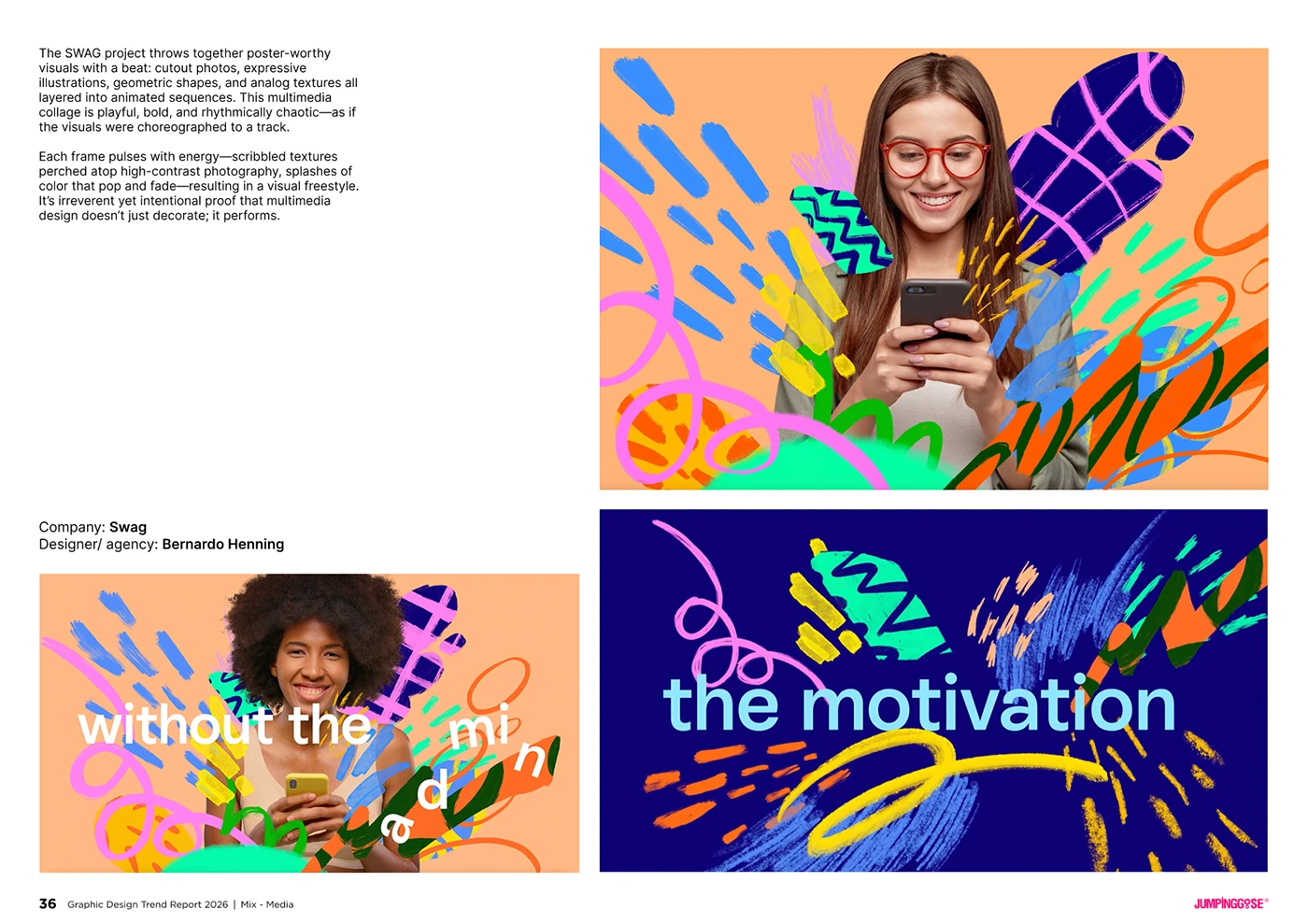
Layering is central to this trend. Photography, illustration, typography, and texture coexist within single compositions, creating visuals that feel rich and dimensional. Mixed-media design reflects a broader rejection of flatness, both visually and conceptually, in favour of complexity and nuance.
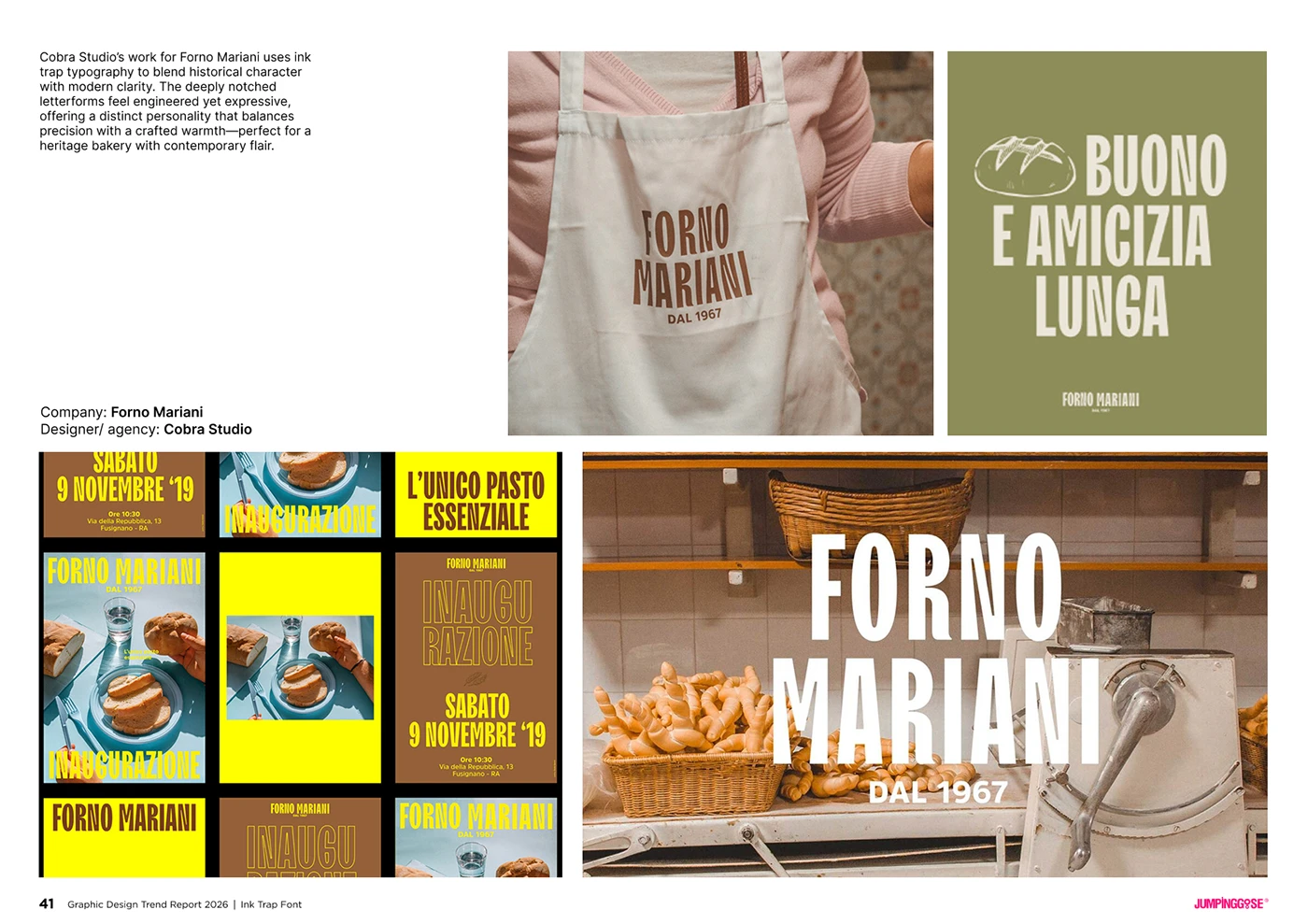
7. Ink Trap Fonts
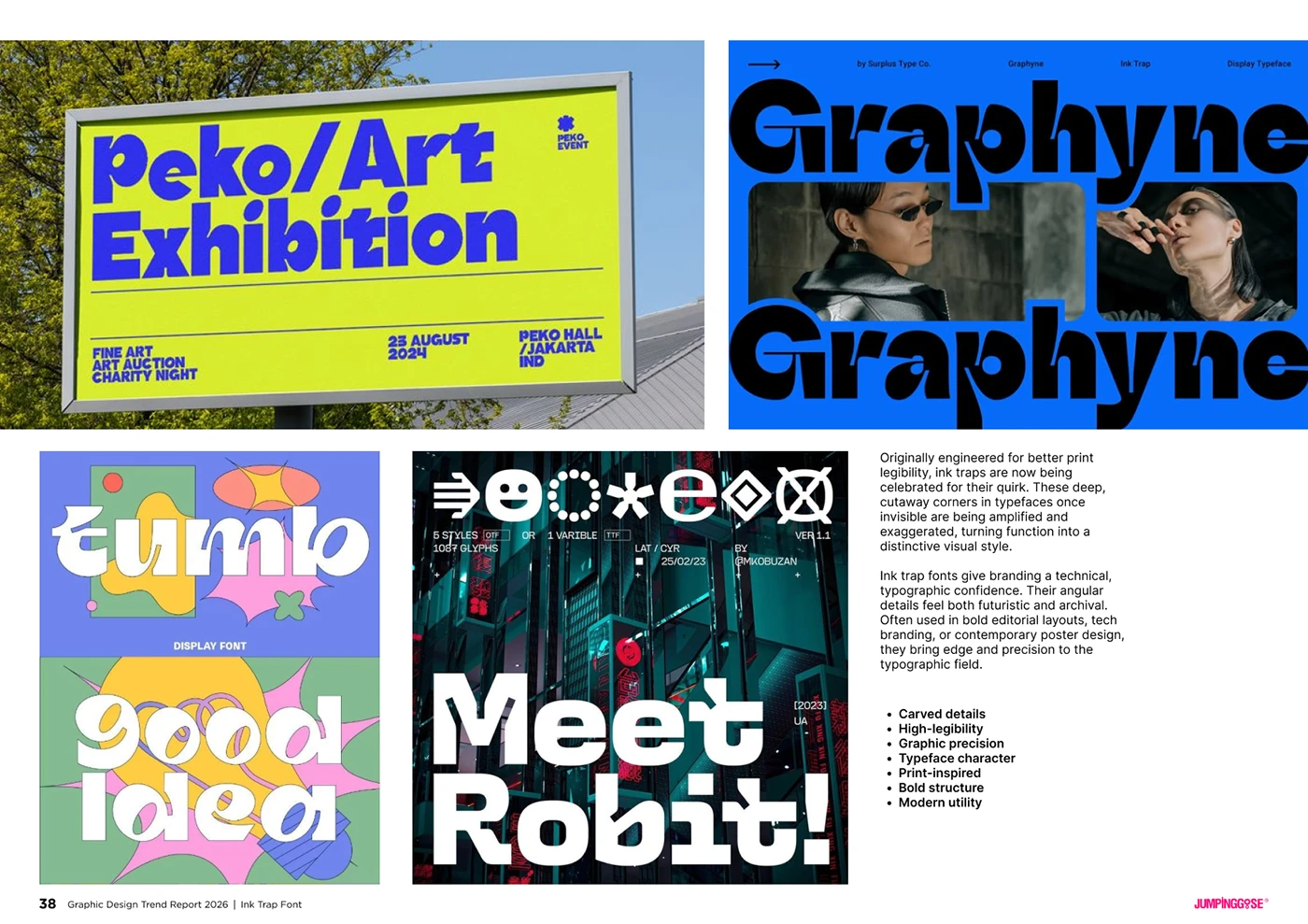
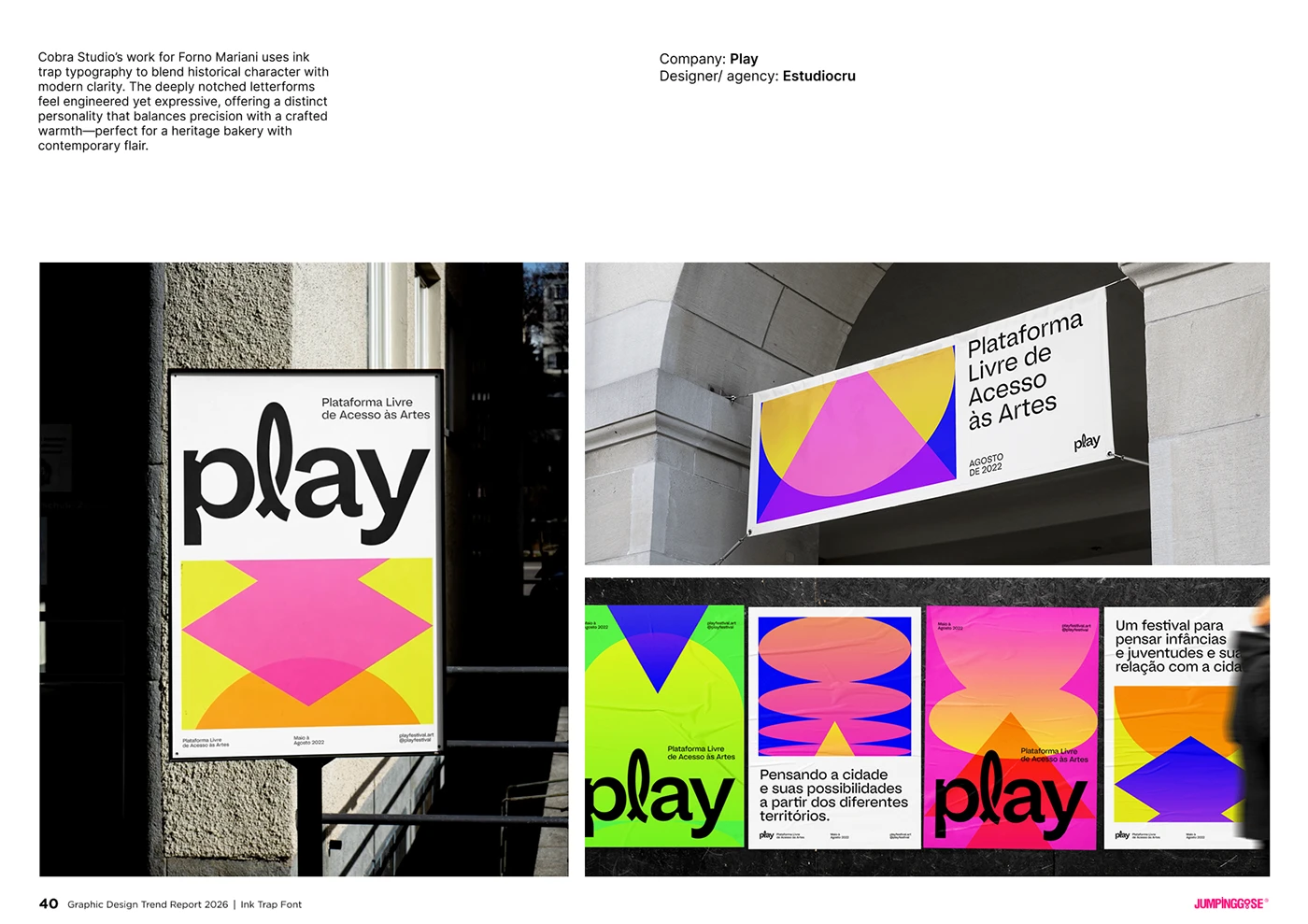
Originally a functional solution for print, ink traps have evolved into a stylistic choice. Designers are amplifying these details to introduce rhythm, character, and subtle disruption into typographic systems. The result is typography that feels engineered yet expressive.
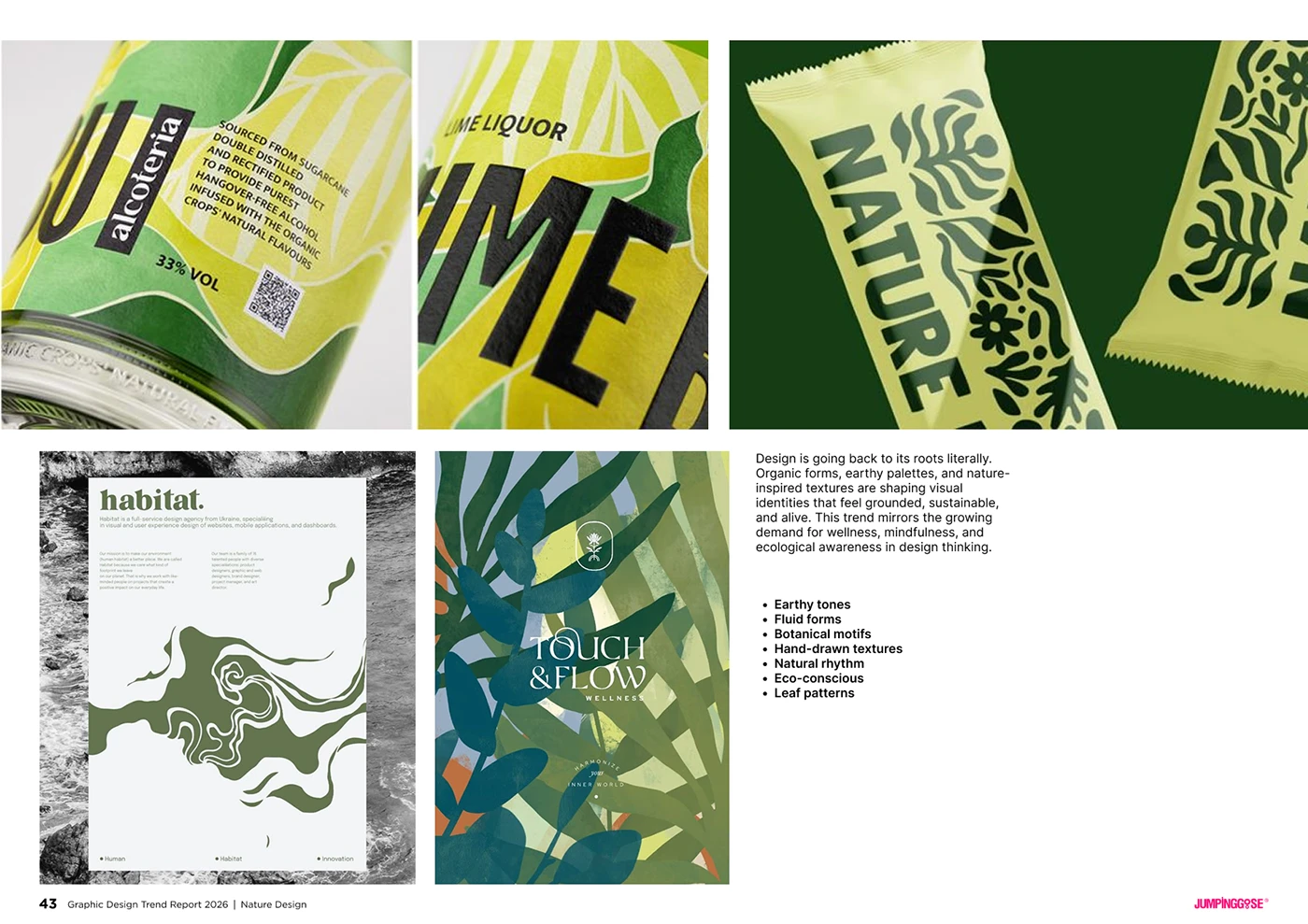
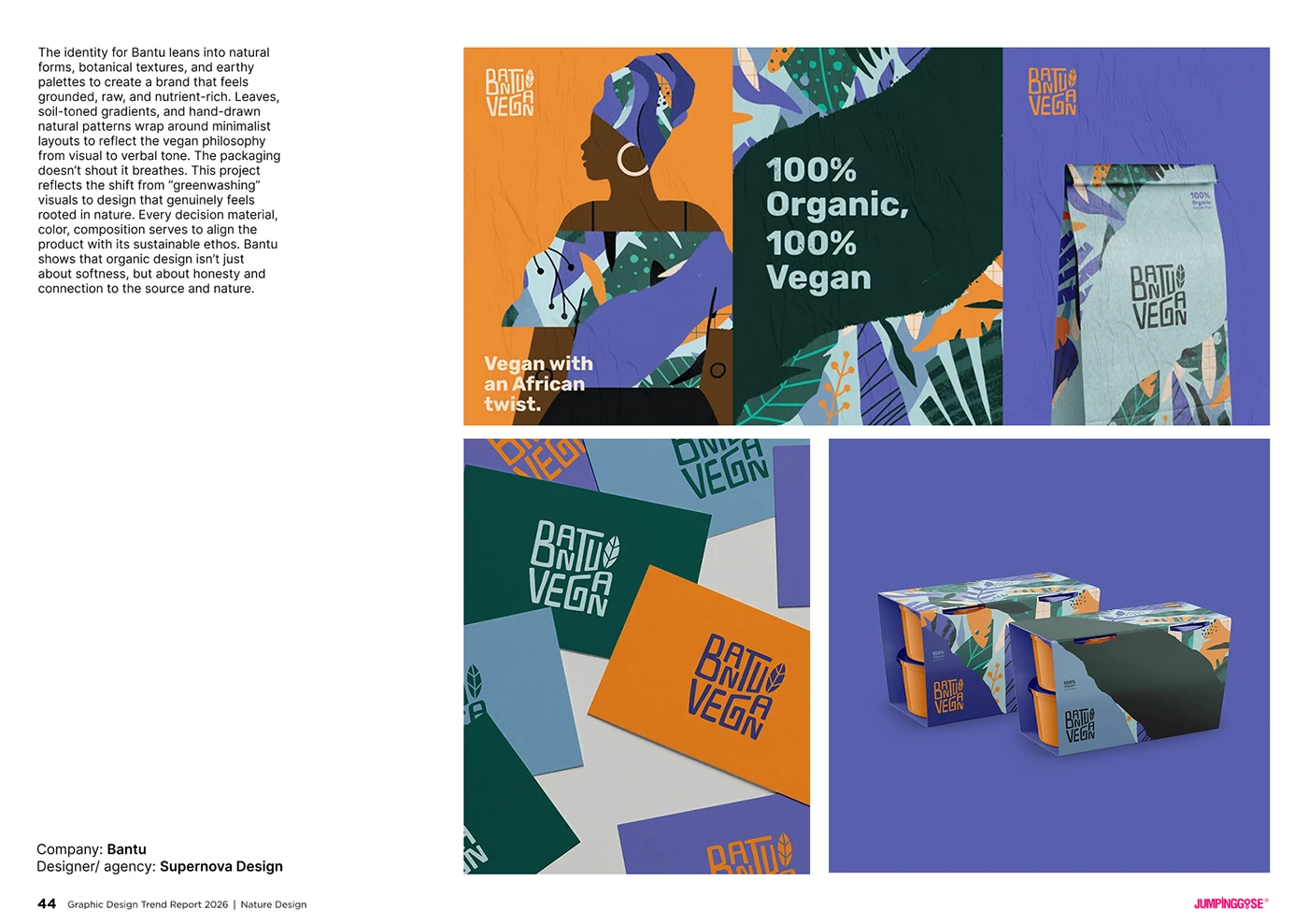
8. Nature-Inspired Design
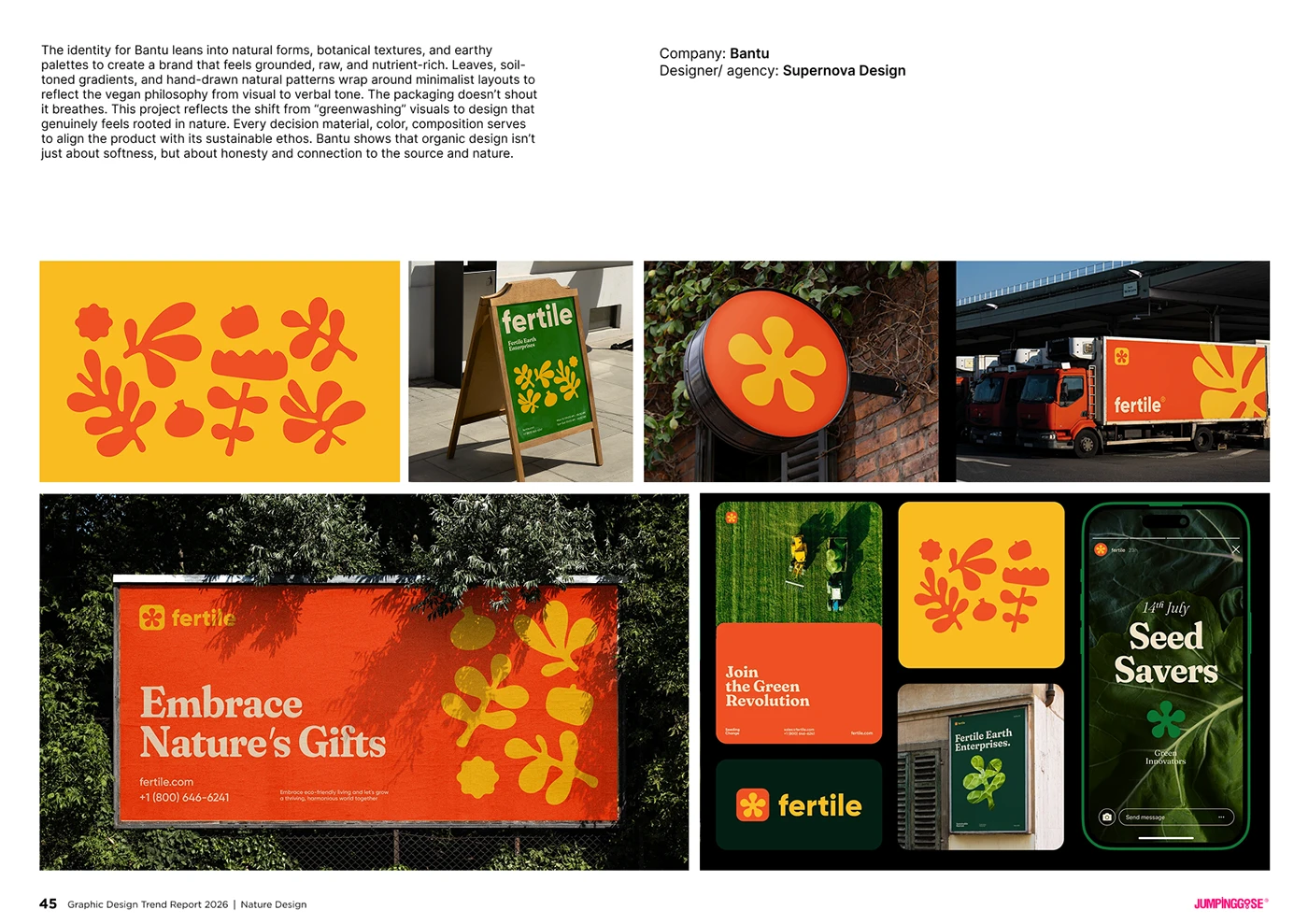
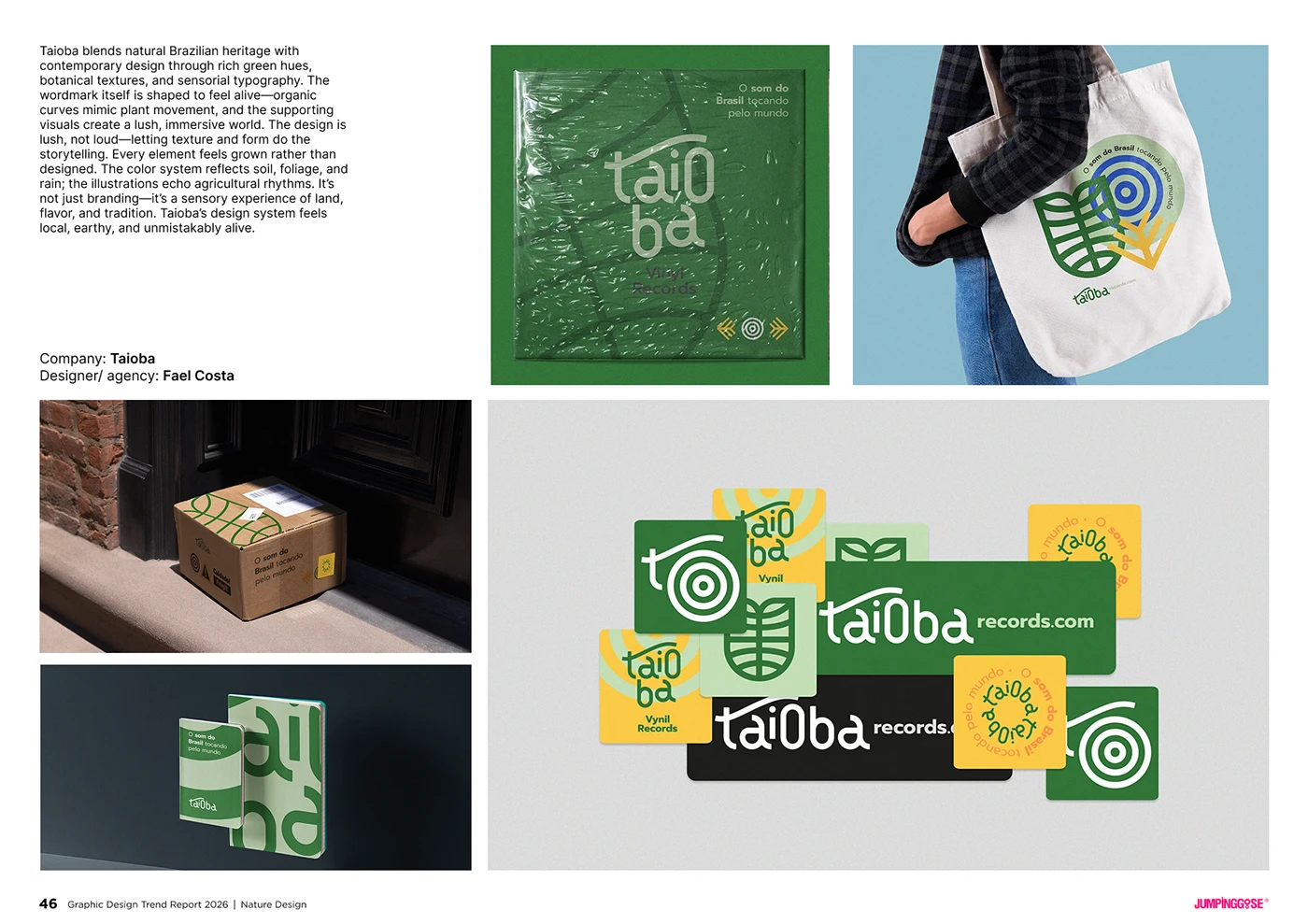
Nature-inspired design in 2026 feels grounded rather than decorative. Organic shapes, muted palettes, and tactile textures are used to convey honesty and balance. This trend often resists overt symbolism, focusing instead on atmosphere and materiality.
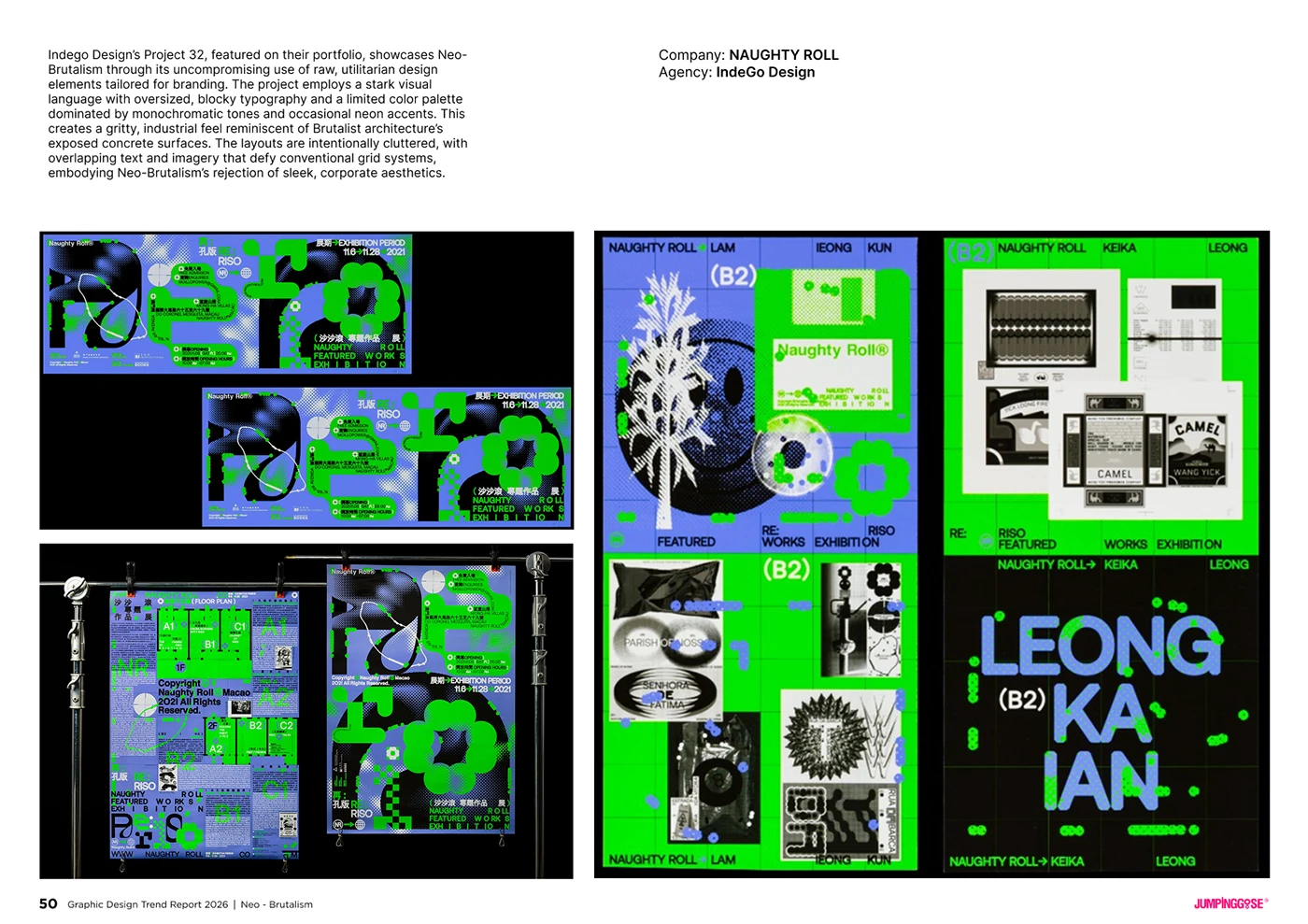
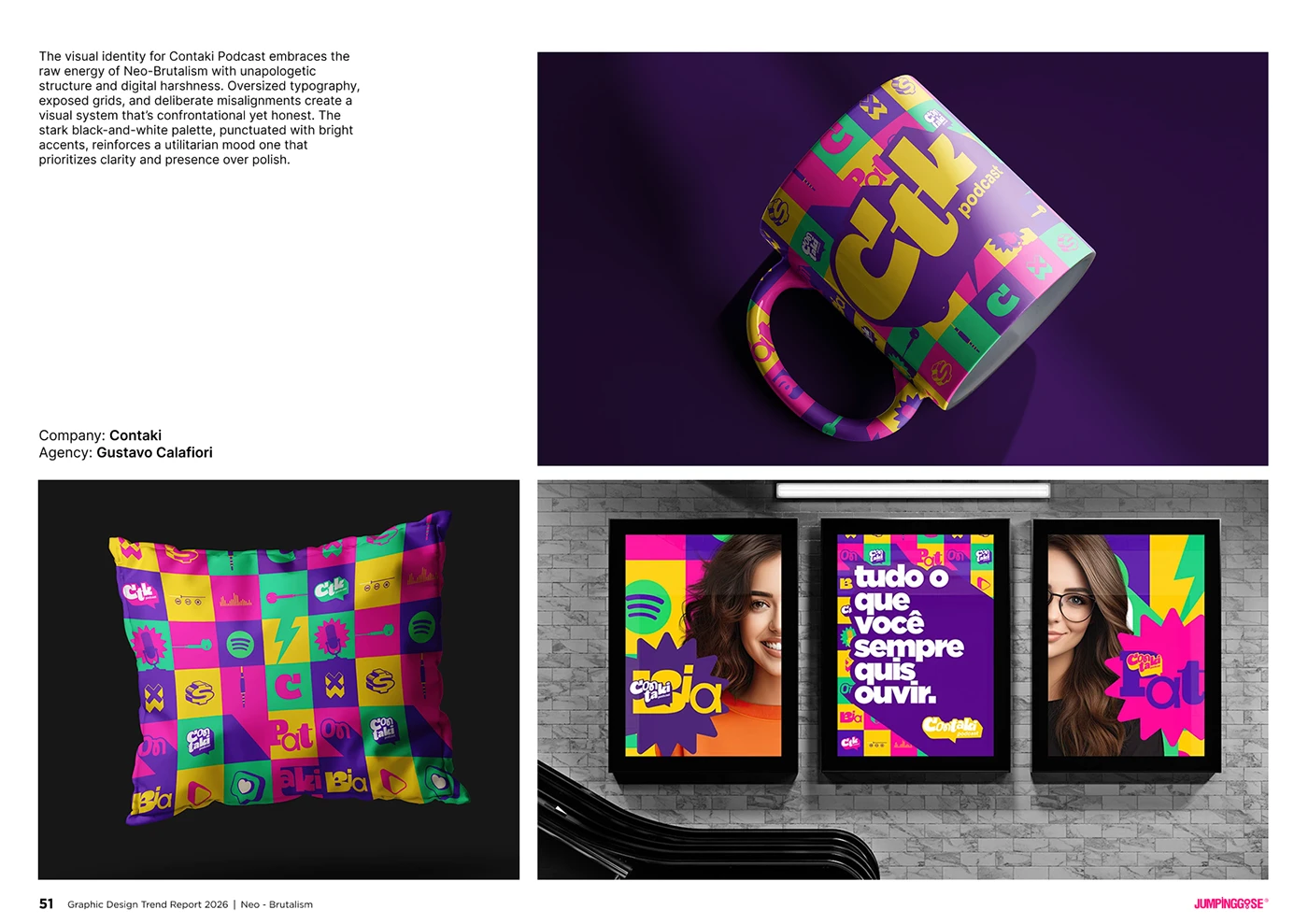
9. Neo-Brutalism
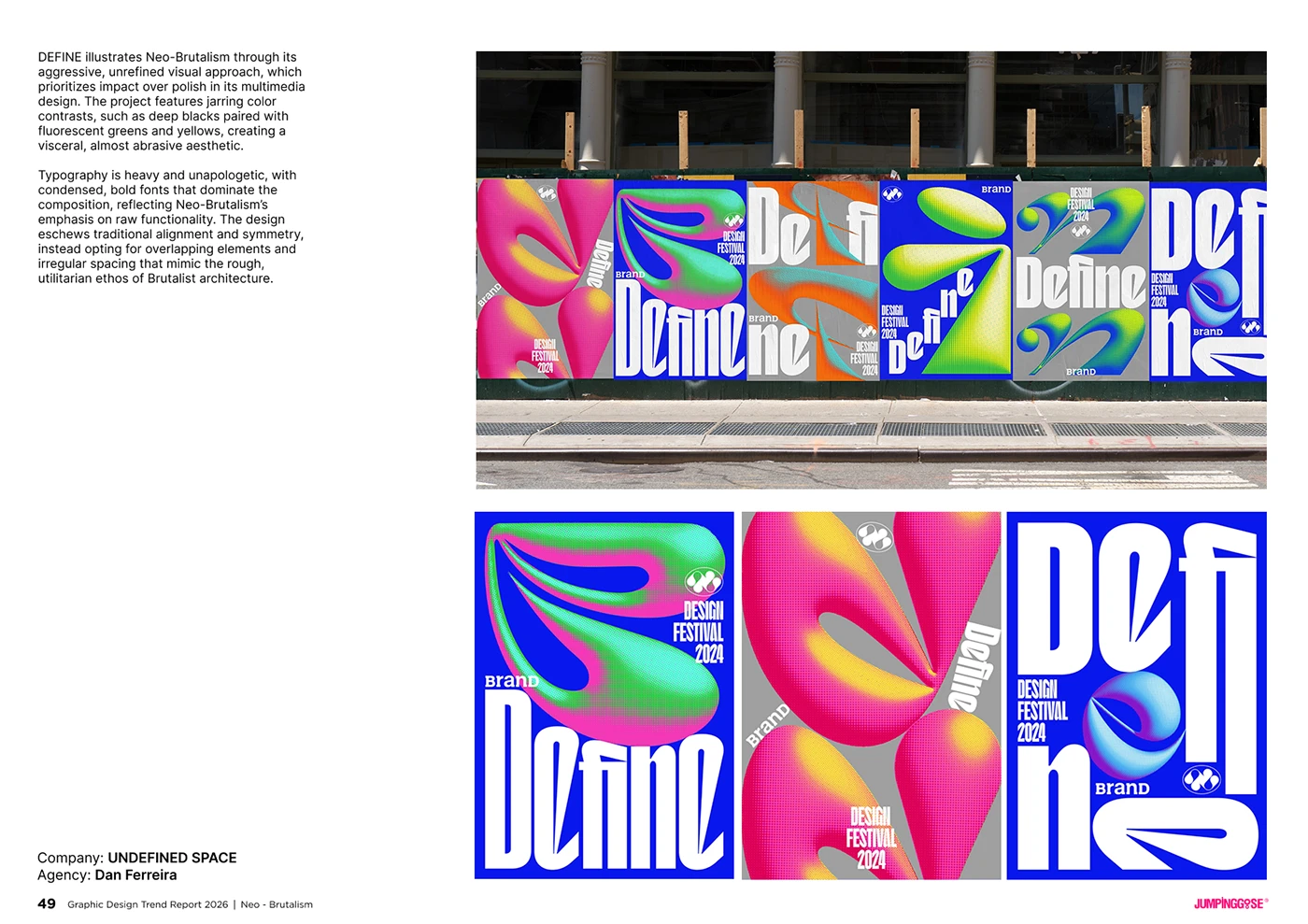
Neo-brutalism continues to assert itself through raw layouts, oversized typography, and intentional friction. It prioritises clarity and impact over refinement, often creating visuals that feel confrontational yet confident. This aesthetic thrives in spaces where bold positioning is essential.
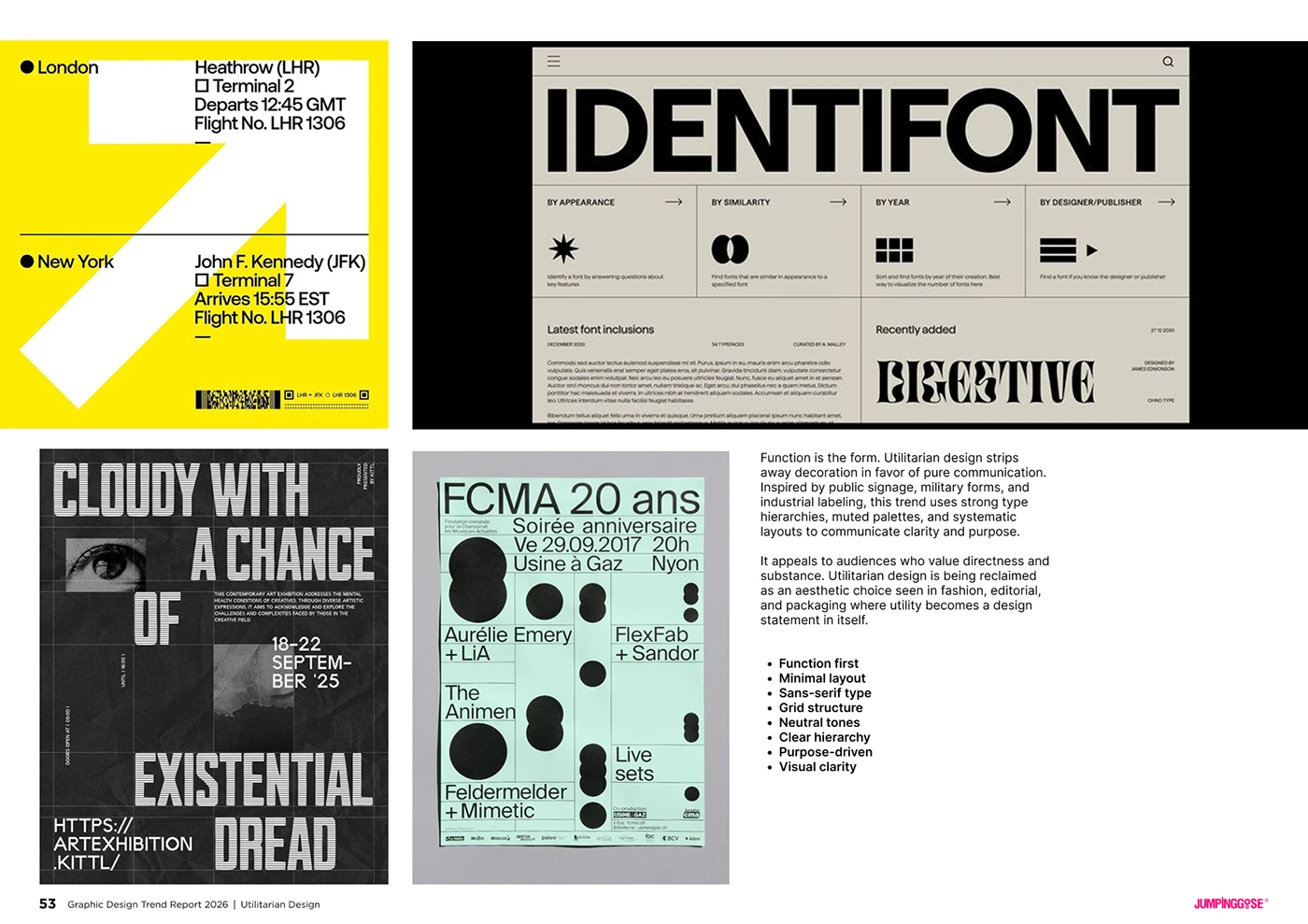
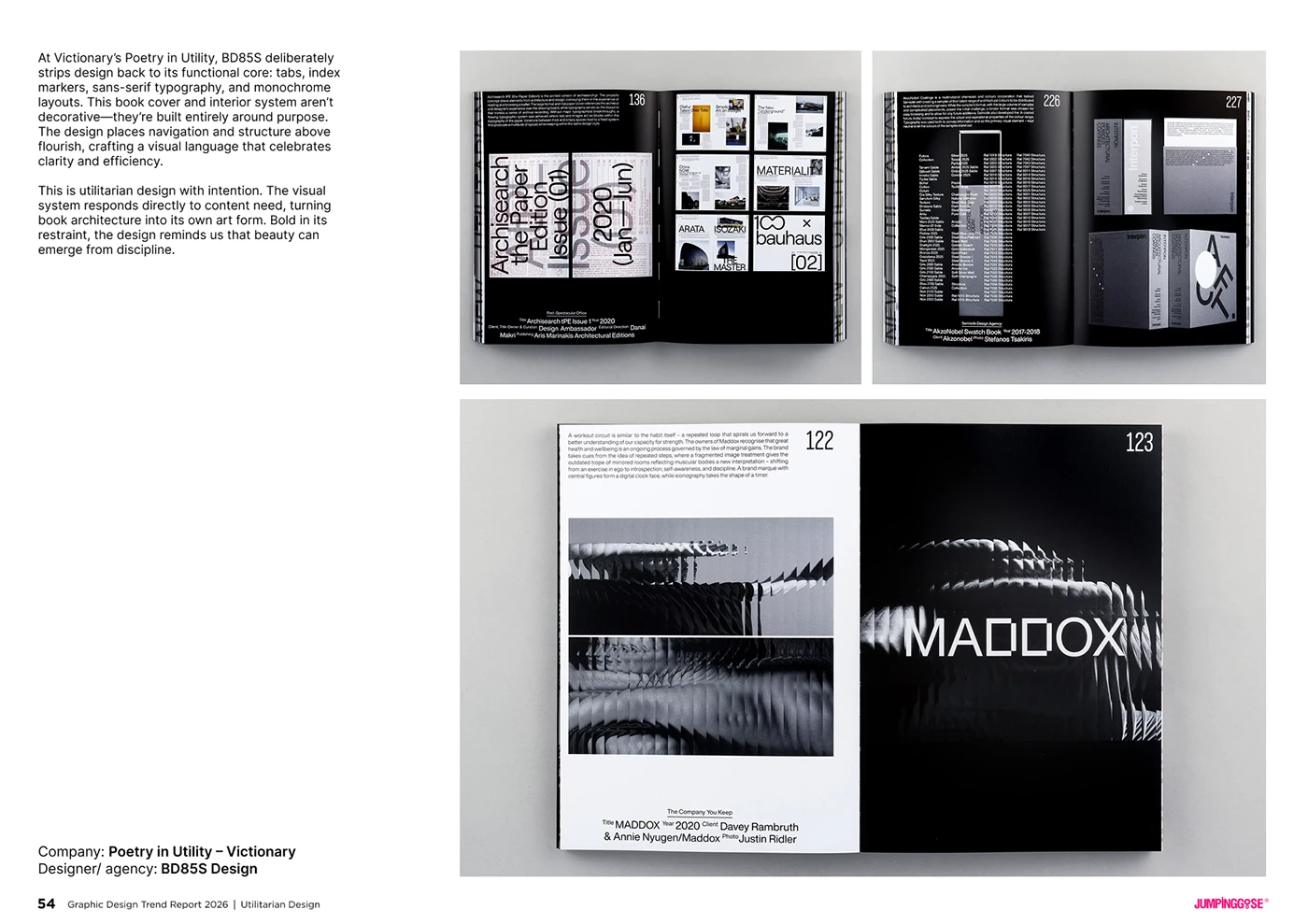
10. Utilitarian Design
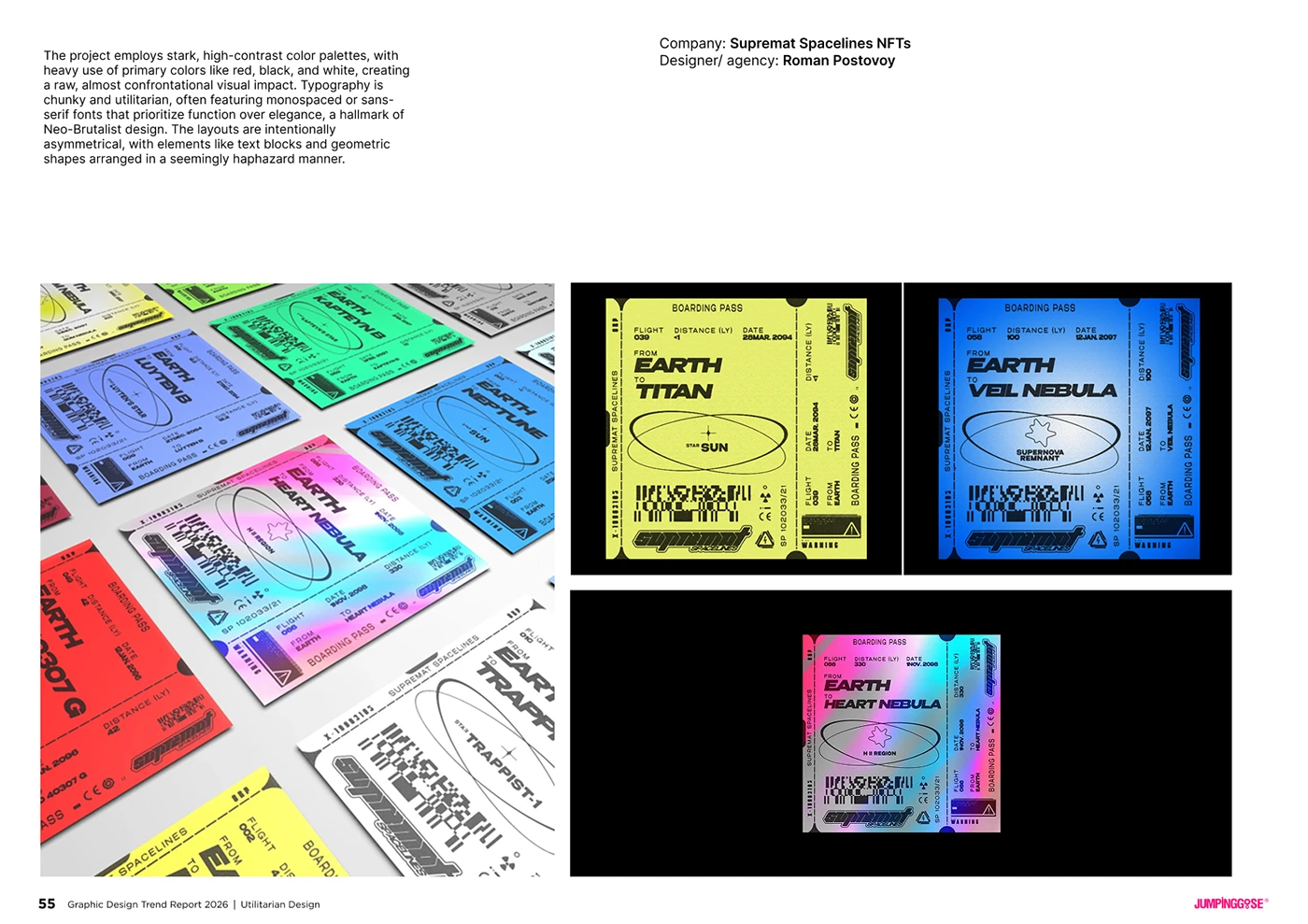
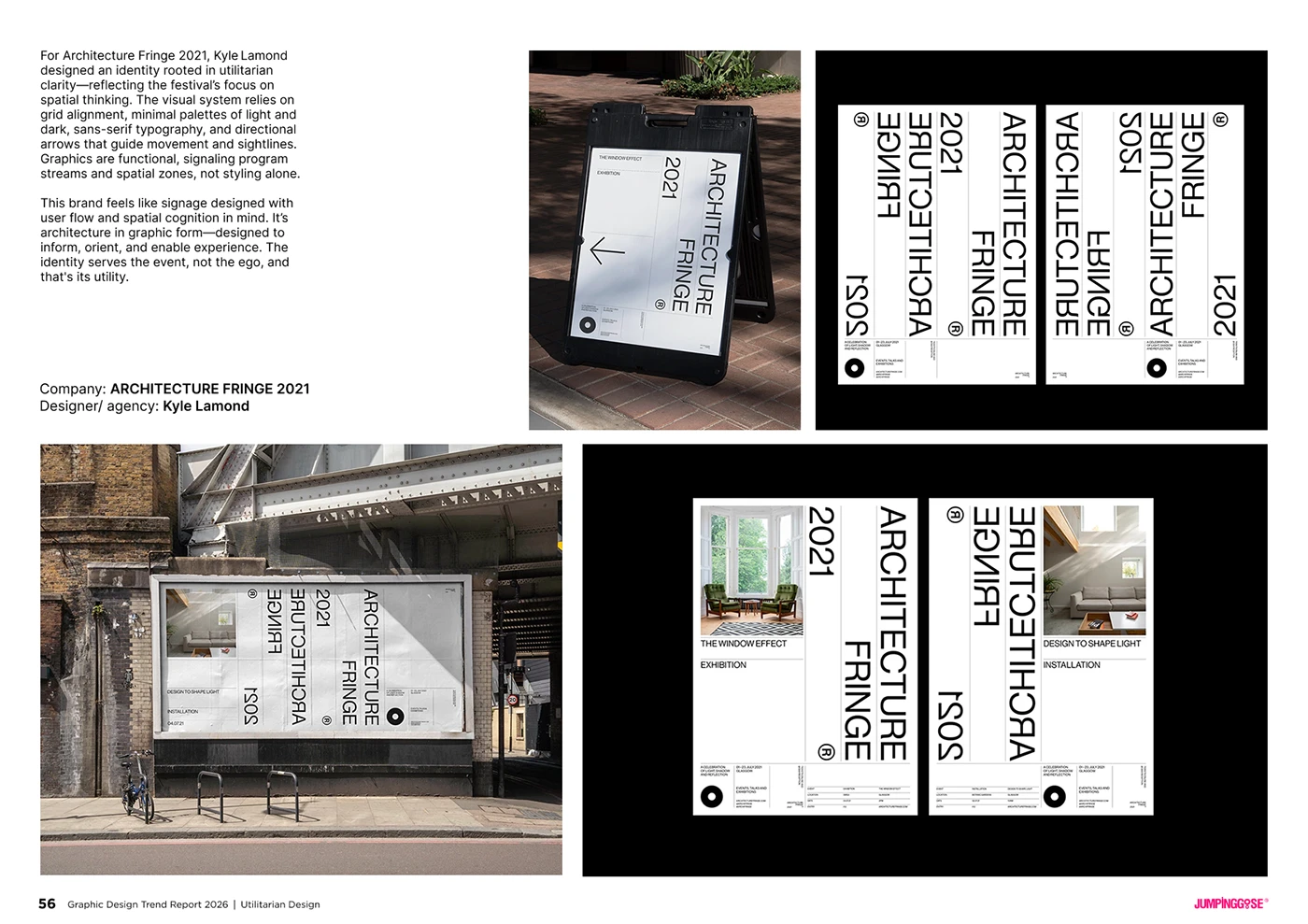
Here, function defines form. Influenced by signage systems, industrial graphics, and wayfinding, utilitarian design values hierarchy, legibility, and efficiency. Its appeal lies in its refusal to over explain. Clarity becomes the visual language.
11. Pixel Art Revival
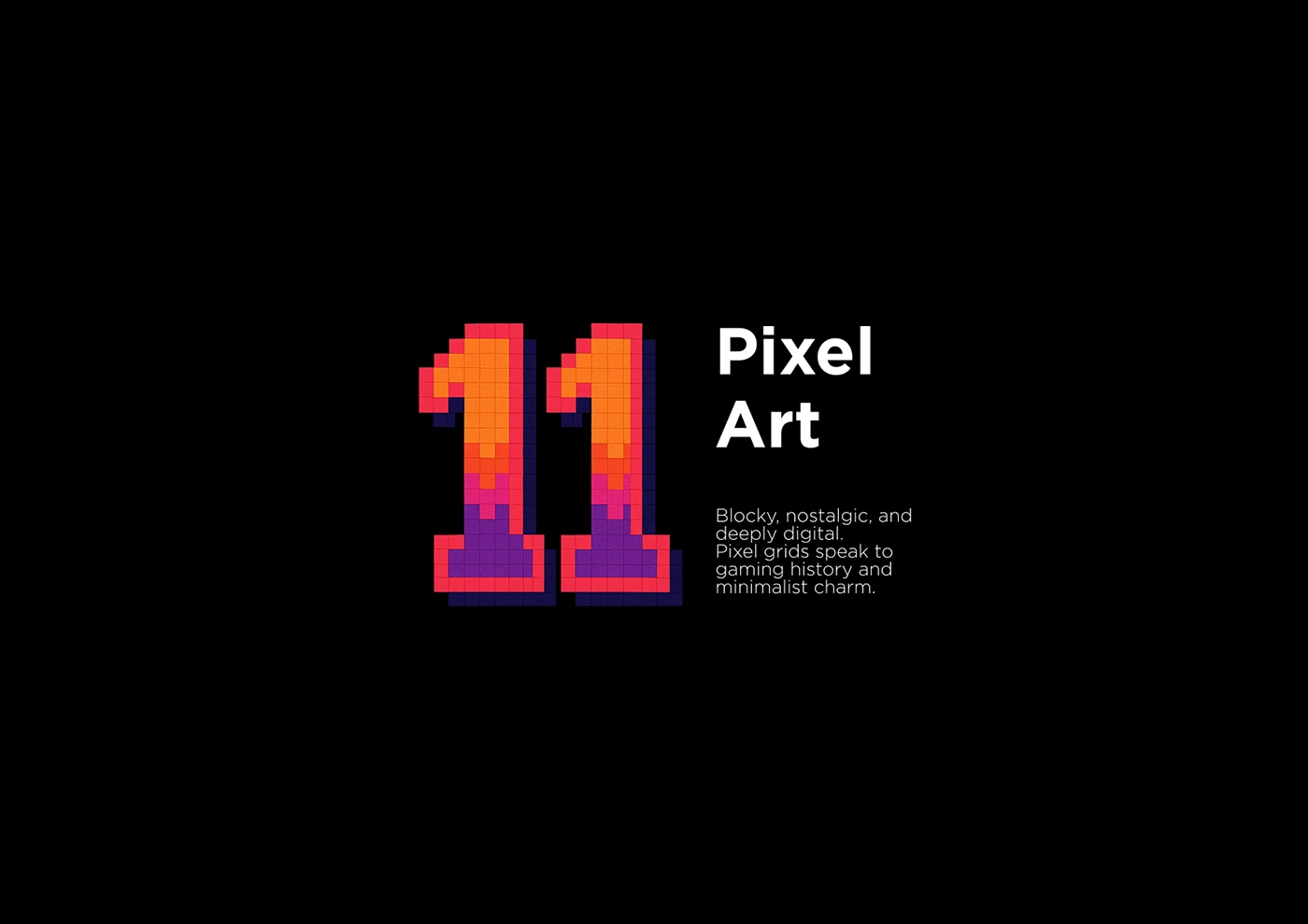
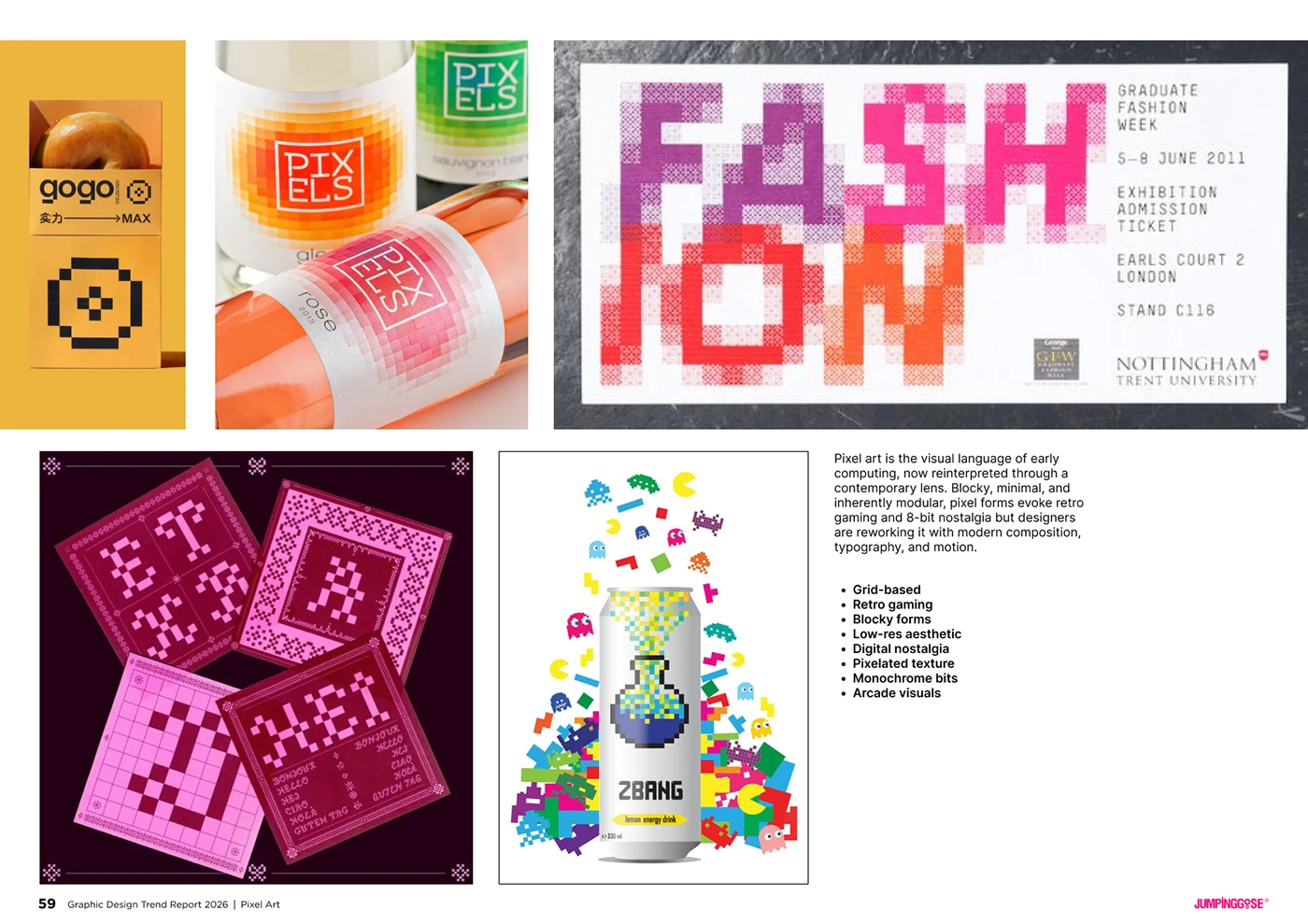
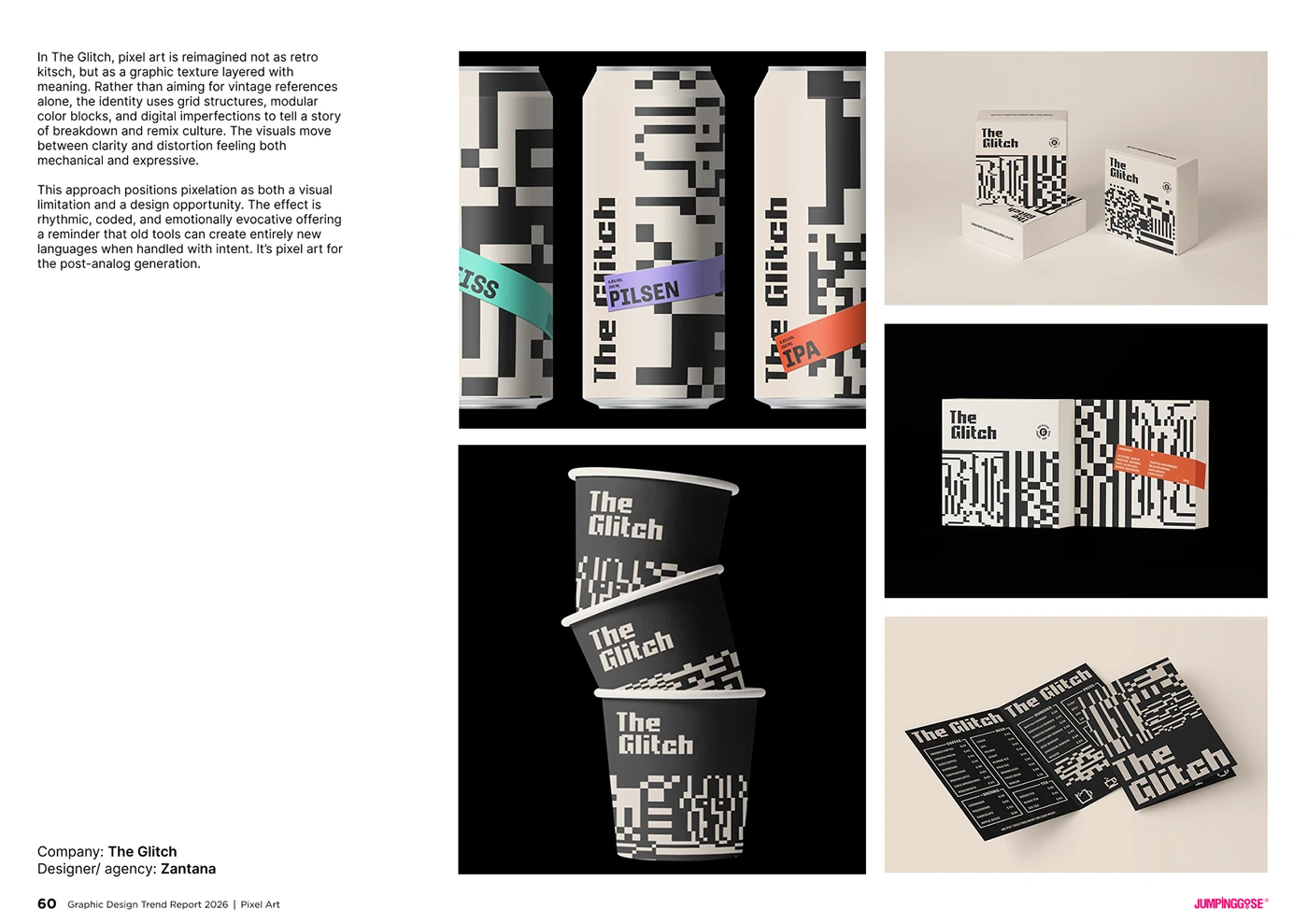
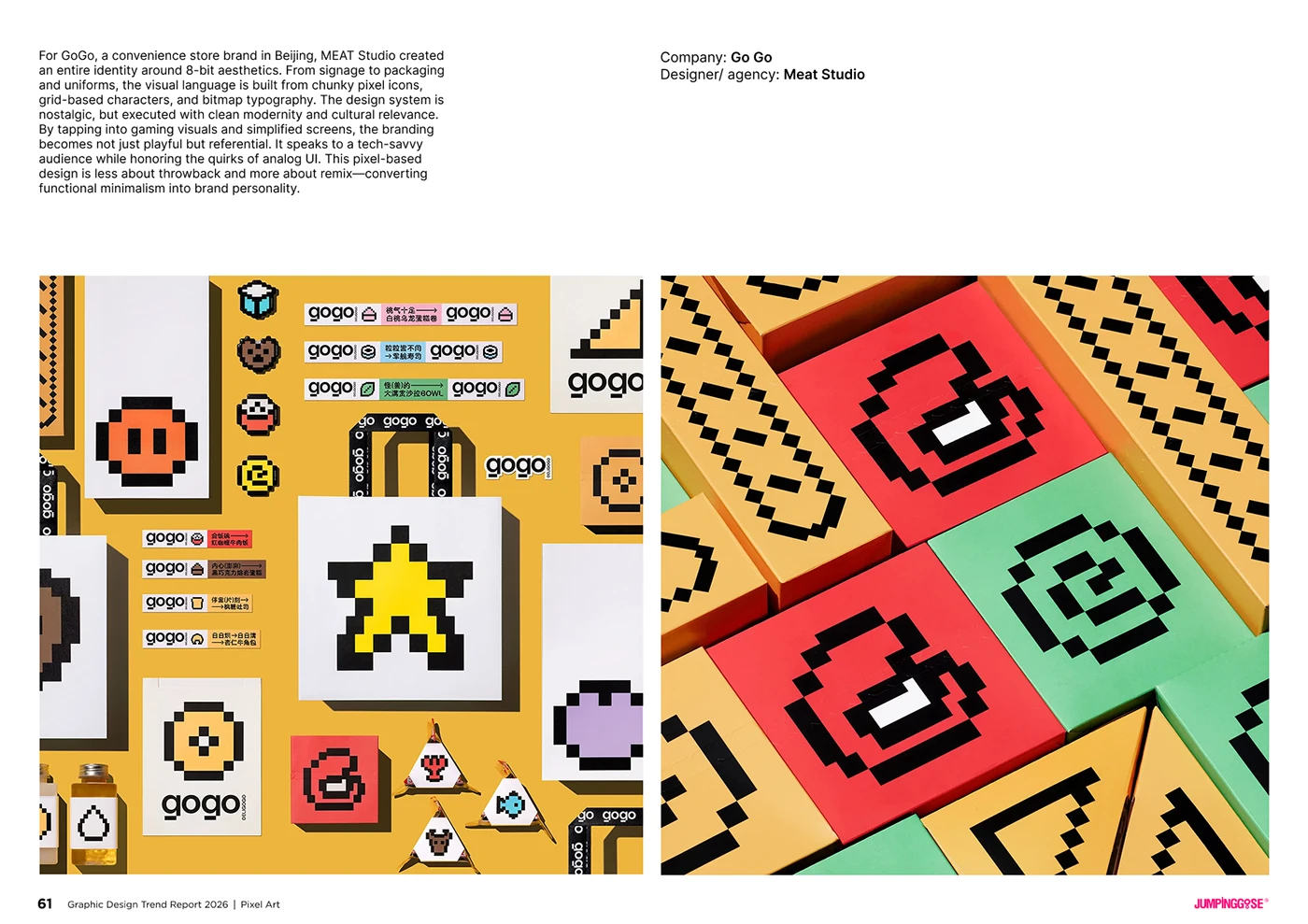
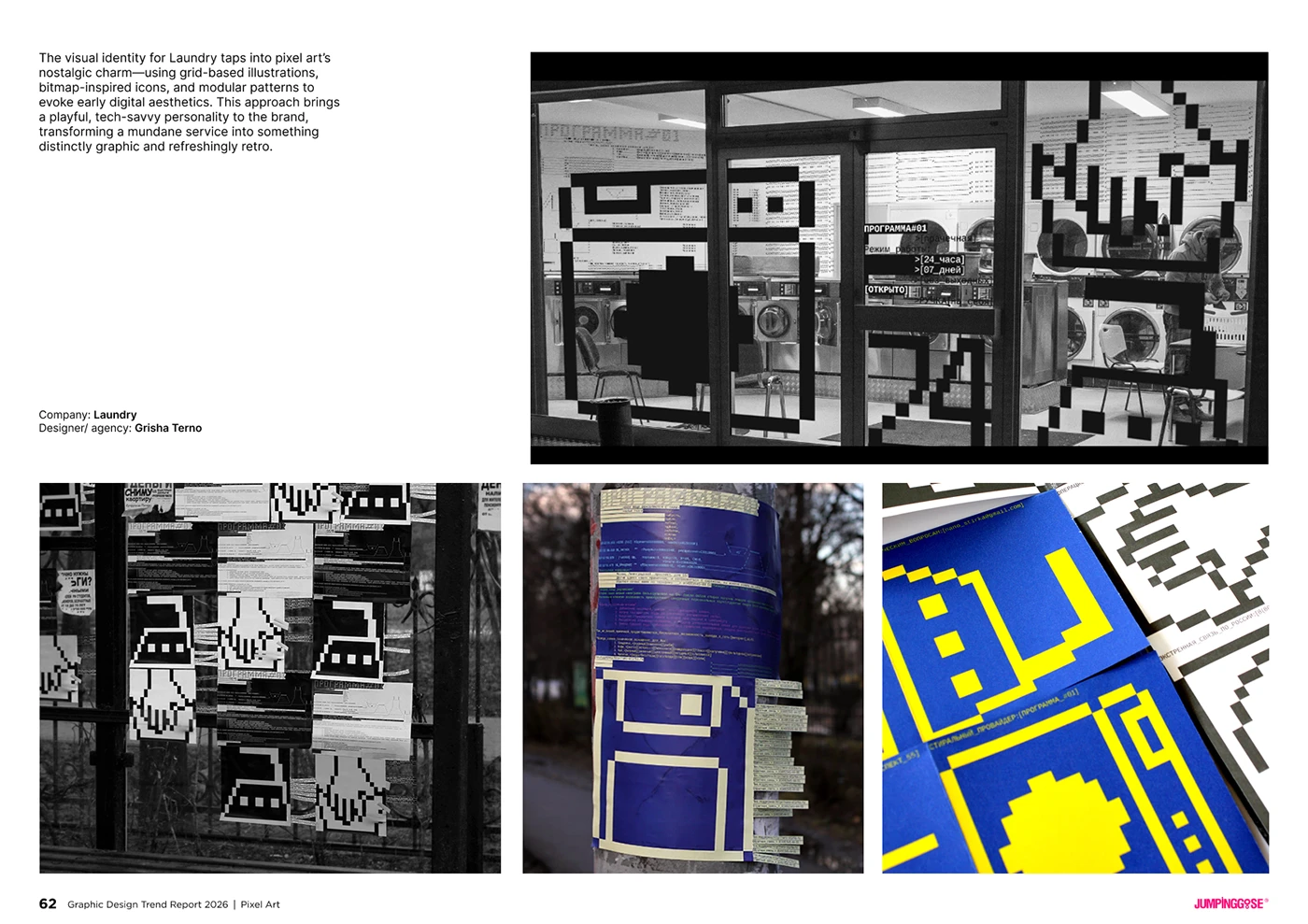
Pixel art has evolved beyond nostalgia. In 2026, it functions as a modular system, embracing grids as creative constraints. Designers use pixel structures to create playful yet controlled identities that reference digital culture without feeling retro.
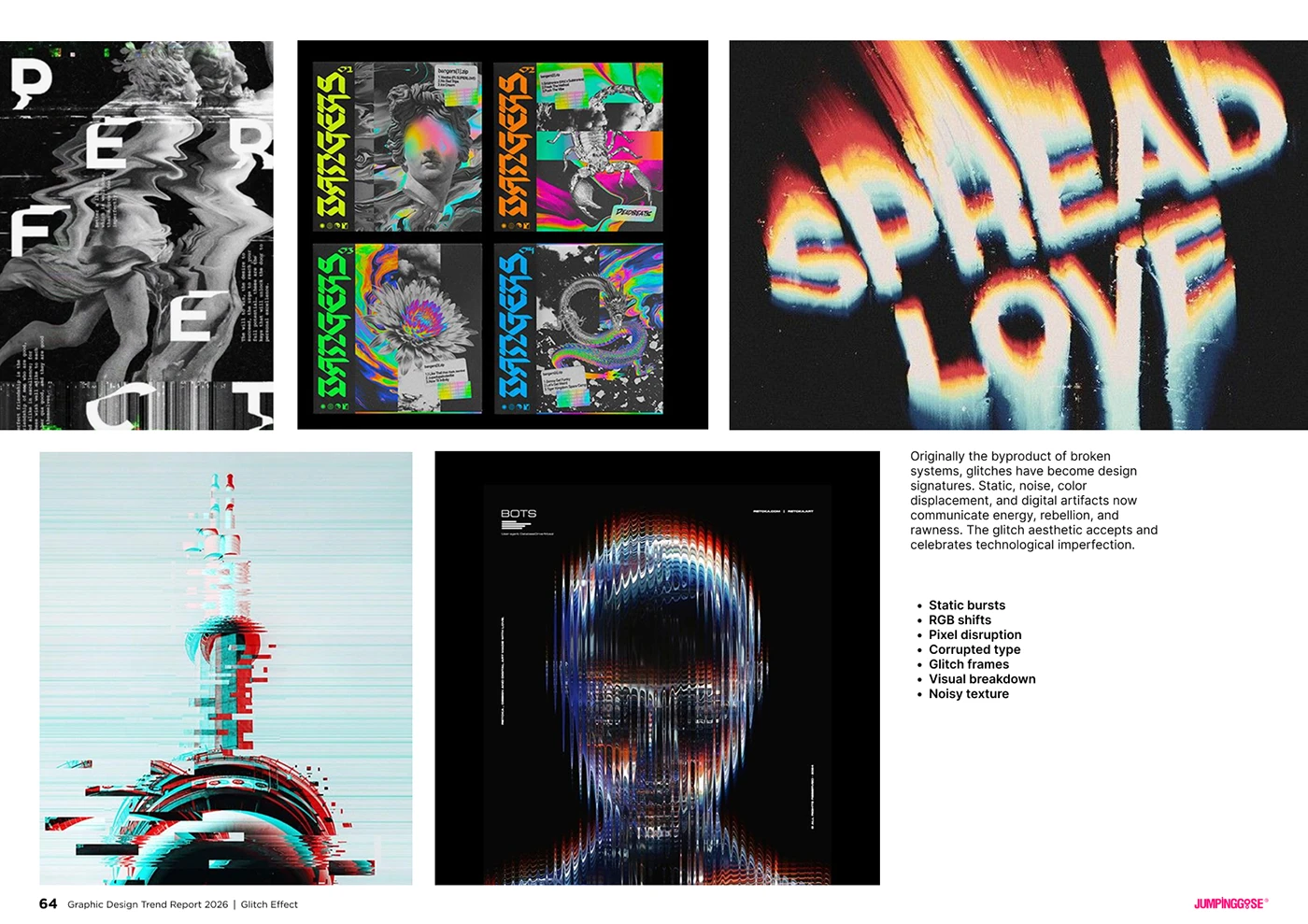
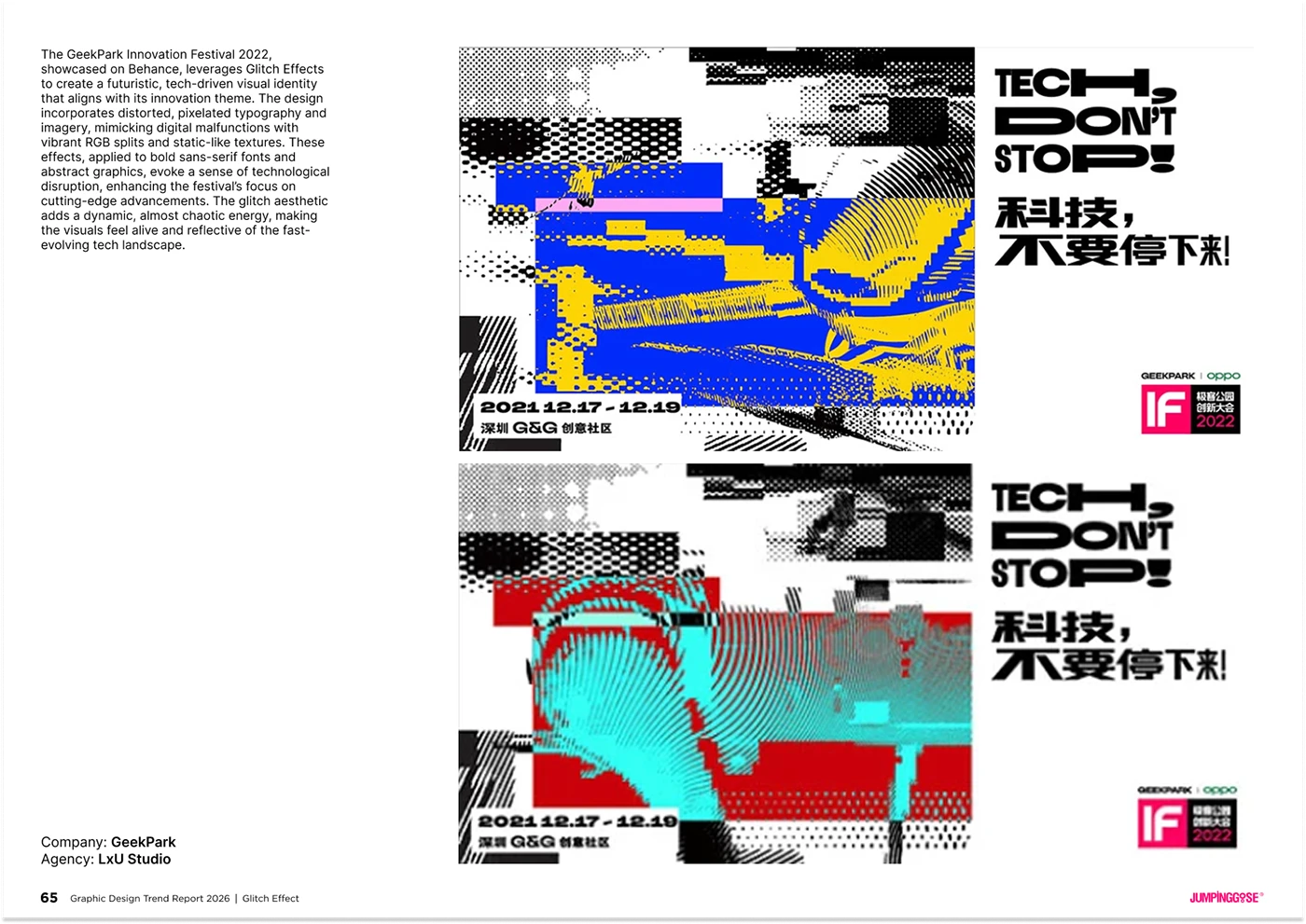
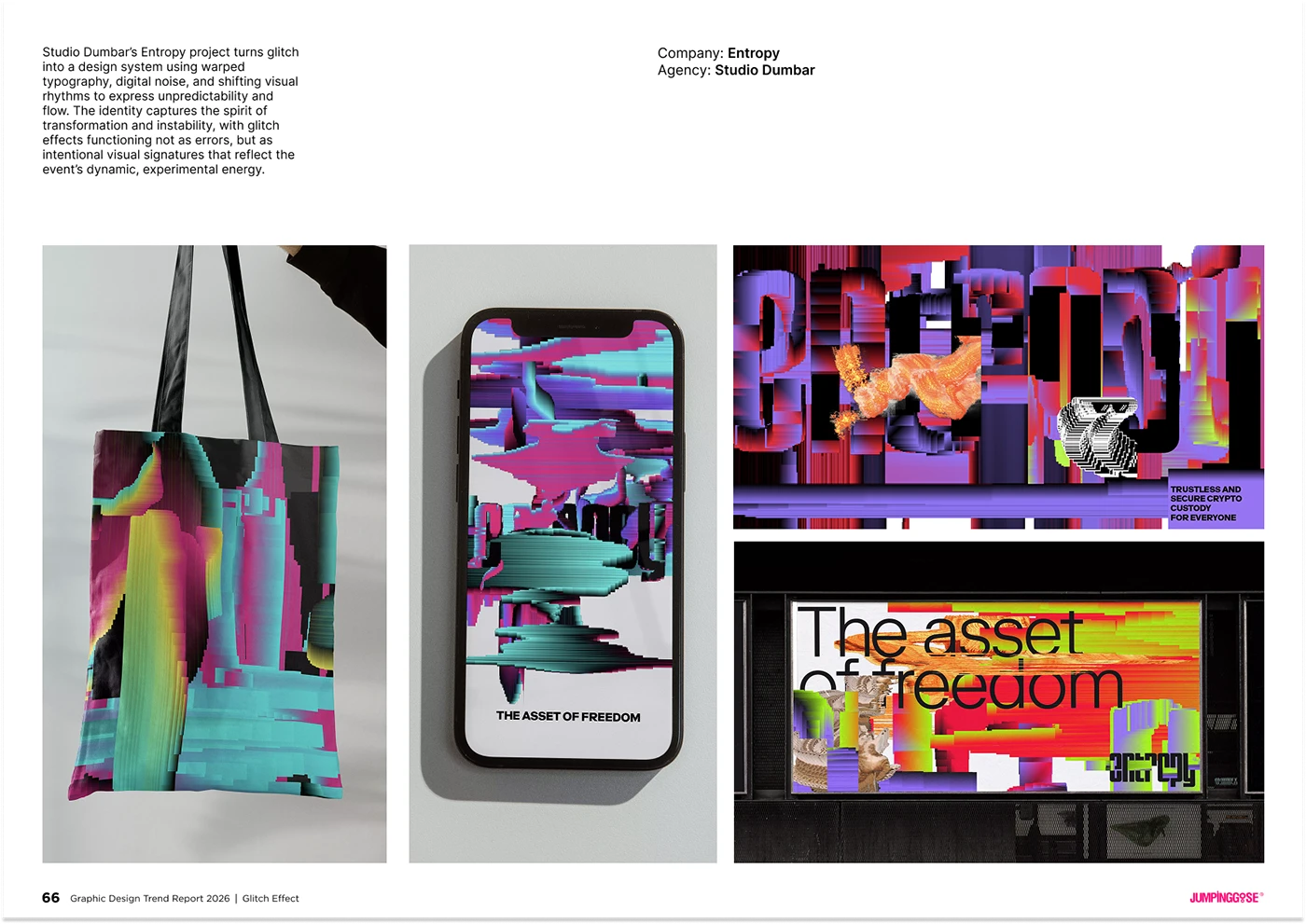
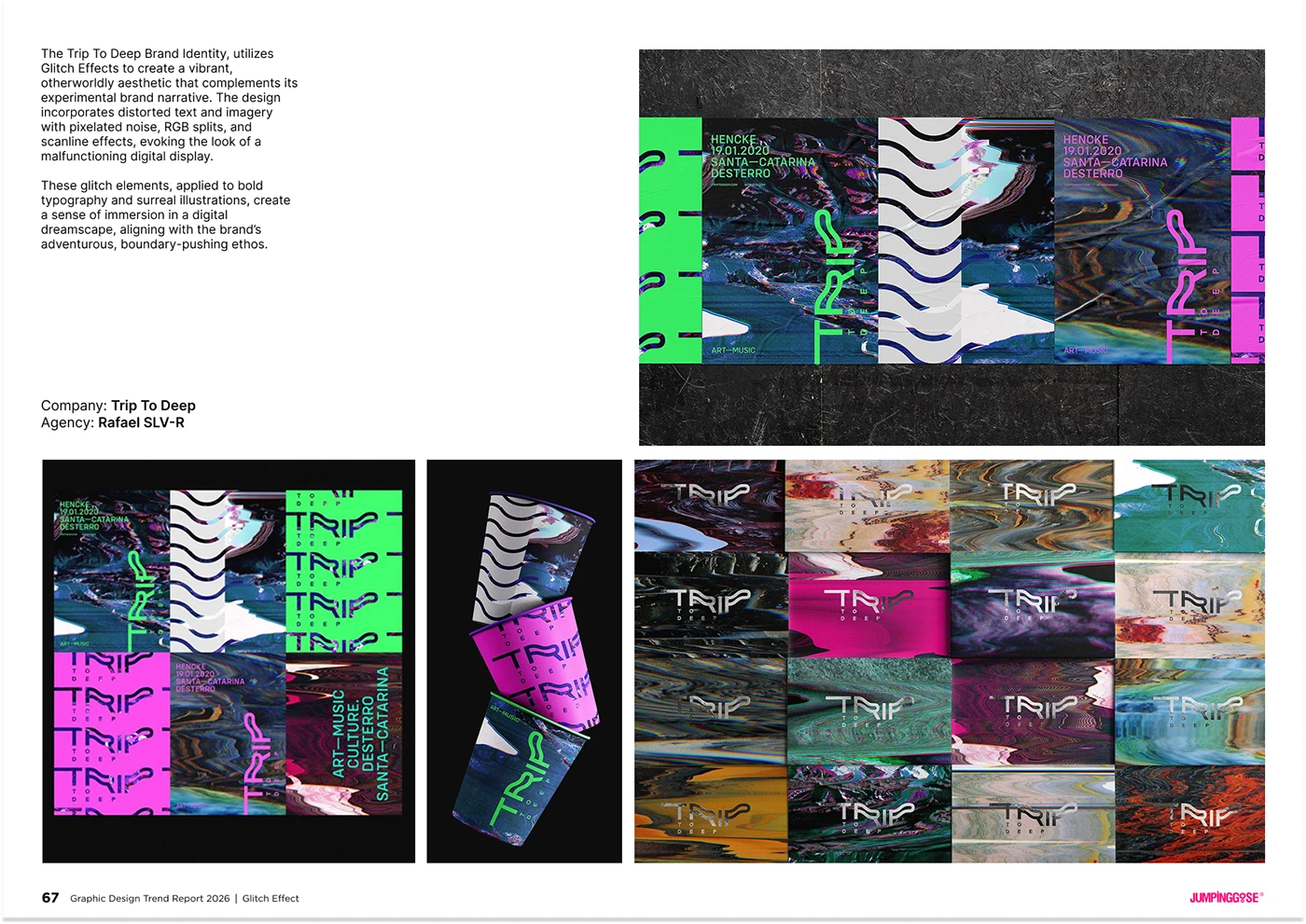
12. Glitch Effects
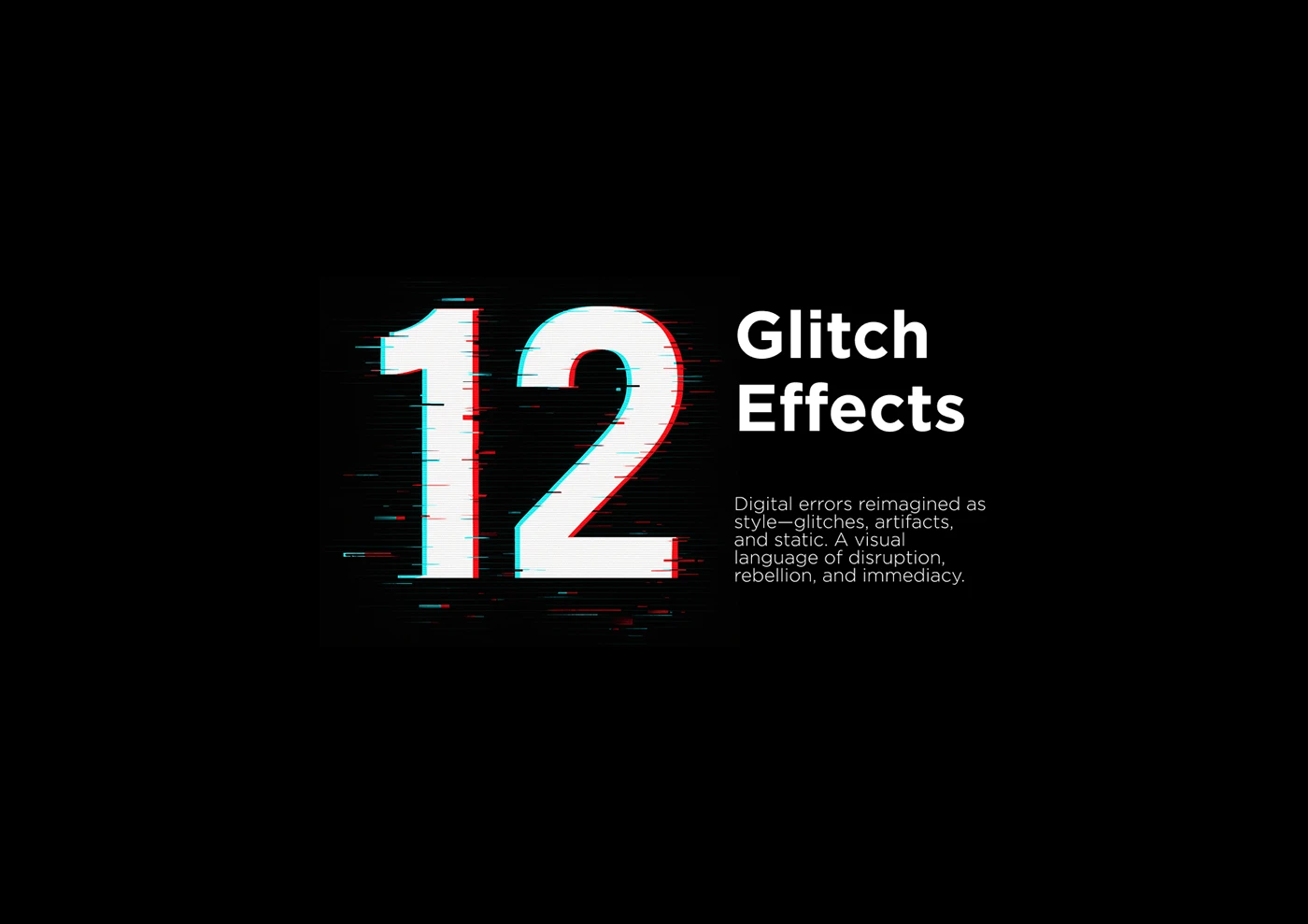
Glitch aesthetics have become more intentional. Rather than visual noise, distortion is now used strategically, suggesting disruption, transition, or digital tension. The effect is controlled, purposeful, and often subtle.
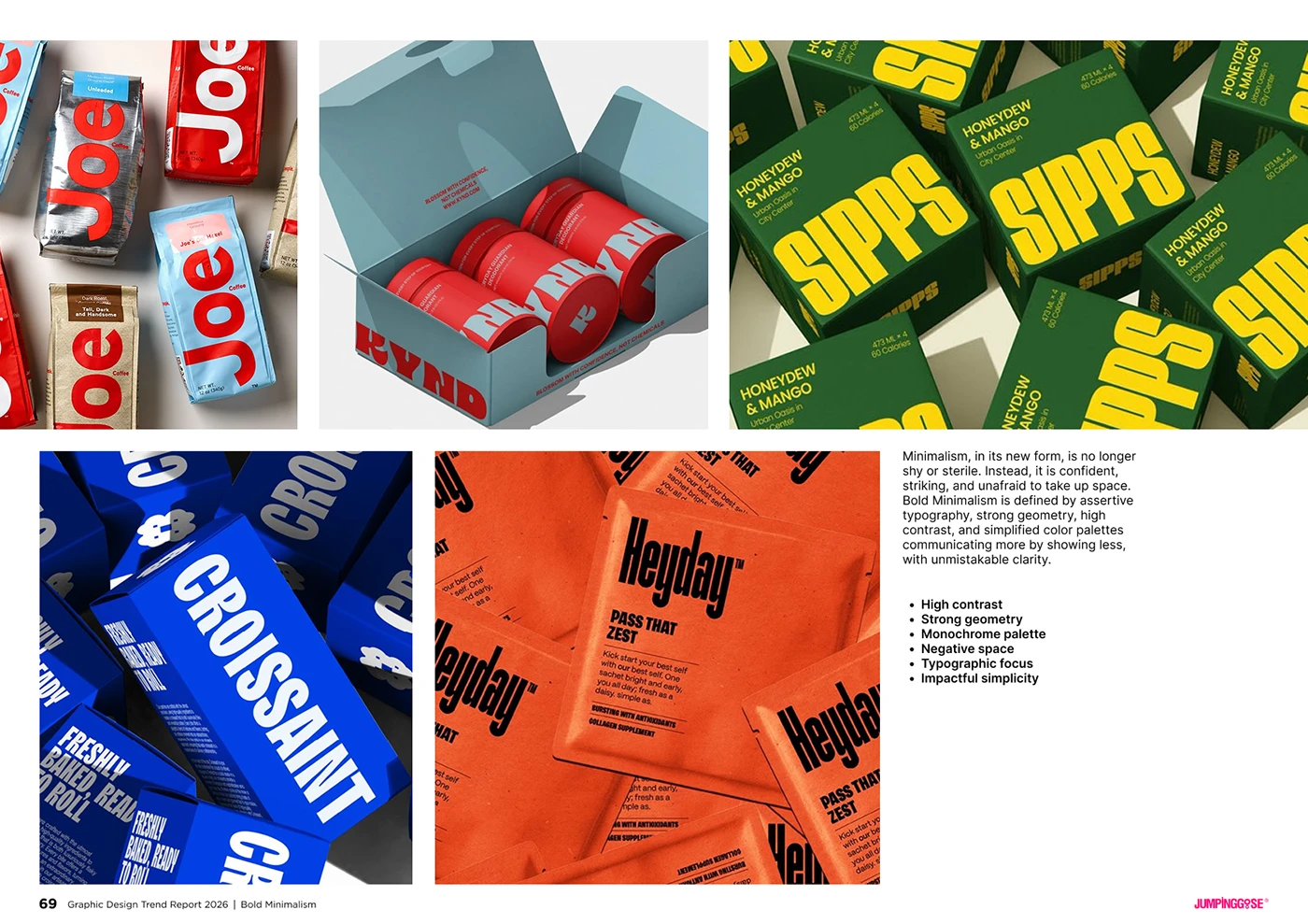
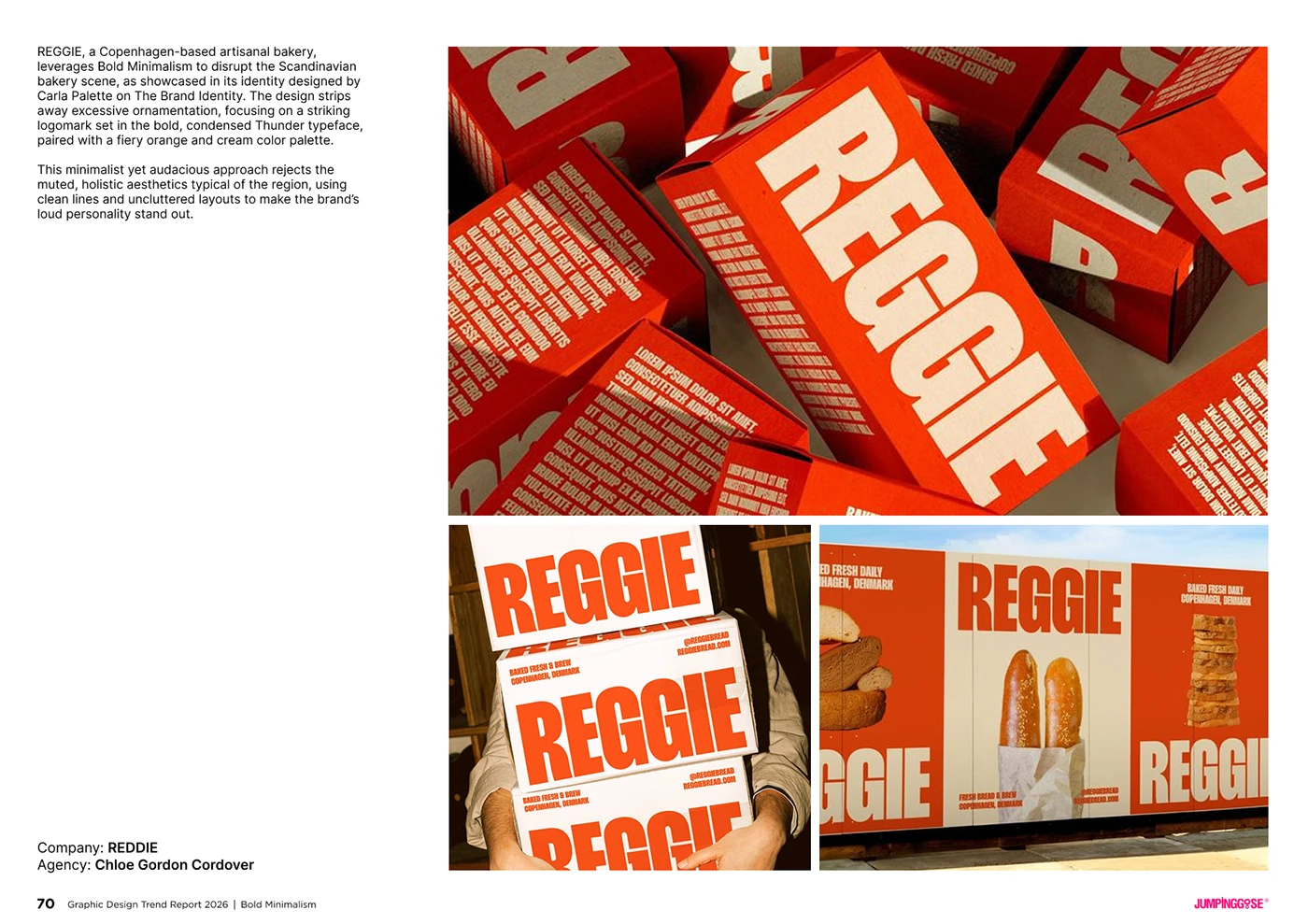
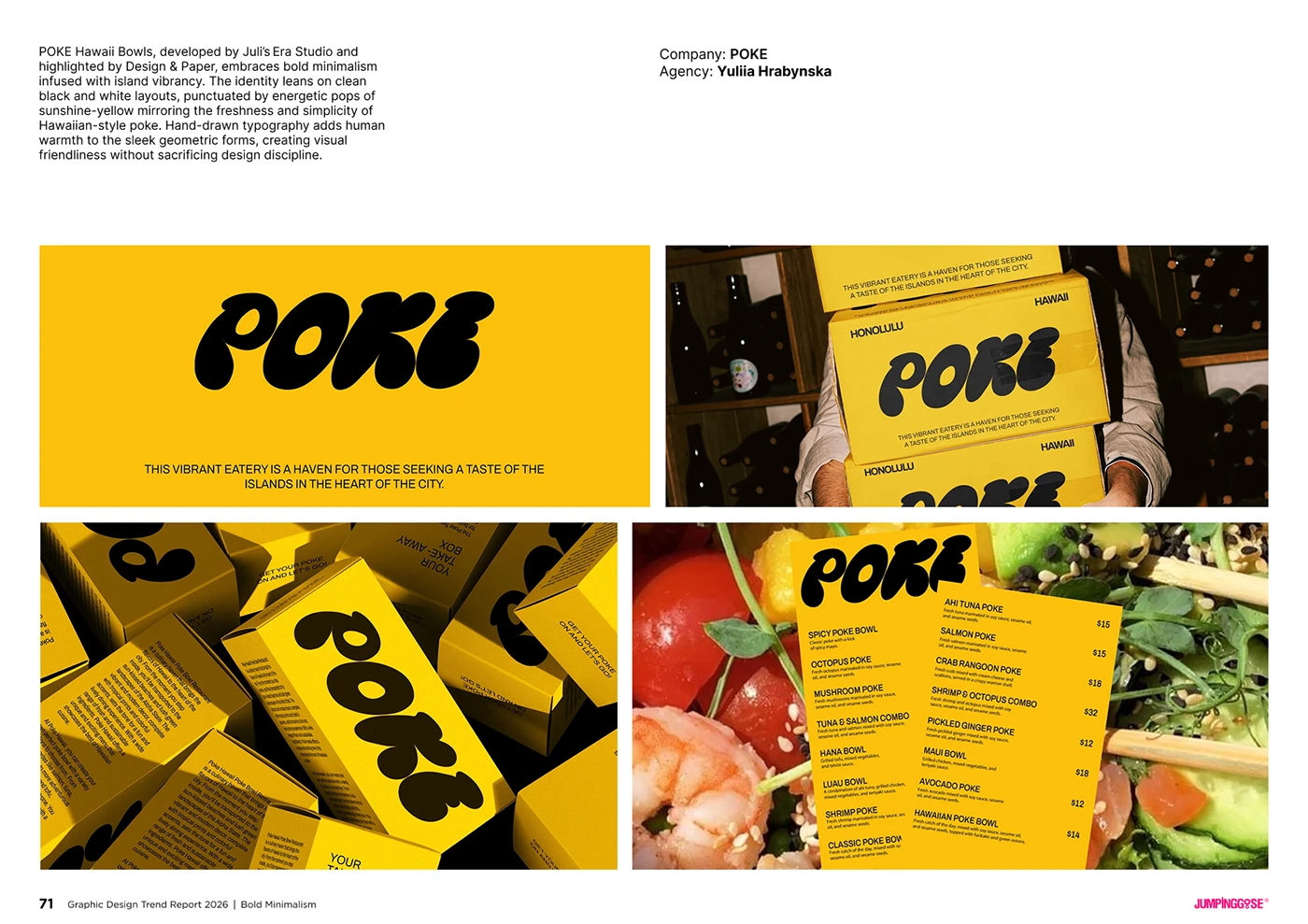
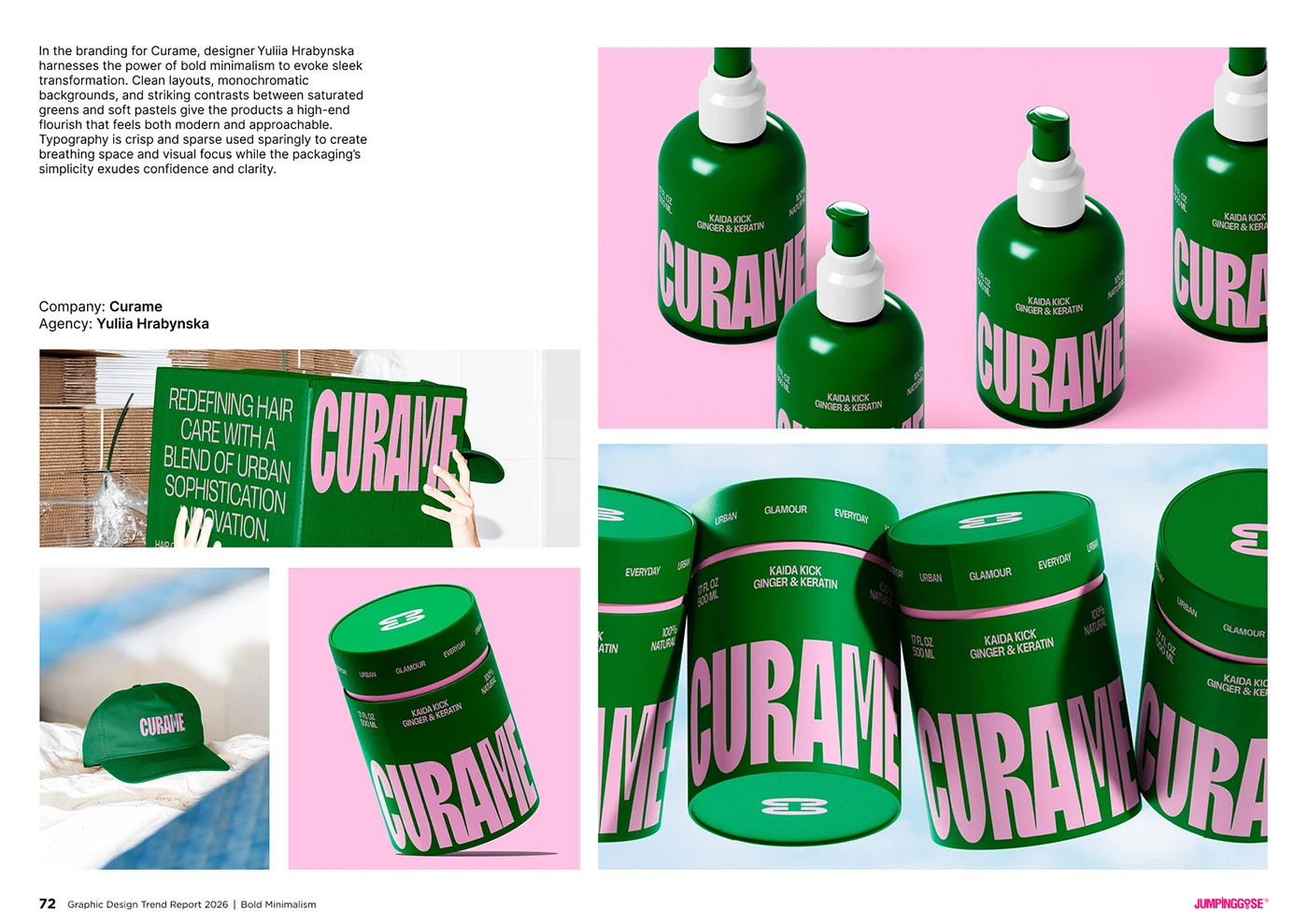
13. Bold Minimalism
Minimalism remains relevant, but with greater assertiveness. Strong colour choices, confident typography, and high contrast replace softness. The result is clarity with presence, minimal, yet unmistakably bold.
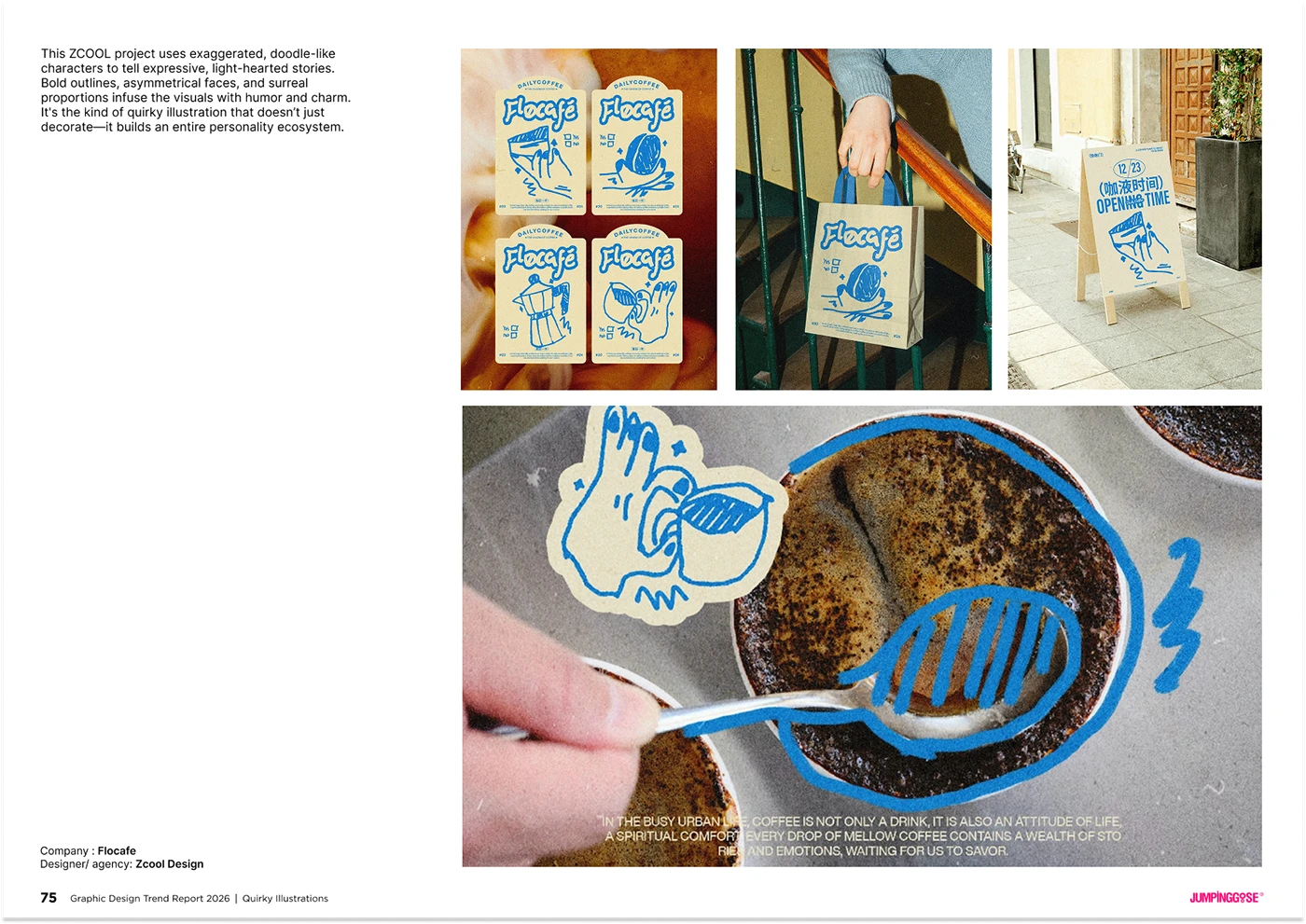
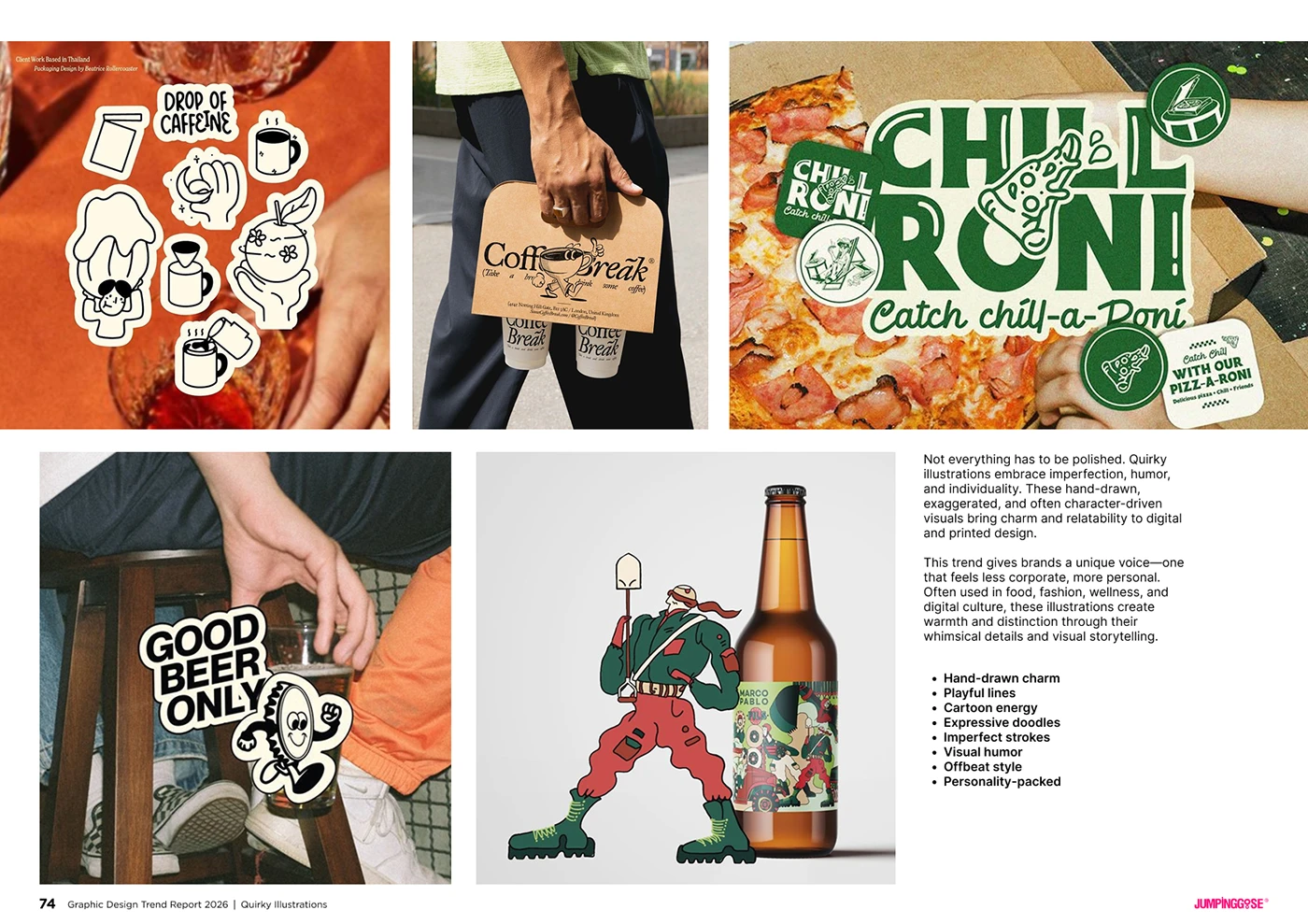
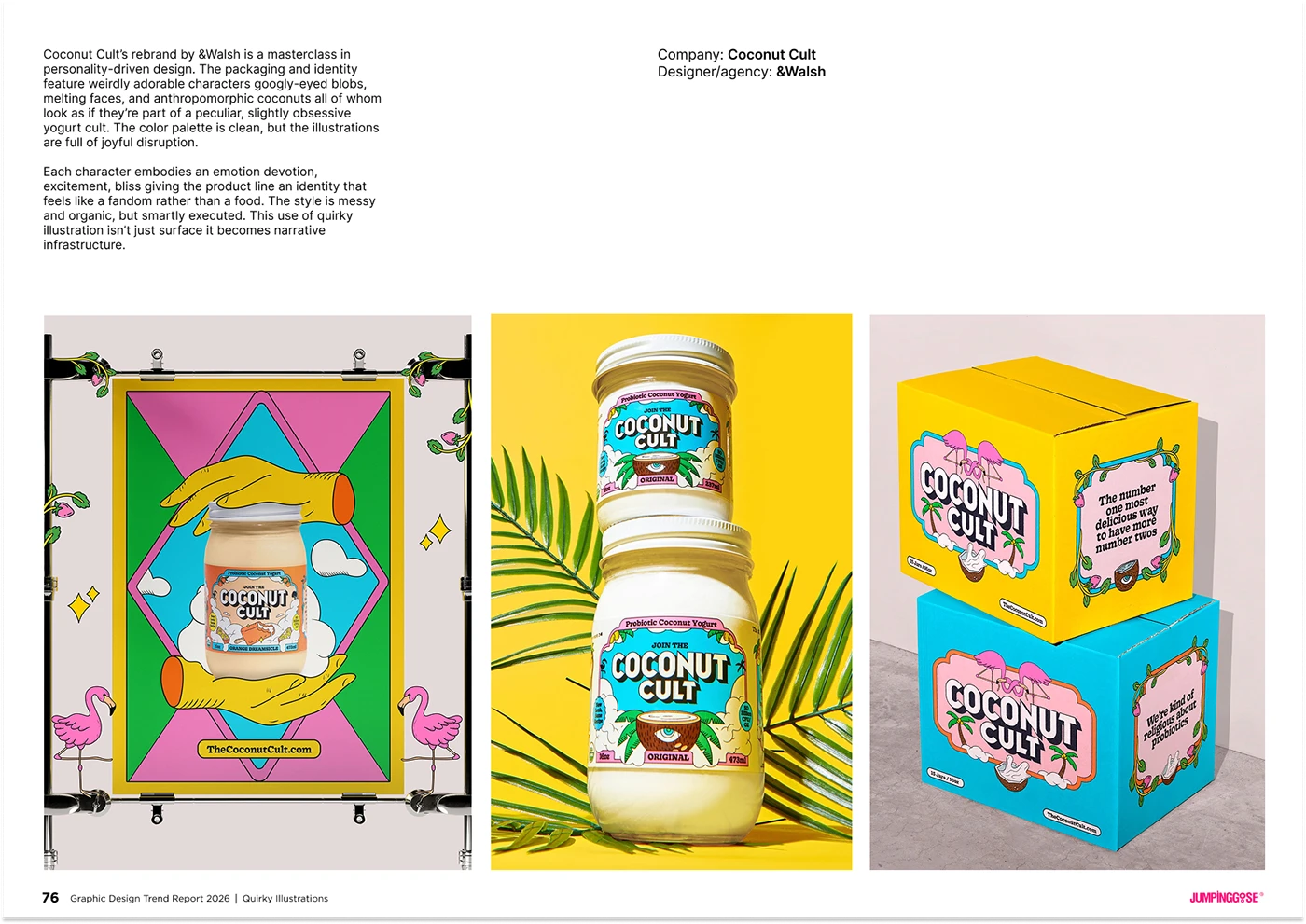
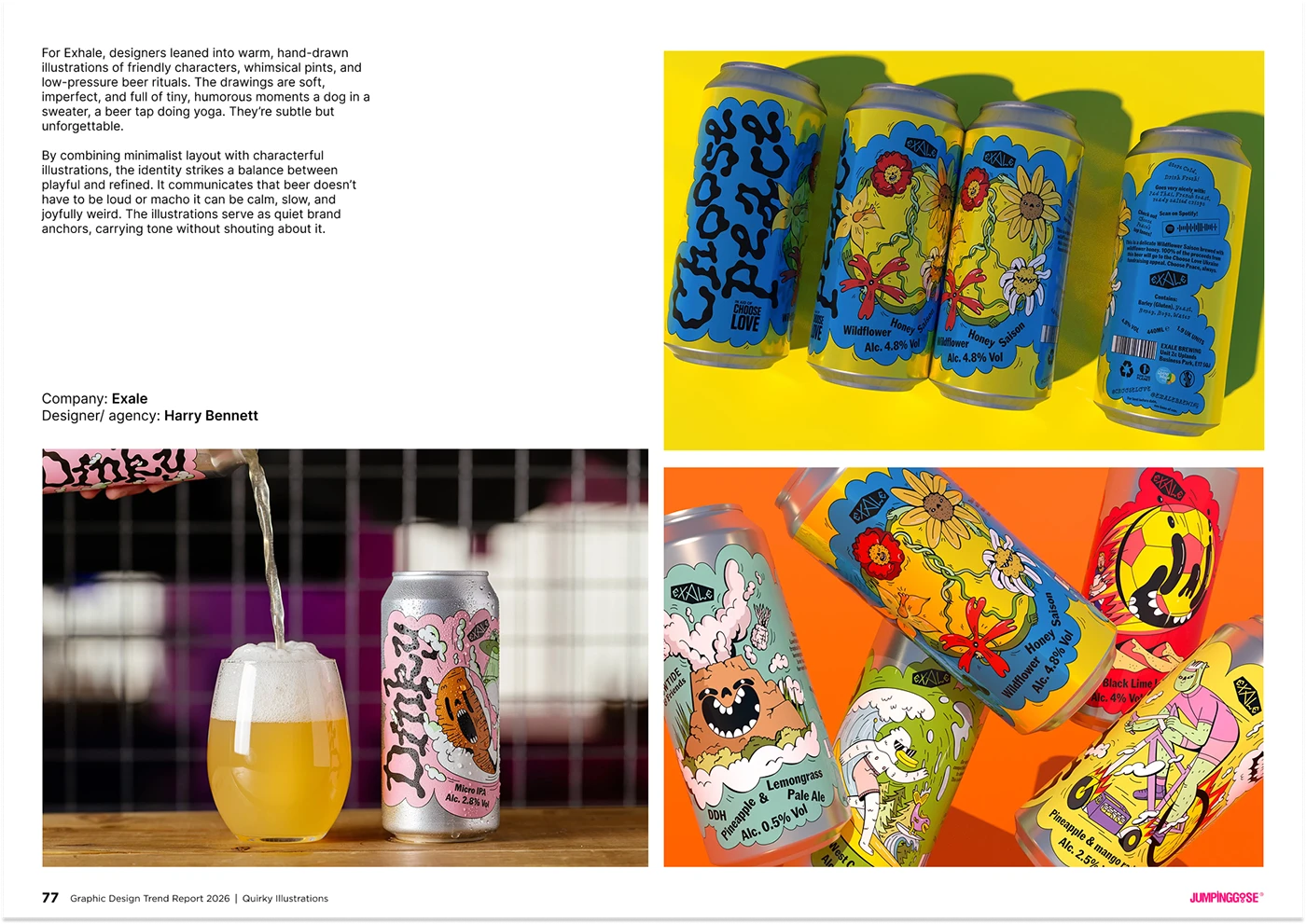
14. Quirky Illustrations
Illustration leans into imperfection. Hand-drawn forms, exaggerated proportions, and playful compositions introduce warmth and personality. These visuals often function as emotional anchors within otherwise structured systems.
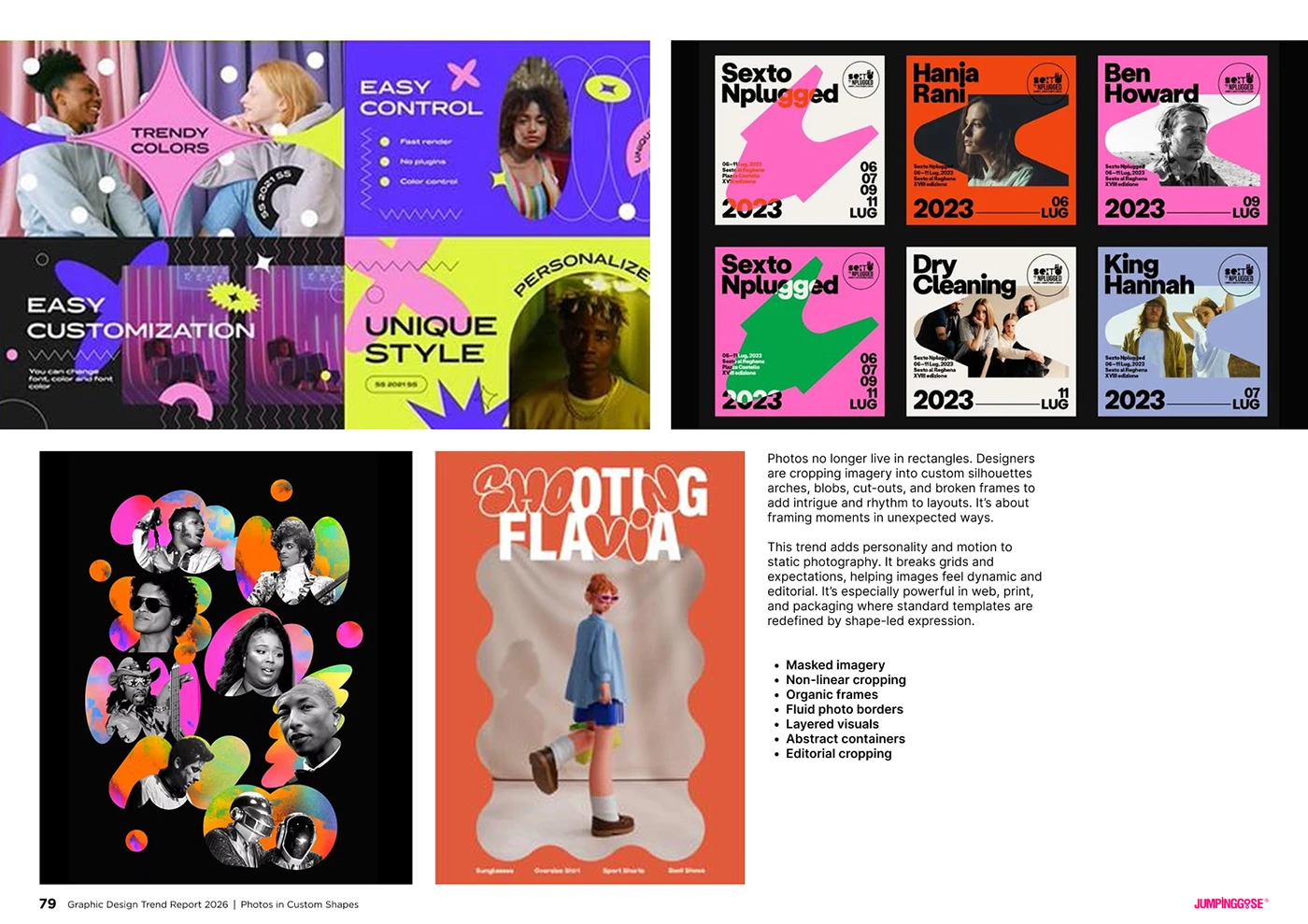
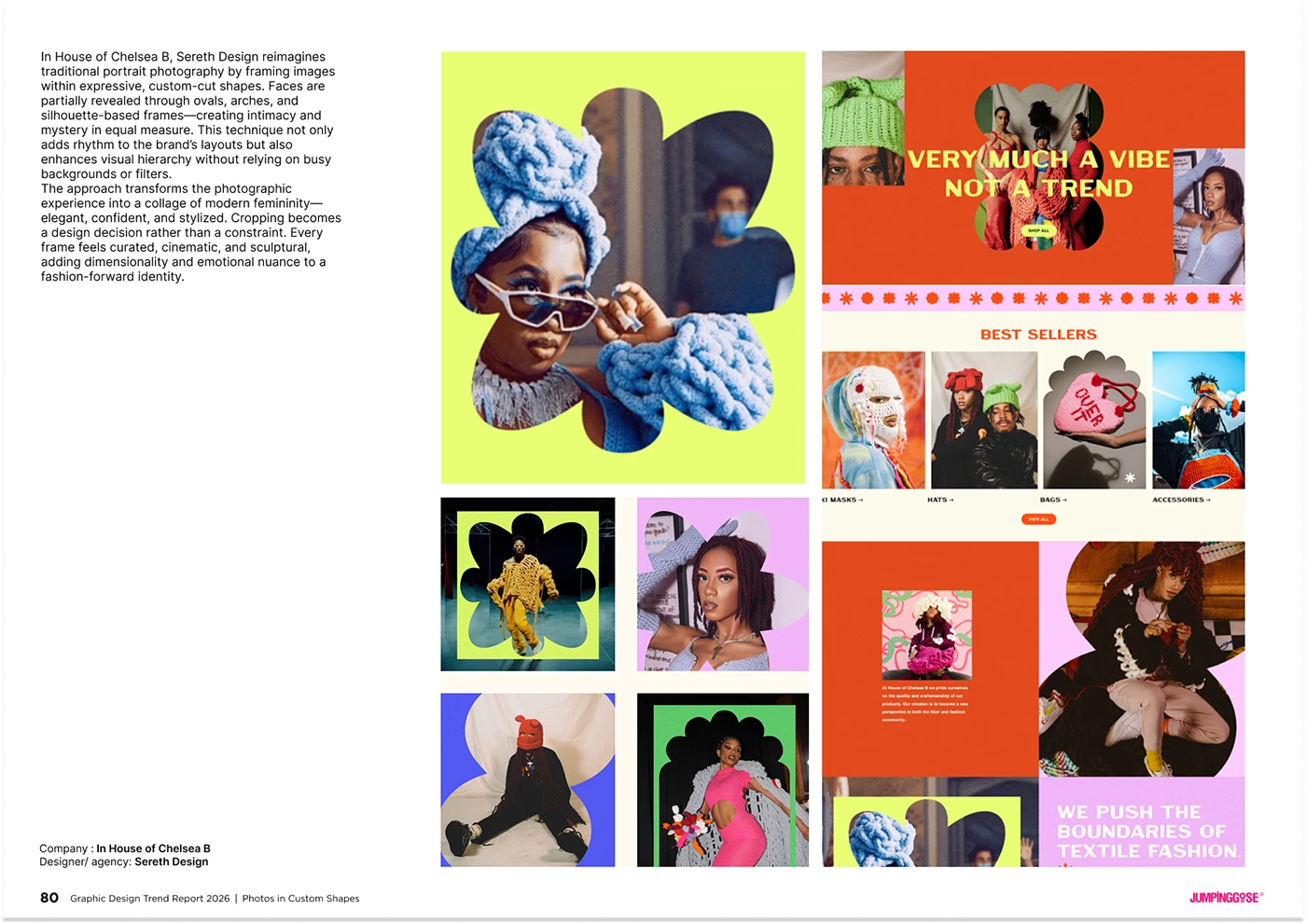
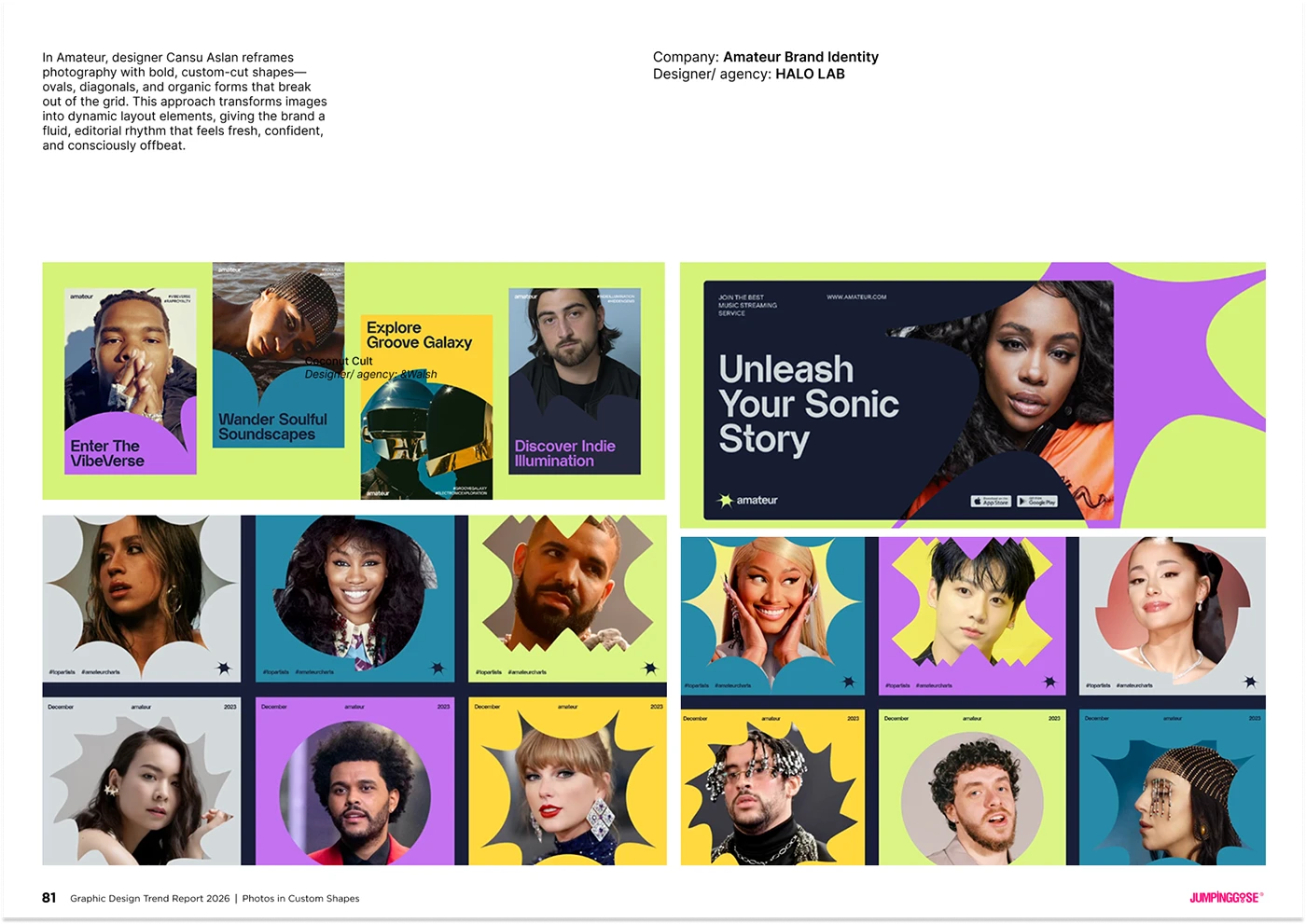
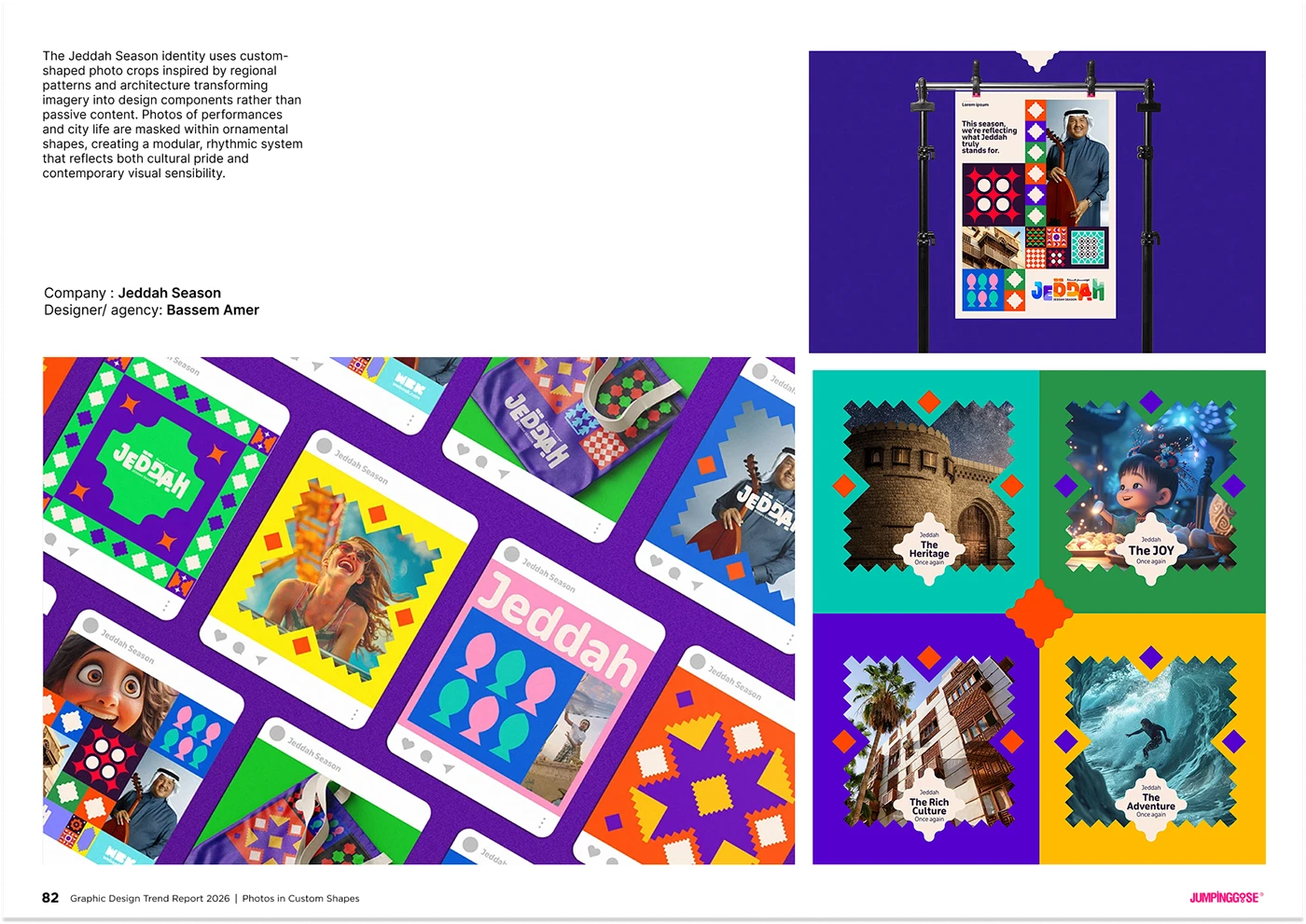
15. Photos in Custom Shapes
Photography increasingly escapes the rectangle. Custom crops and ornamental frames turn images into active design elements, contributing rhythm and structure to layouts. The photograph becomes part of the system, not just the content.
16. Handmade & Collage Aesthetics
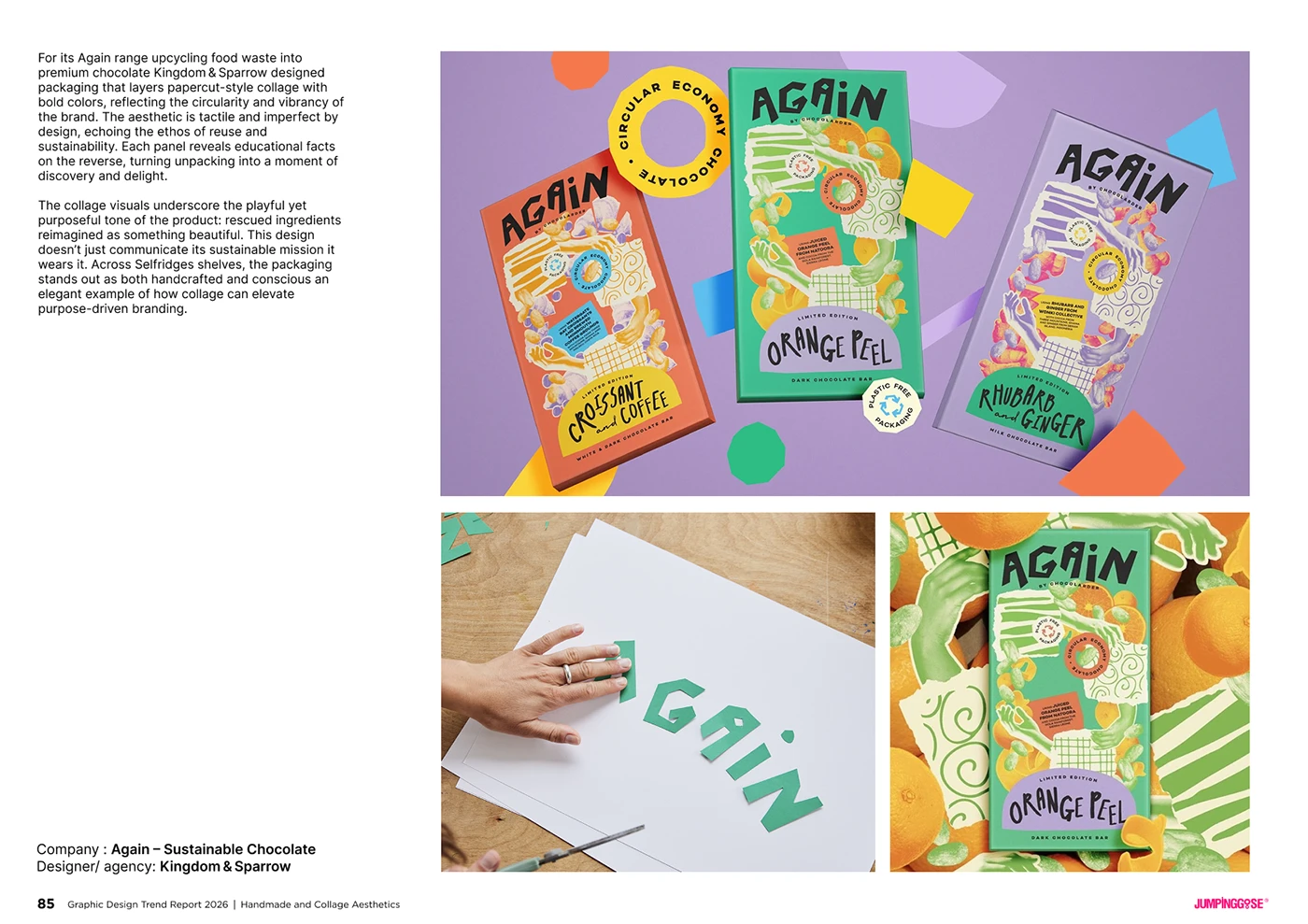
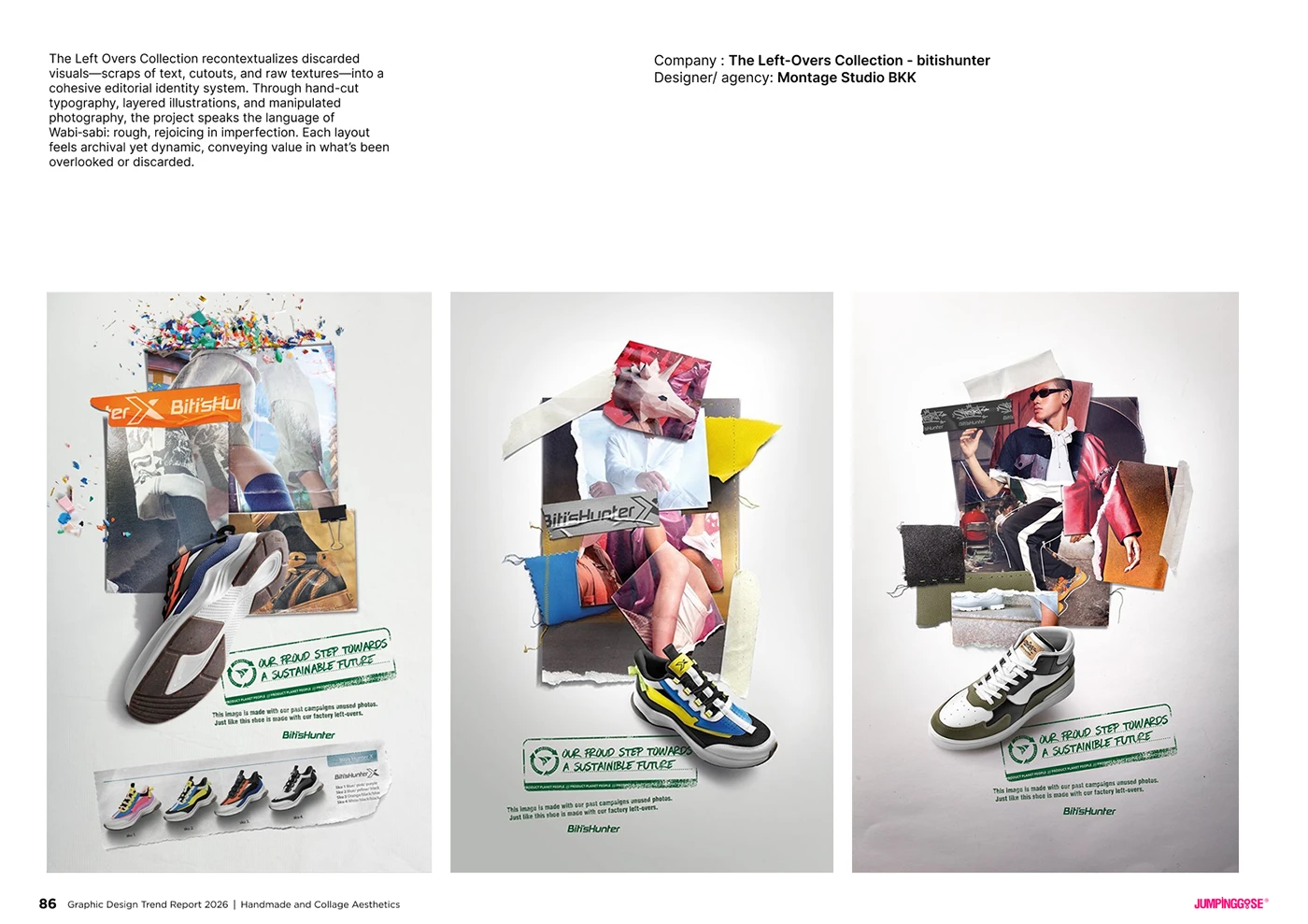
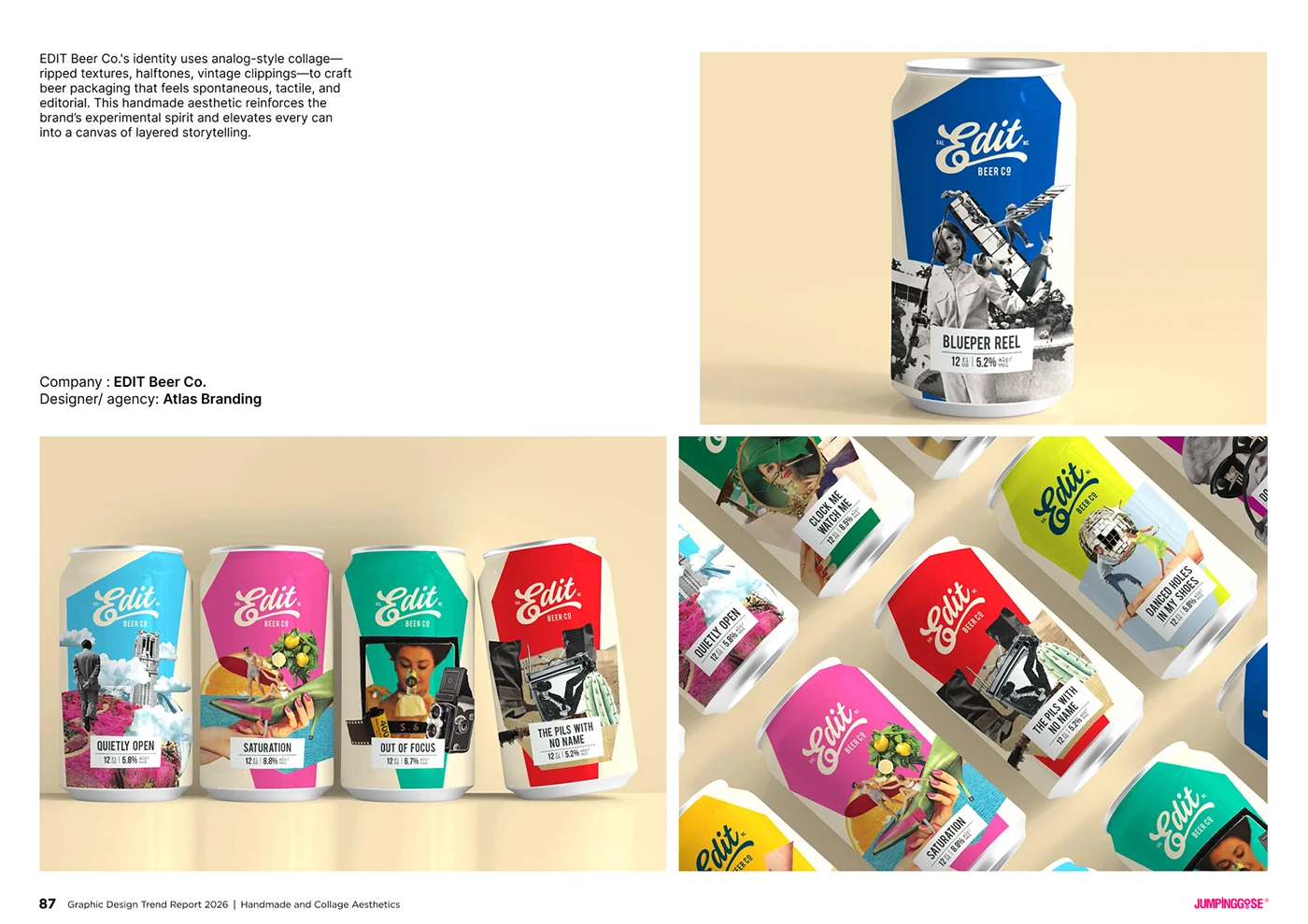
Collage design responds directly to digital fatigue. Cut paper, layered textures, and visible imperfections introduce tactility and authenticity. These compositions feel human, expressive, and often carry underlying narratives of sustainability or experimentation.
17. Gradients & Blends
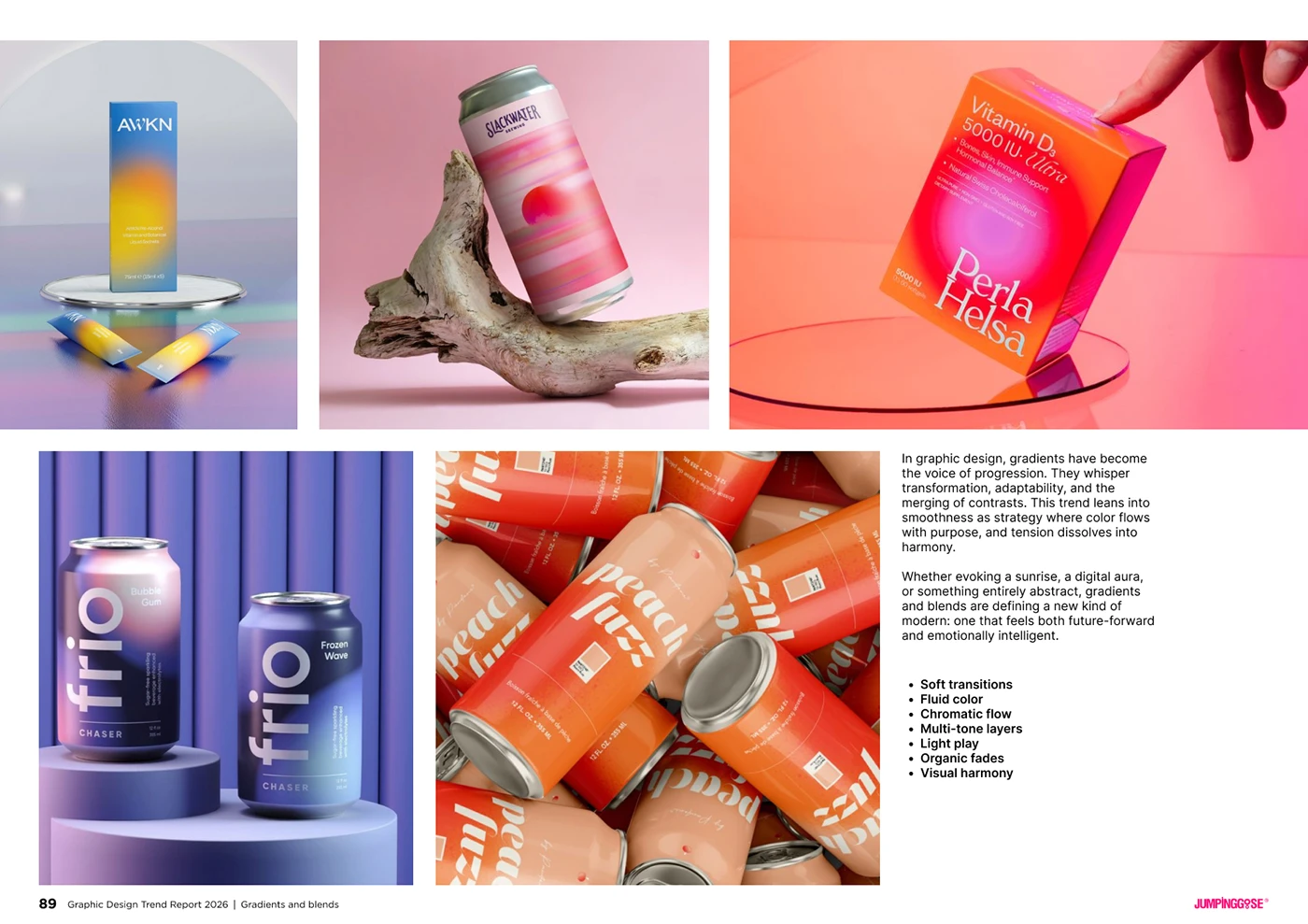
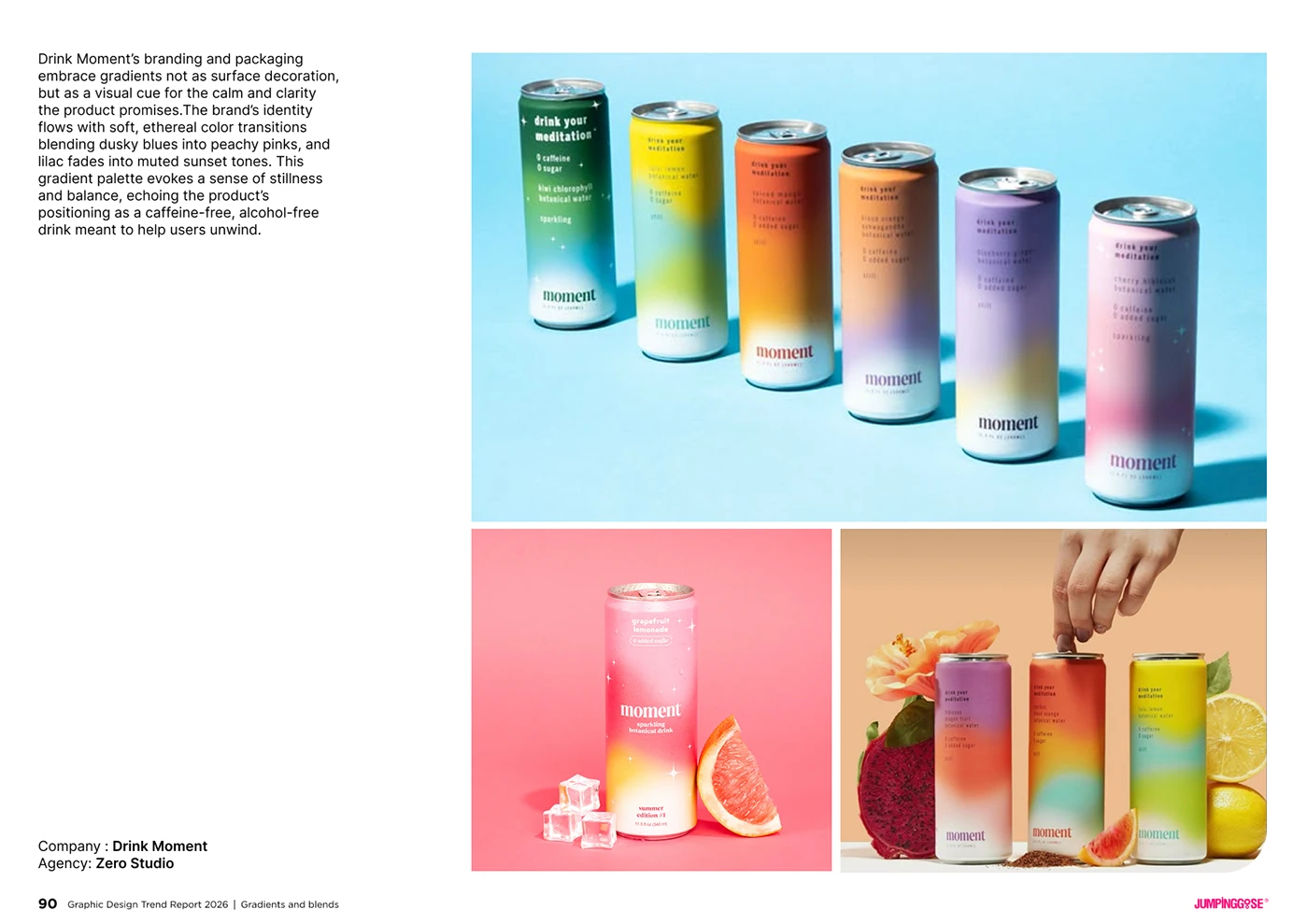
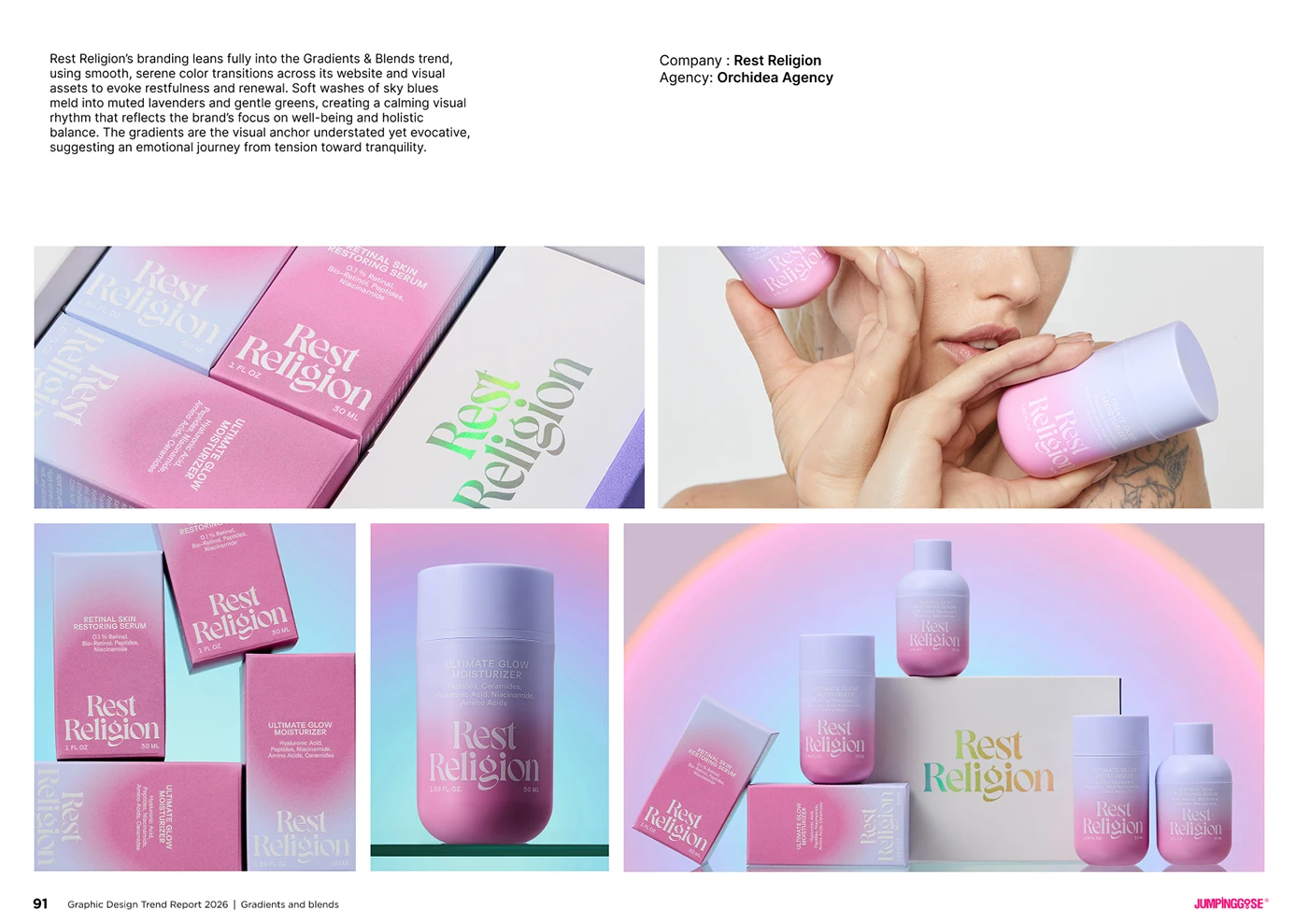
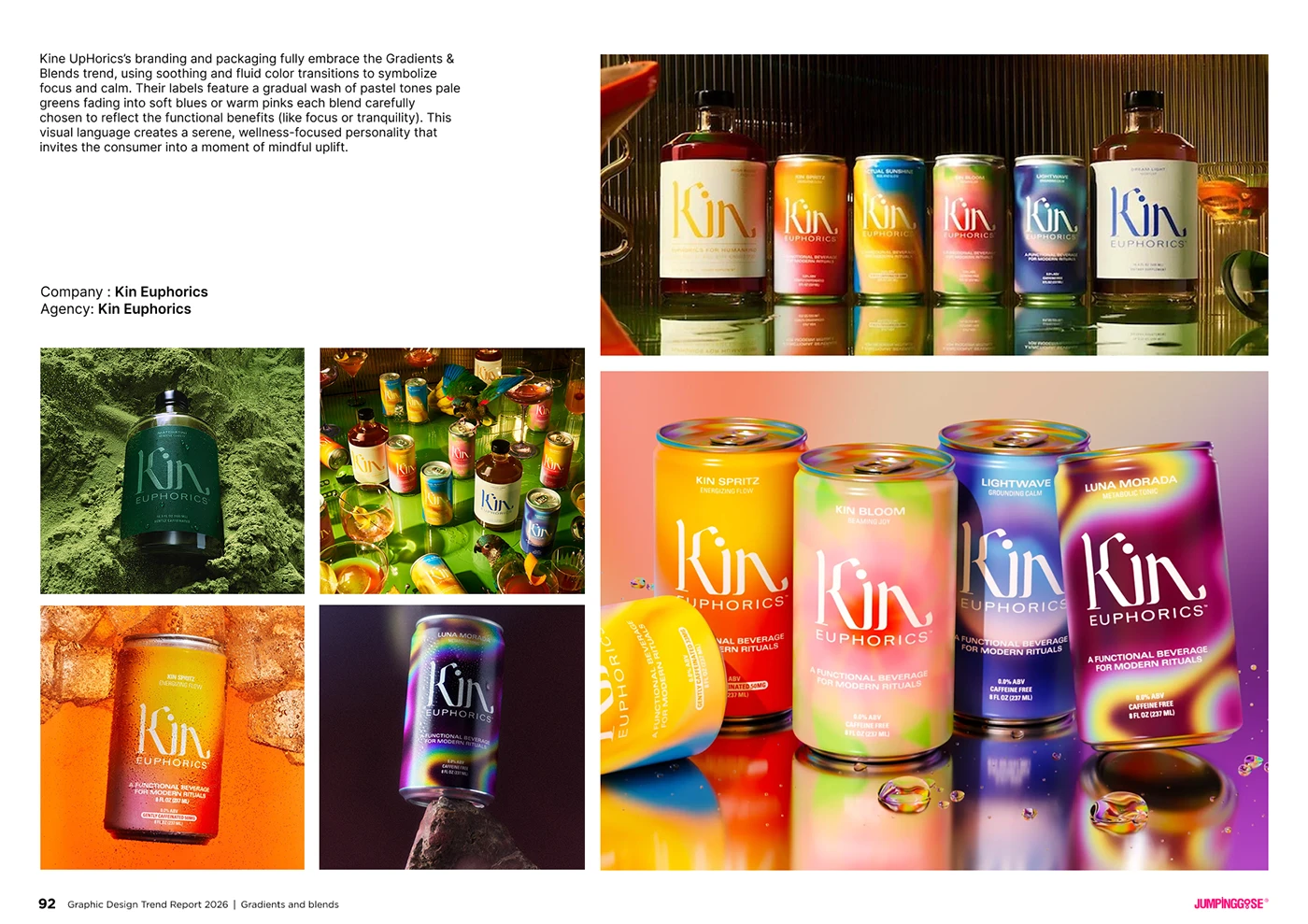
Gradients in 2026 move beyond decoration into mood-setting tools. Soft fades, chromatic transitions, and blended colour fields create harmony and emotional continuity rather than sharp contrast.
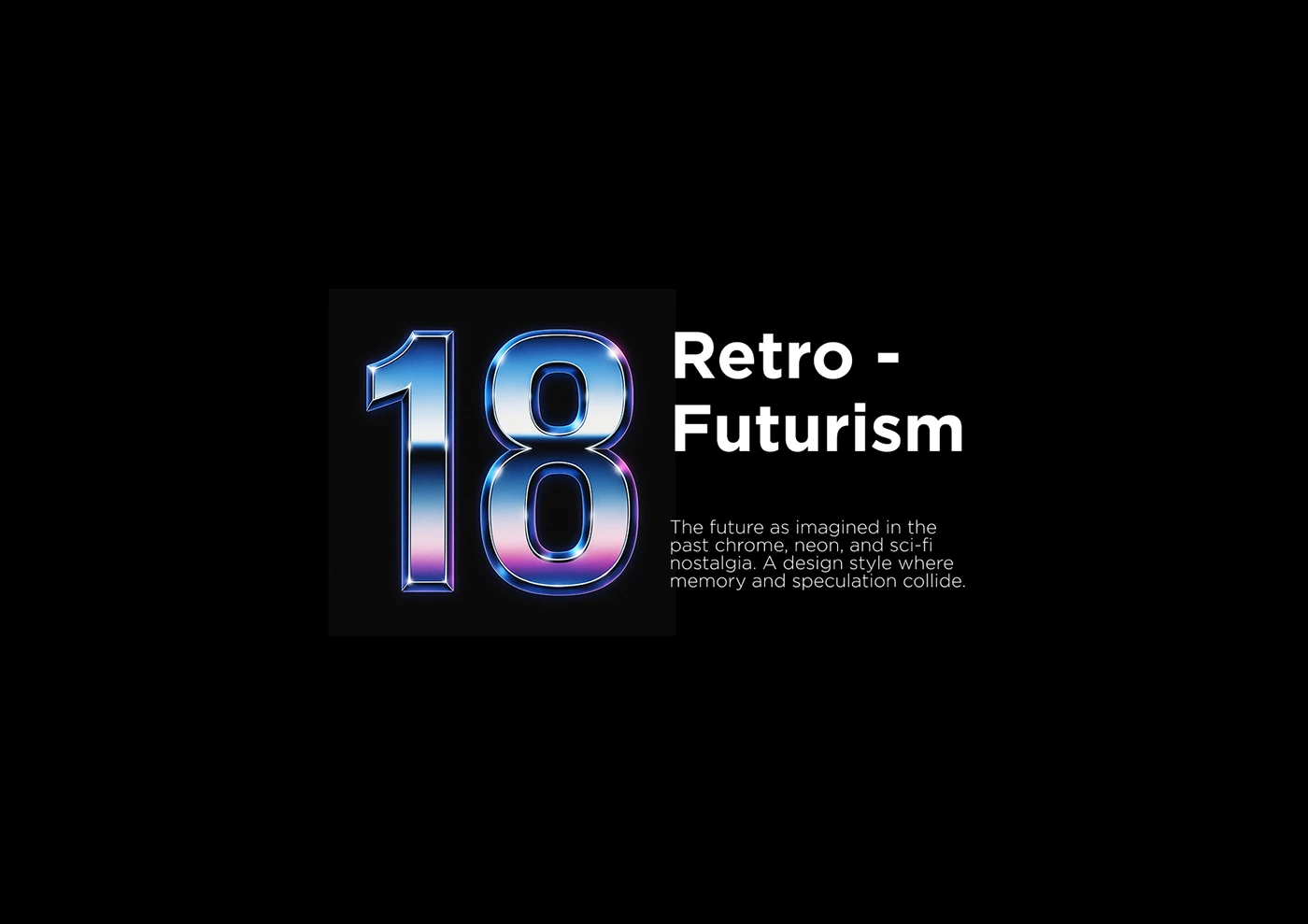
18. Retro-Futurism
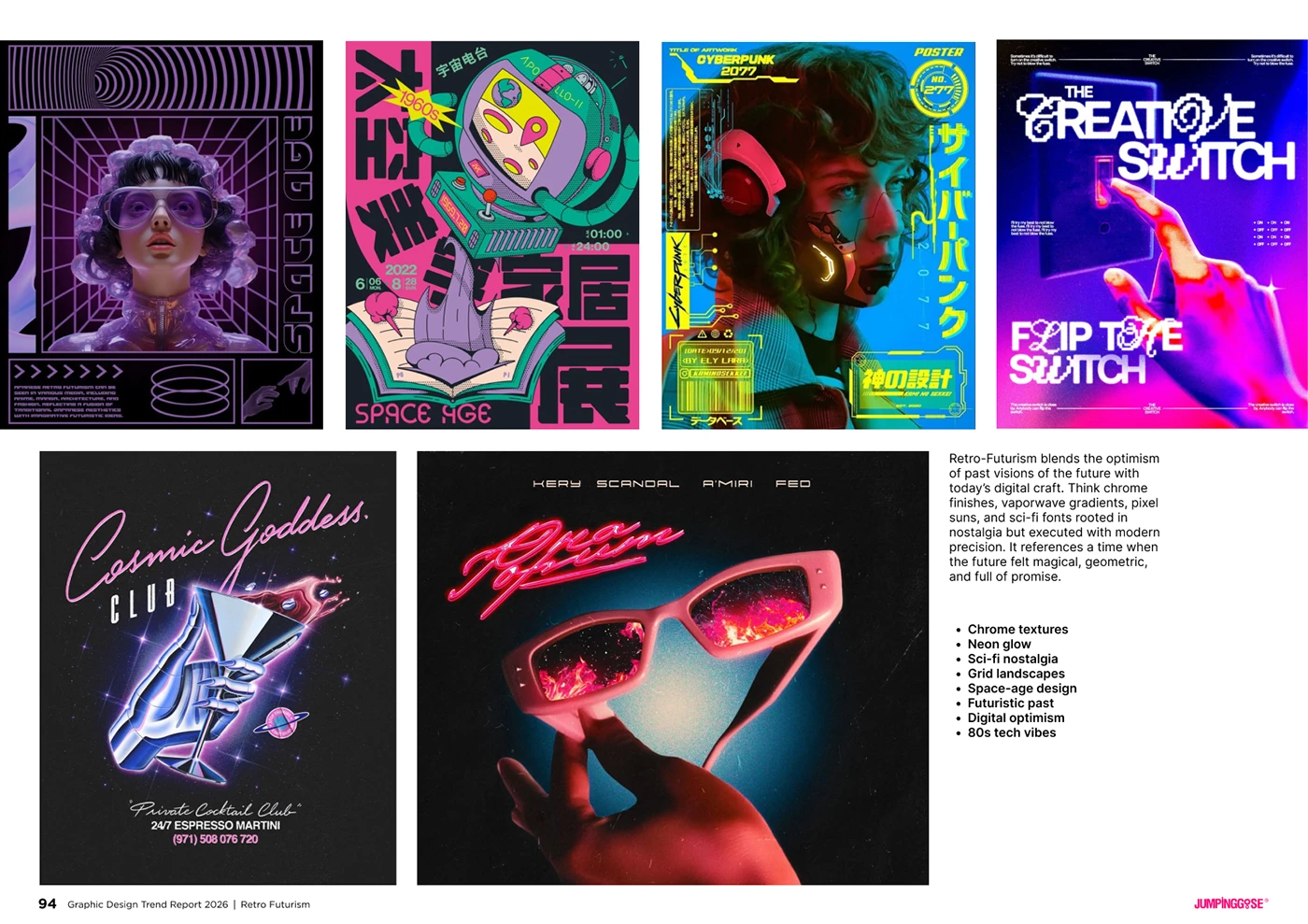
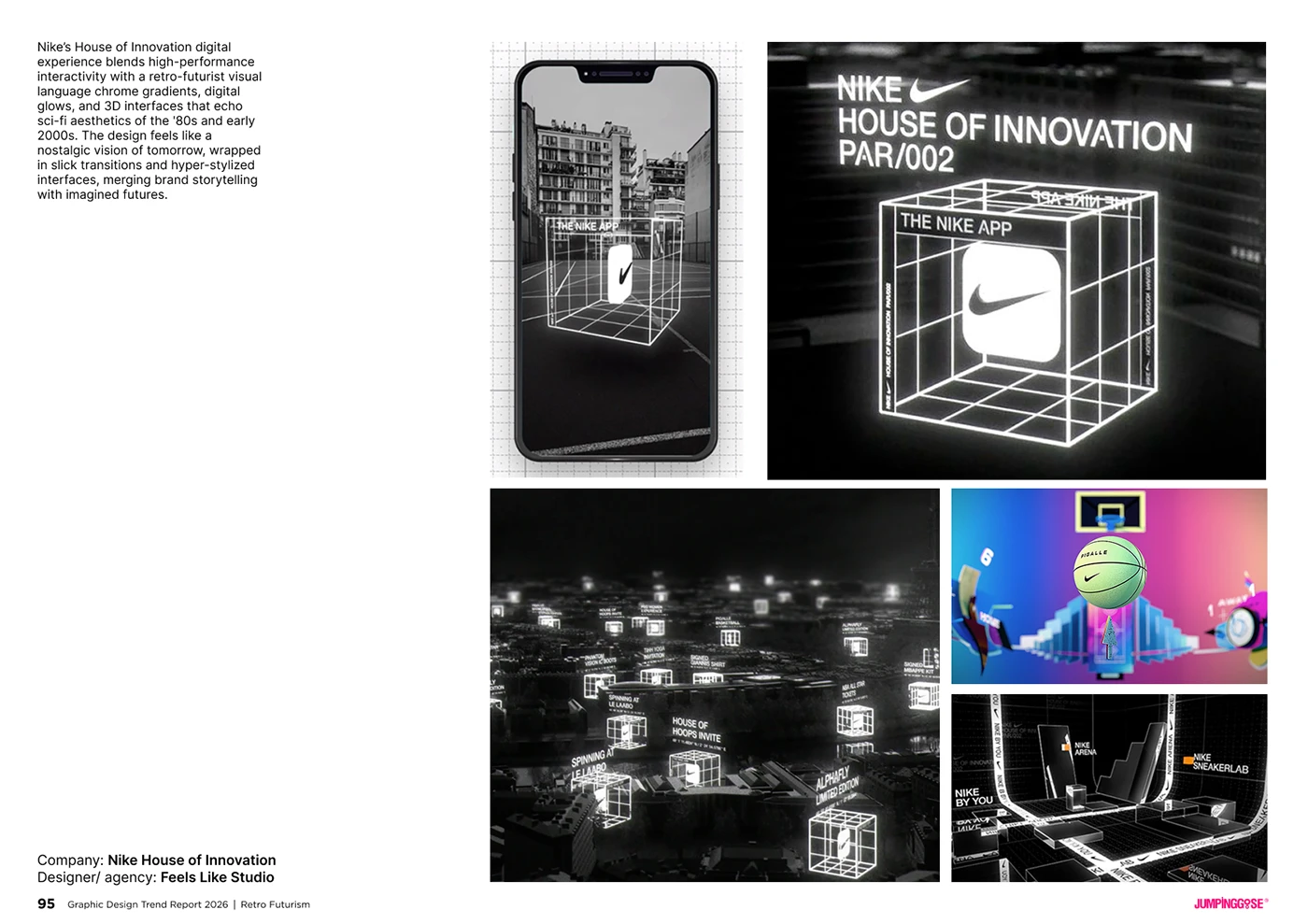
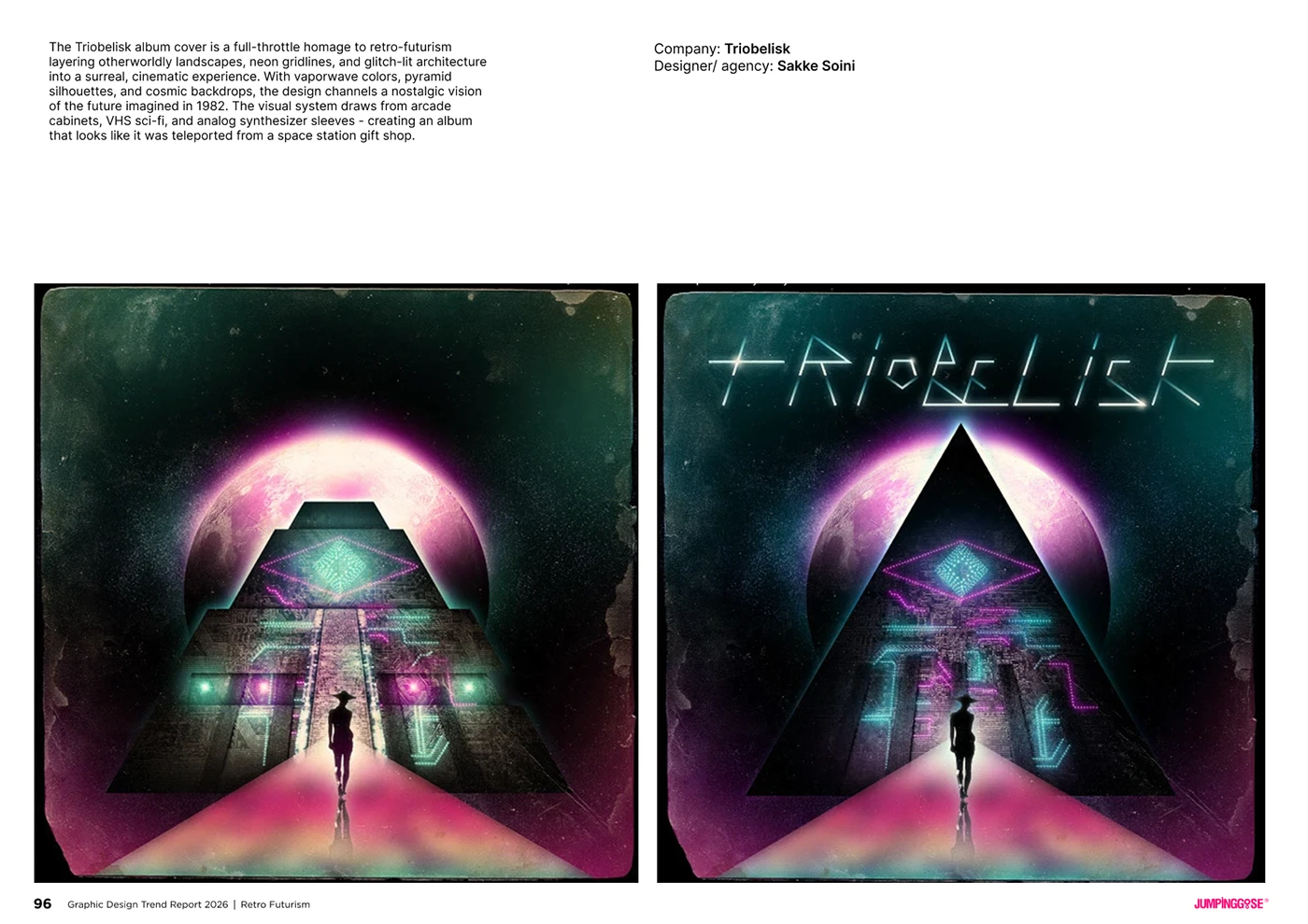
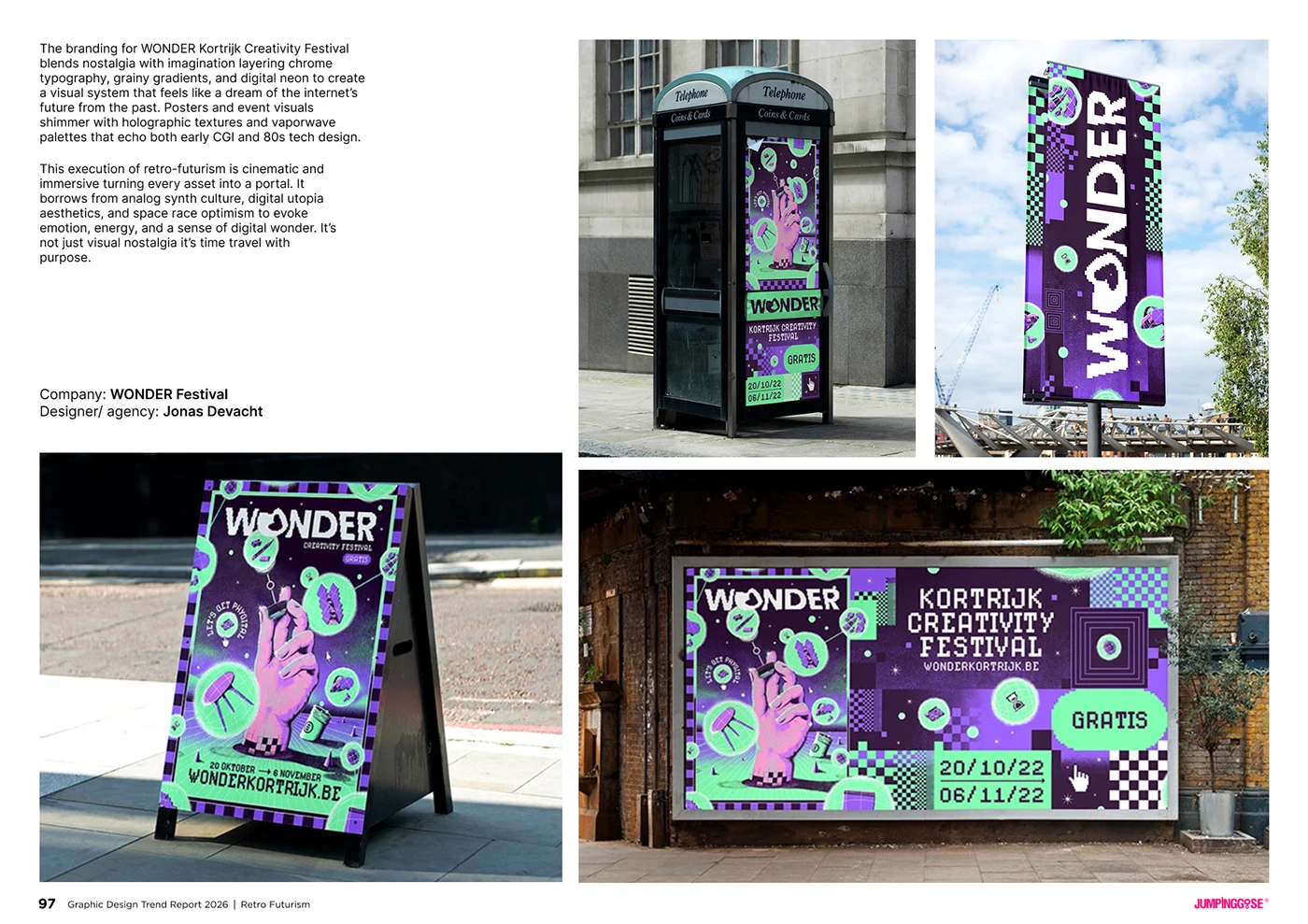
Retro-futurism revisits past visions of the future through chrome finishes, neon palettes, and sci-fi references. The result is a visual language where nostalgia and speculation coexist, executed with contemporary precision.
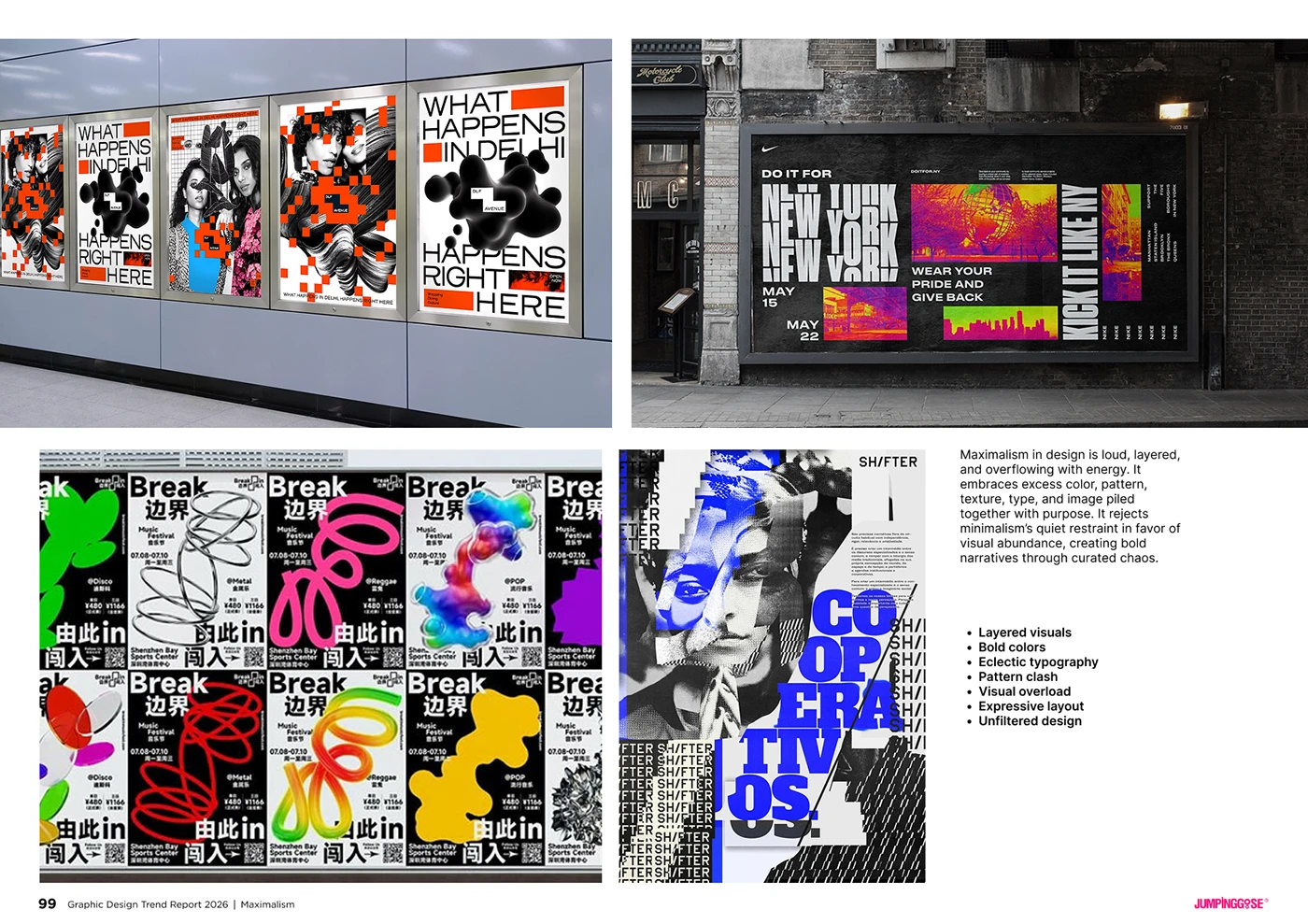
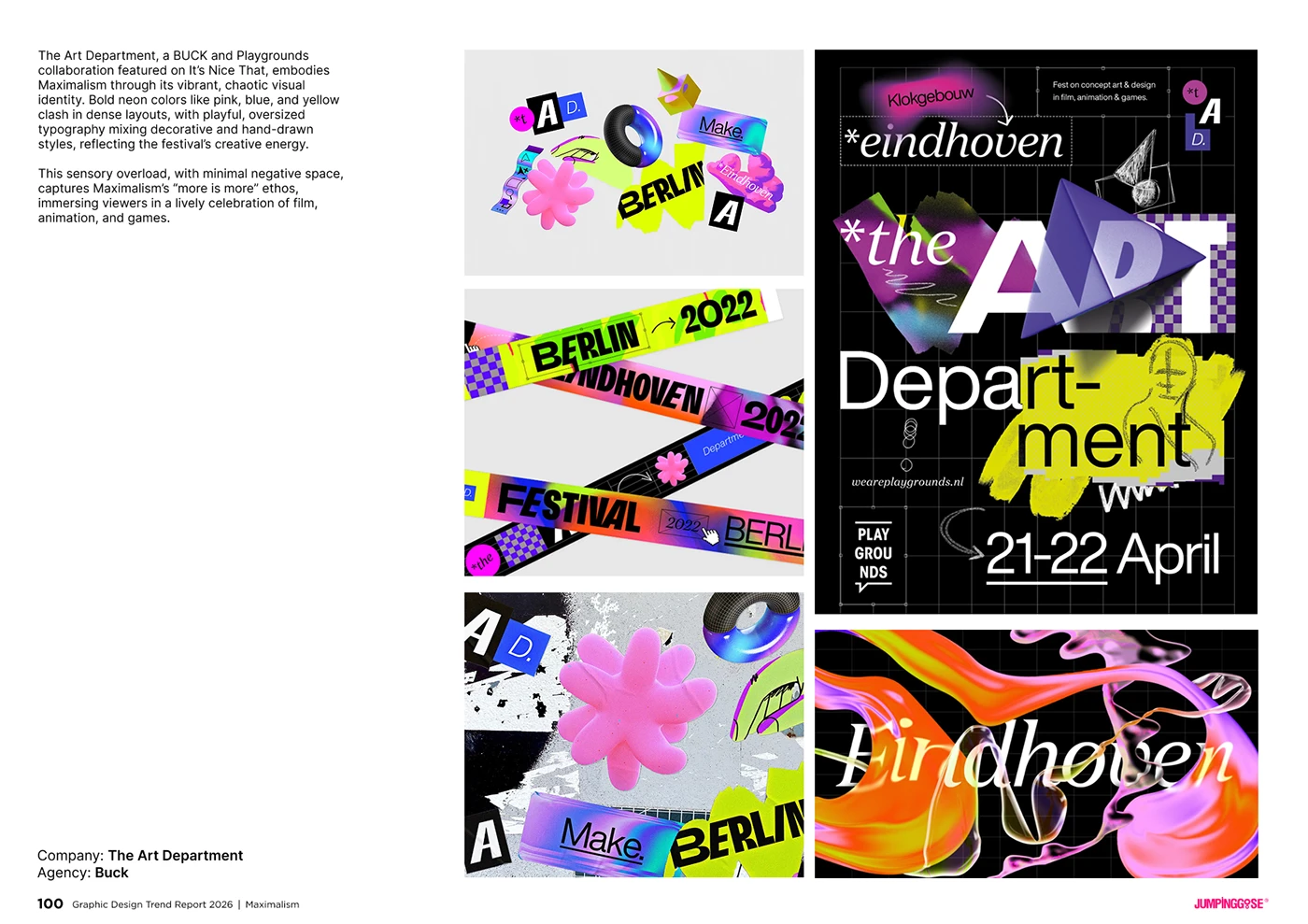
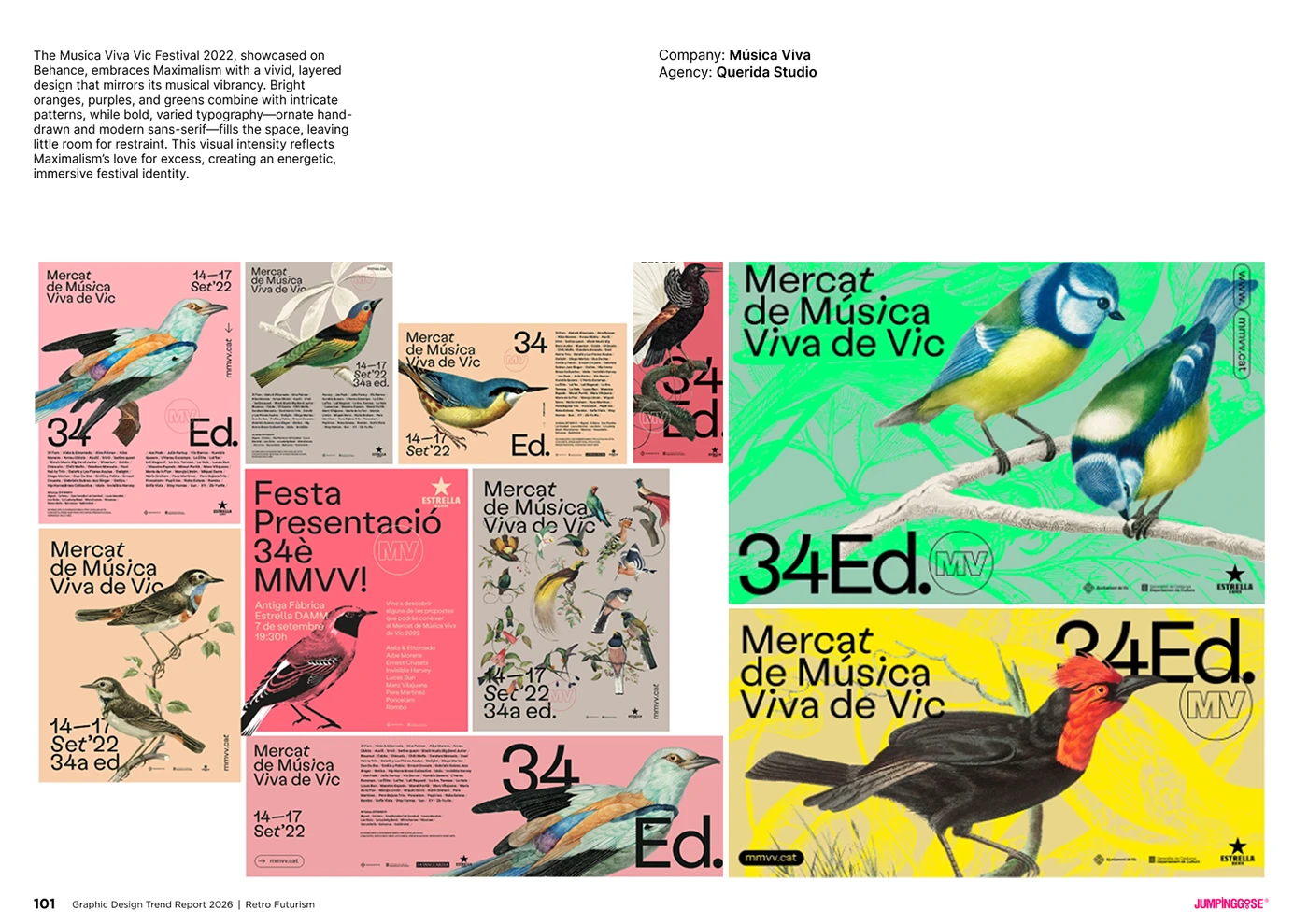
19. Maximalism
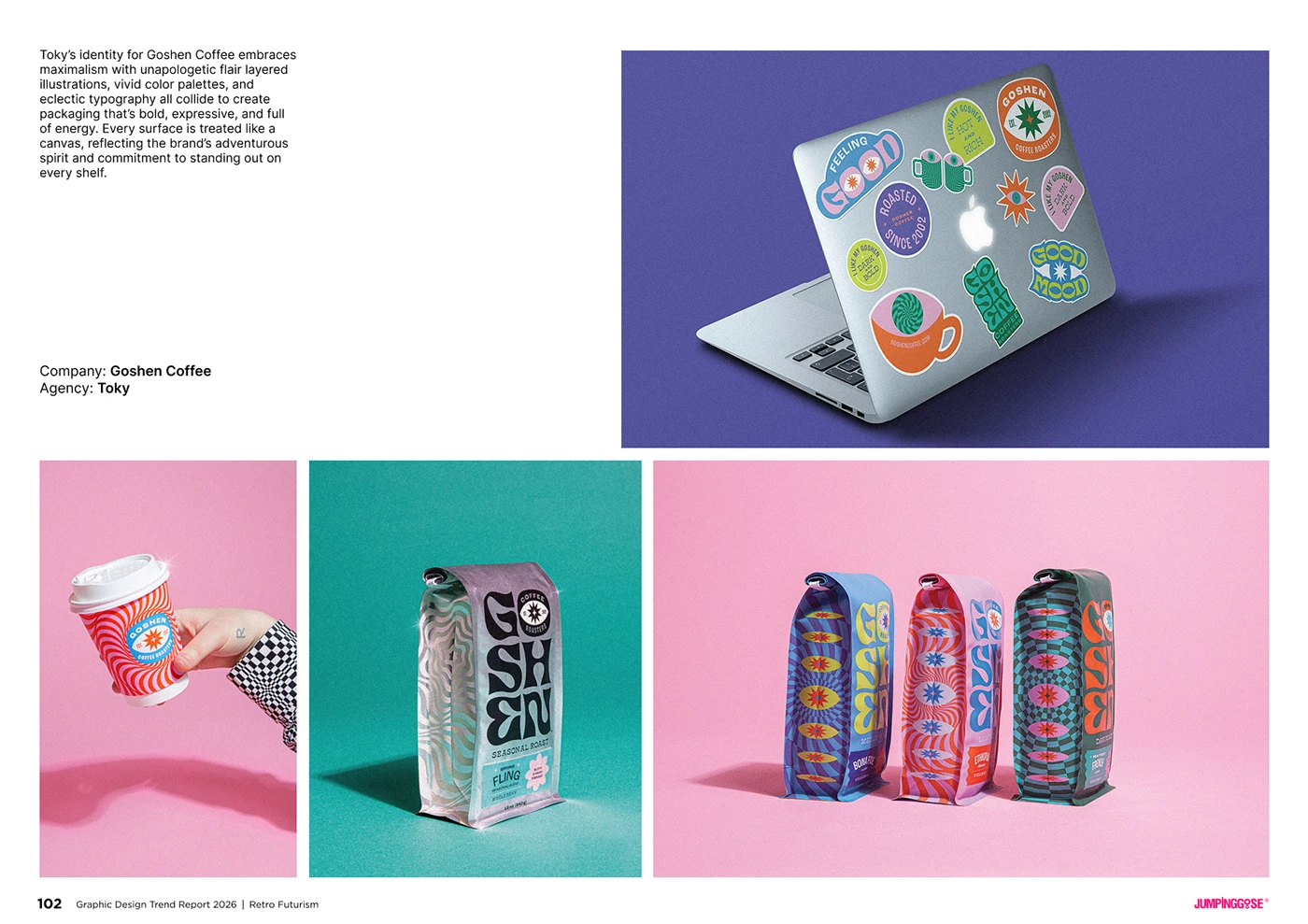
Maximalism embraces visual density through layered typography, colour, imagery, and texture. Though loud and expressive, the strongest executions remain deliberate, balancing excess with underlying structure.
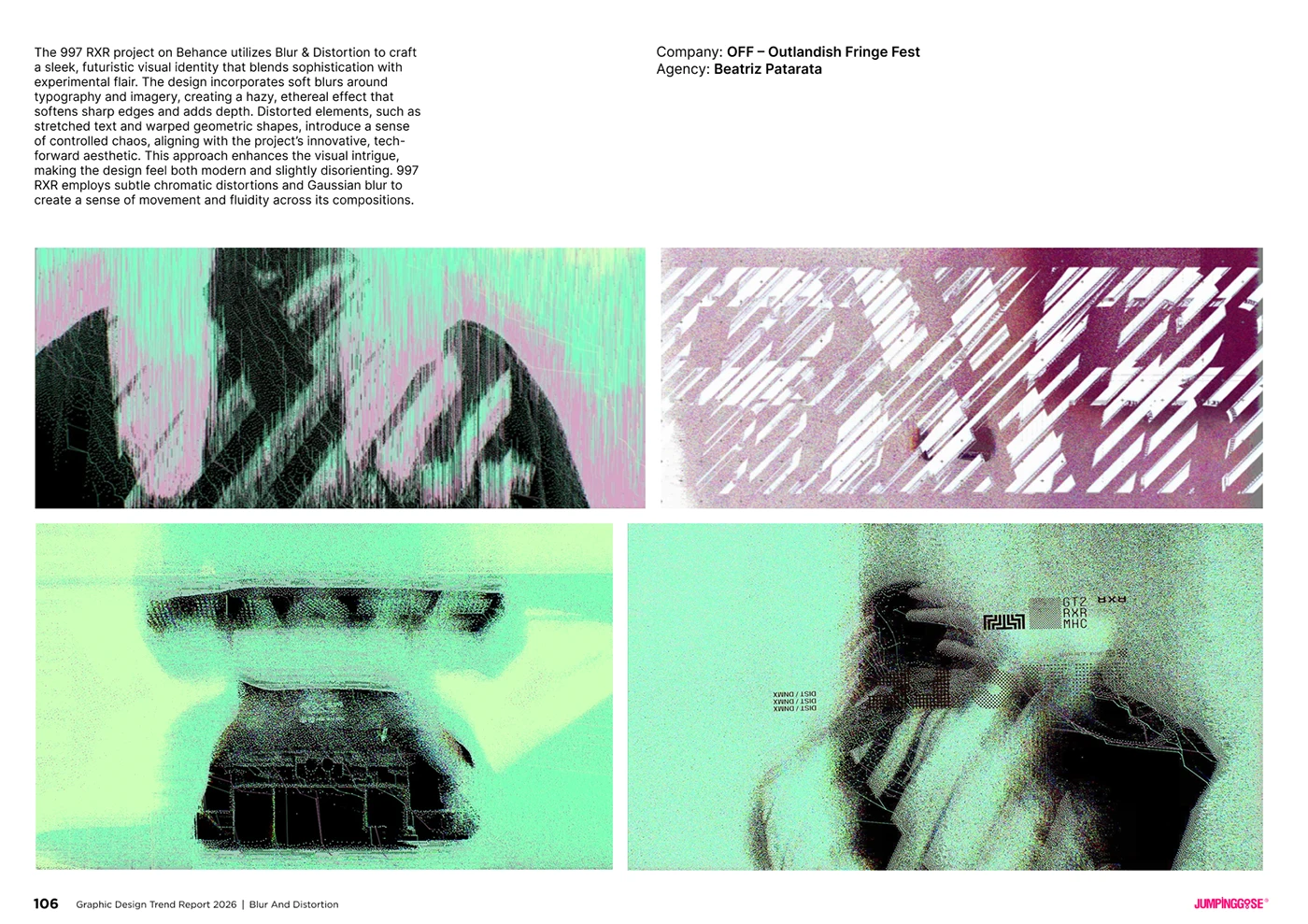
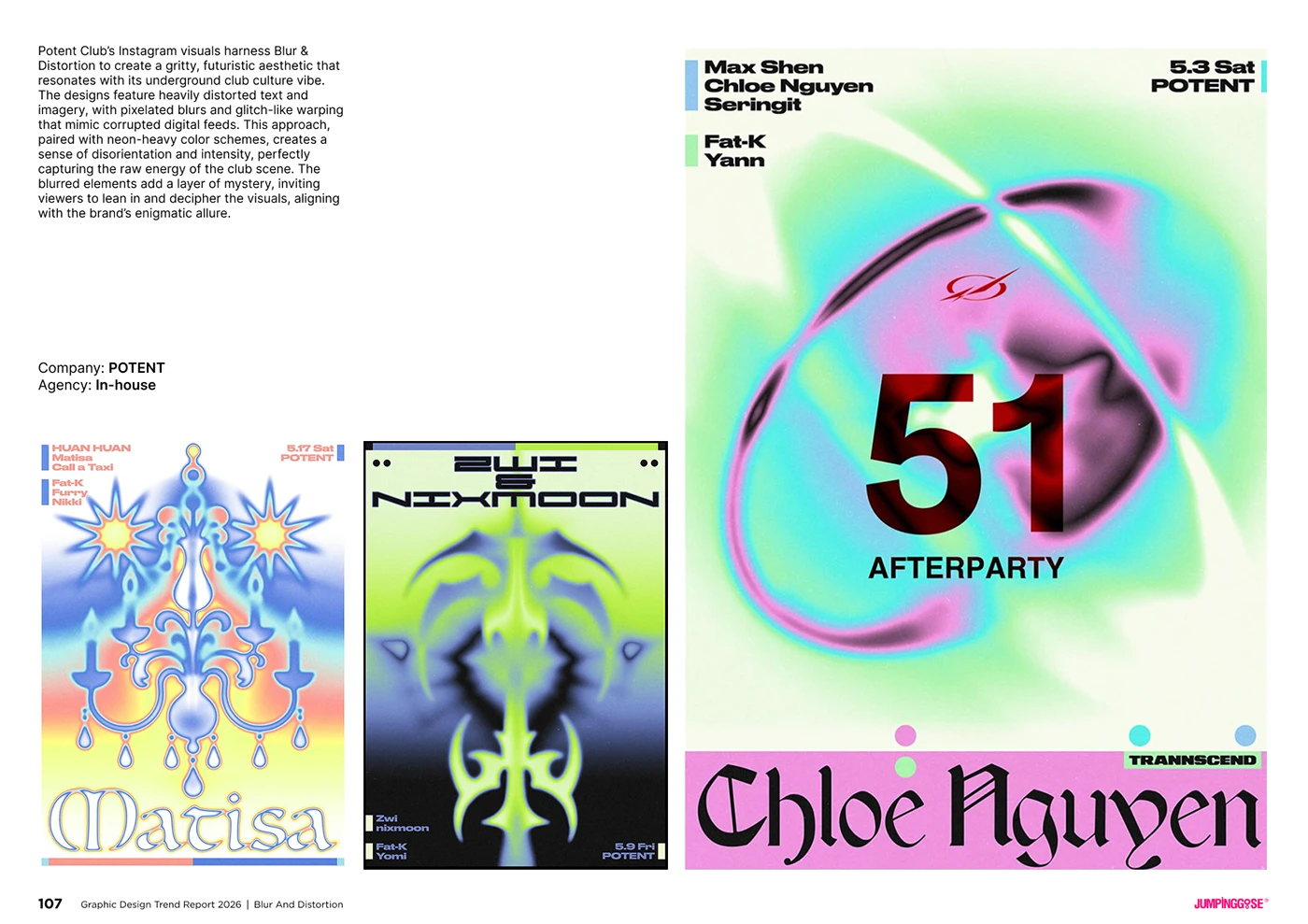
20. Blur & Distortion
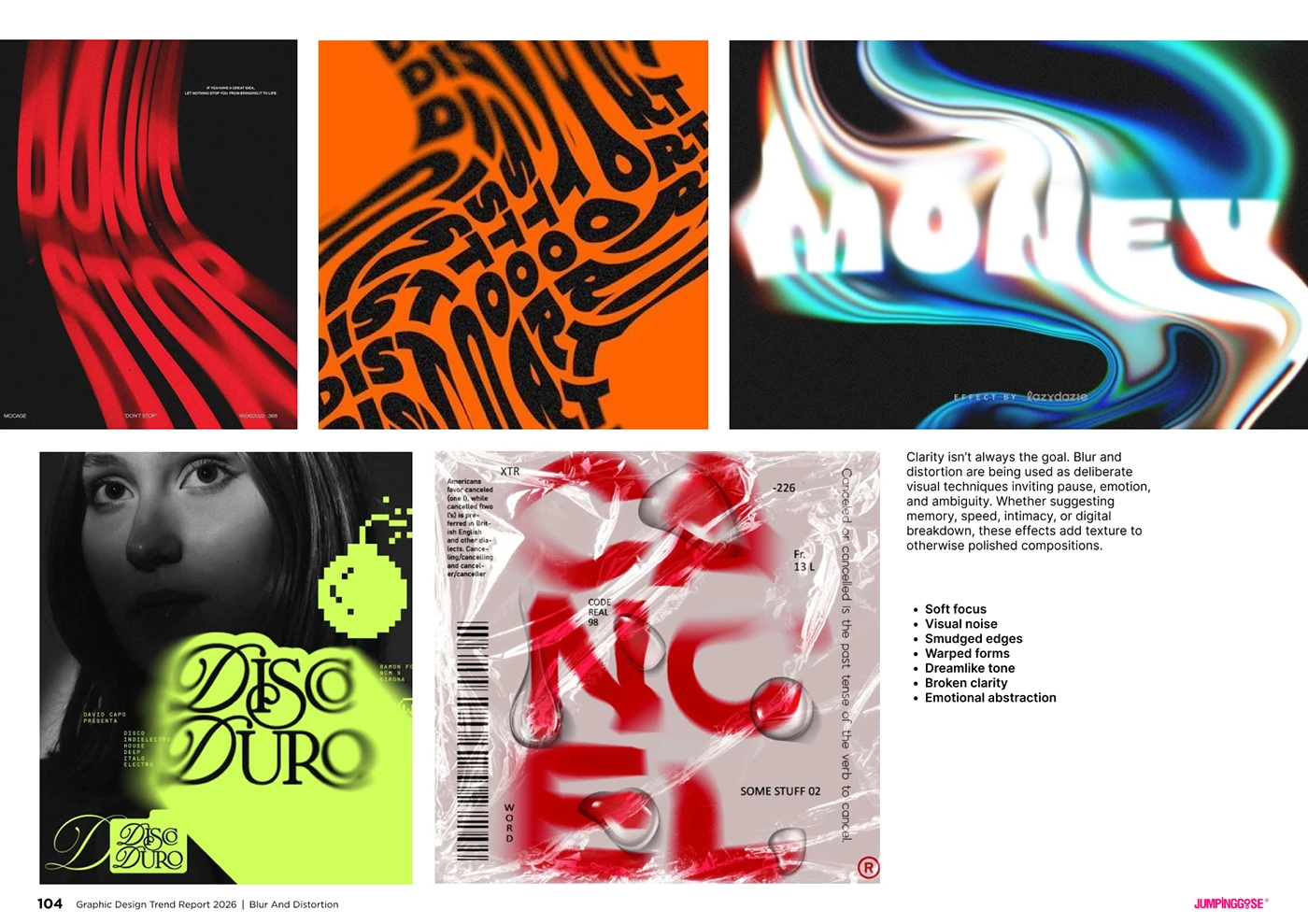
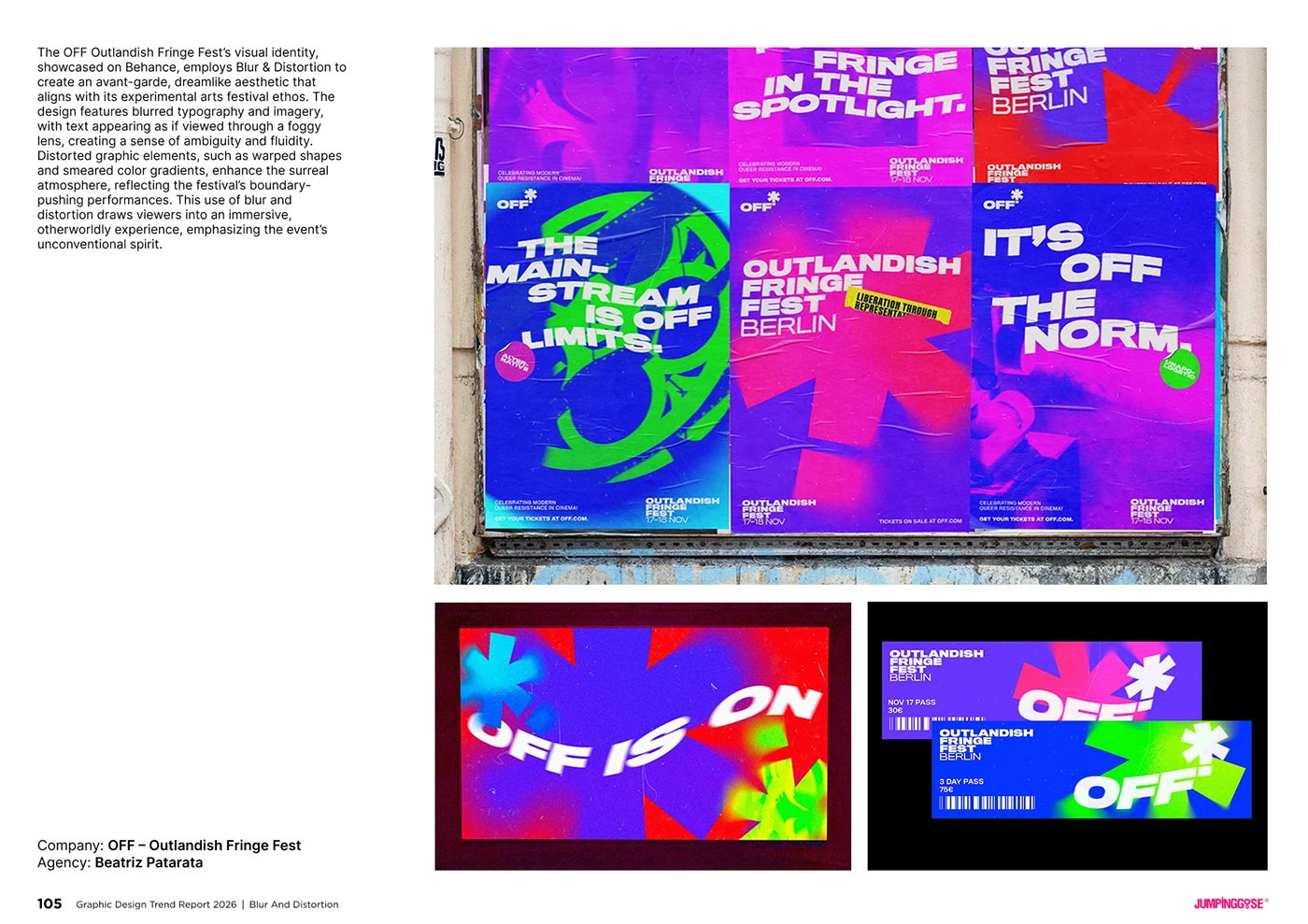
Blur and distortion are used intentionally to introduce emotion and texture. Smudged edges, visual noise, and soft focus prioritise atmosphere and ambiguity over crisp precision.
As these twenty trends show, graphic design in 2026 is less about chasing novelty and more about making deliberate choices. The strongest work emerging today isn’t defined by tools or aesthetics alone, but by intent. Designers are thinking in systems, responding to culture, and using technology with restraint rather than dependence.
Trends will continue to evolve, overlap, and fade, but the underlying shift is clear: design is becoming more expressive, more human, and more conscious of its role in shaping perception. Whether you adopt these directions fully or selectively, the value lies in understanding why they exist and how they align with the stories you’re trying to tell.
Ultimately, trends are not rules to follow, but signals to interpret. And in 2026, those signals point toward clarity, emotion, and thoughtful design decisions that prioritise meaning over mere visual impact.
Source: Top 20 Graphic Design Trends For 2026 | DigitalSynopsis
